Alternative Choices in Psychotherapy and Autism Evaluation

Philadelphia, PA
  • Home
  • Autism Diagnosis
  • Who We Are
    • Robert Naseef, Ph.D
    • Cindy Ariel, Ph.D
    • Robert Sher, Ph.D
  • Dr. Naseef's Blog
  • Public Speaking
    • About Dr. Robert Naseef
    • Keynote Topics
    • Previous Speaking Engagements
    • Endorsements
    • Videos
    • Contact
  • Our 4 Books
  • Contact
  • Home
  • Autism Diagnosis
    • Robert Naseef, Ph.D
    • Cindy Ariel, Ph.D
    • Robert Sher, Ph.D
  • Dr. Naseef's Blog
    • About Dr. Robert Naseef
    • Keynote Topics
    • Previous Speaking Engagements
    • Endorsements
    • Videos
    • Contact
  • Our 4 Books
  • Contact

Dr. Naseef's Blog

Robert Naseef's blog provides insightful views on neurodevelopmental disorders, especially Autism Spectrum Disorders. Combining personal experience and professional insight, he explores challenges faced by individuals on the spectrum and their families. The blog highlights understanding, acceptance, and practical support, serving as a valuable resource for caregivers and professionals seeking deeper awareness and effective strategies.

  • All
  • Acceptance
  • ADHD
  • AuDHD
  • autism
  • autism parents
  • autistic adults
  • autistic children
  • Autistic children
  • civil rights
  • Diagnosis
  • disability justice
  • disability rights
  • Fathers
  • medicaid
  • racism
  • Resilience
  • scientific integrity
  • social justice

Autism in the Family: Getting the Big Picture

Robert Naseef August 28, 2015

This post appeared orginally on the Autism Speaks Blog.

I became a typical father in 1979.  It was a dream come true—those magical first smiles, first steps, first words. Then in 1981, my son stopped talking, stopped playing normally, and began flapping his arms.  From those first red flags of autism until now, I have not stopped experiencing autism and the family—the central theme of my life and work—counseling, teaching, and writing about the impact of autism on families.

The behavioral challenges of autism are often so consuming that it can be next to impossible to keep the needs of your family in perspective.  From the outside, it may look like the child is the boss or king of the family. Parents often live holding their breath until the next problem or meltdown. The whole family can be immobilized by the unrelenting stress.

No small wonder that the interventions focus primarily on reducing problem behaviors and promoting learning and development. This necessary, but narrow focus on trying to eliminate troubling symptoms can feel like drowning in quicksand. While in the big picture, your emotional life, your marriage, and your other children are on hold indefinitely. Here are some lessons I have been learning and teaching regarding the big picture:

  • Give yourself permission to open up to your thoughts and feelings, which fall along the parents’ spectrum of fear, guilt, depression, anger, and anxiety over the lost dream.  Take a few slow breaths and notice your reactions. Some take the diagnosis in stride, but more commonly it’s an emotional bomb, and it takes time to regain your footing and go on to an uncertain future.  Like the weather, your unpleasant feelings will pass, and open the door to hope and celebration in every little step of developmental progress.

  • Spend some time each day joining your child on the floor having fun, following your child’s lead, and building connection. Your child with autism is still a child and needs more than therapy in her day. Parents cannot control the outcome for any child, but we can restore a full and rewarding relationship with a child growing up with autism.

  • Try to spend at least a little time each day with your other children or attending even minimally to their unique needs. Typically developing brothers and sisters feel rejection when their sibling doesn’t engage with them, sadness over not having a playmate at times, and sometimes embarrassment outside the home. There are special lessons to be learned from each child.

  • Work to understand the different perspective of your partner. Mothers are consumed by the day-to-day needs of raising a different kind of child.  It’s hard to take a break from needs that do not diminish.  Fathers have a difficult time talking about their feelings especially when unable to fix the problem.  While reports of an 80% divorce rate are unfounded, evidence does support increased stress, anxiety, and depression in men and women.

  • Take care of yourself and your relationship. Appreciate what your partner is doing right. Make time for each other. You need each other more than ever. All children need active, positive, energetic parents. In a very real sense, children cannot thrive if their parents are drowning.  It might be impossible to have “date nights,” but it is conceivable to do little things for each other and together, thus nurturing your relationship.

This is the big picture of what I believe it takes to survive and thrive with autism in the family. Trying to focus too much on behavior and trying to change someone with autism can block a family’s happiness. This may seem impossible with your child’s behavioral issues, but doing as much as possible to nurture your entire family can make the impact a little easier for all. This does not mean denying real problems. It just means paying attention and cultivating the moments we might overlook or ignore, when problems are absent, such as our children running to us when we get home, or our partner glad to see us after a long day at work or home or both. This is a lifelong search for meaning and connection, while becoming our best selves as family.

Speaking from my own experience, I thought I would change my son, but after years of relentless effort I realized that he changed me. He never spoke again, but this is how his autism has spoken to me day by day.
Comment

Autism and Employment: Hope on the Horizon

Robert Naseef August 16, 2015

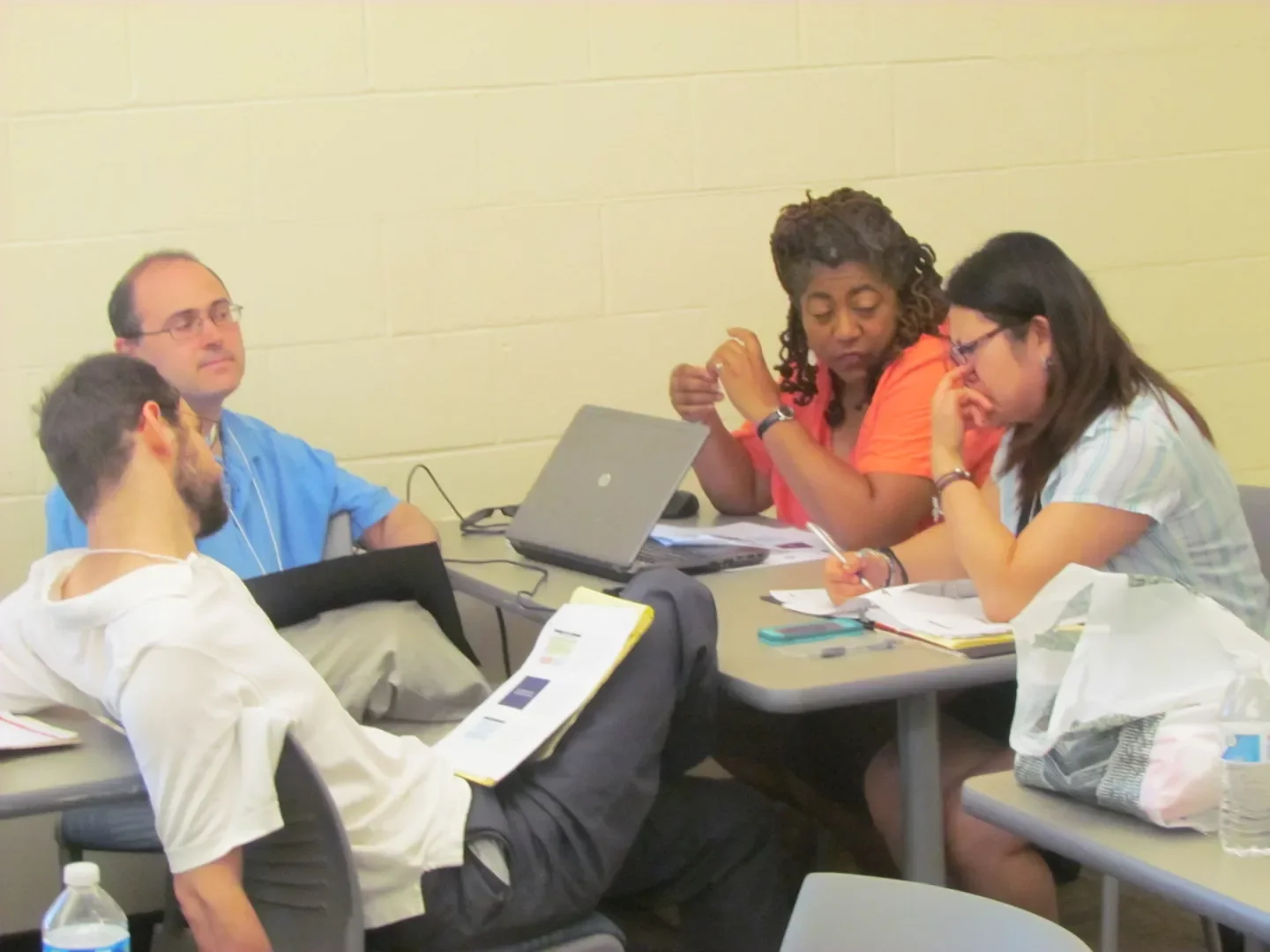
Trainees working in small groups with trainer.

August 17, 2015. From August 3-7, I was involved in an exciting project training young adults with autism for high tech jobs. This intensive 5 day program was organized by the Arc of Philadelphia and titled “Soft Skills for the Workplace.”  This event was the fruit of collaboration between a non-profit (Arc), private industry (SAP), the Bureau of Vocational Rehabilitation, and Montgomery County Community College. I and self-advocate Dr. Stephen Shore were the lead trainers along with The Arc of Philadelphia staff, Tanya Regli (executive director), Tom Cory, and Sabra Townsend.

For 5 days, from 8 AM to 3 PM, 25 young people were energetically engaged learning and developing the social or “soft skills” they need to put their “hard skills” to use in the workplace where they have previously been unemployed or underemployed. Using a variety of teaching strategies, the unique curriculum topics such as:

With co-presenter Stephen Shore.

  • Improving conversation skills

  • Sensory differences and coping strategies

  • Self-advocacy and self-disclosure skills

  • Stress management (or meltdown prevention)

  • Do’s and Don’ts of Social Media

(An in-depth report on the transition to adulthood for young adults with autism is available through the A.J. Drexel Autism Institute.)

Autism does not end when a child reaches adulthood; unemployment and underemployment are extremely high for adults with autism even for those with college degrees. Stress for families goes up once formal education is over and services are few and far between especially for those without cognitive disability. Many parents live in a state of chronic desperation. From the families I meet at conferences or in my psychology practice, I frequently hear “I cannot even die” or “Our nest will never be empty.”

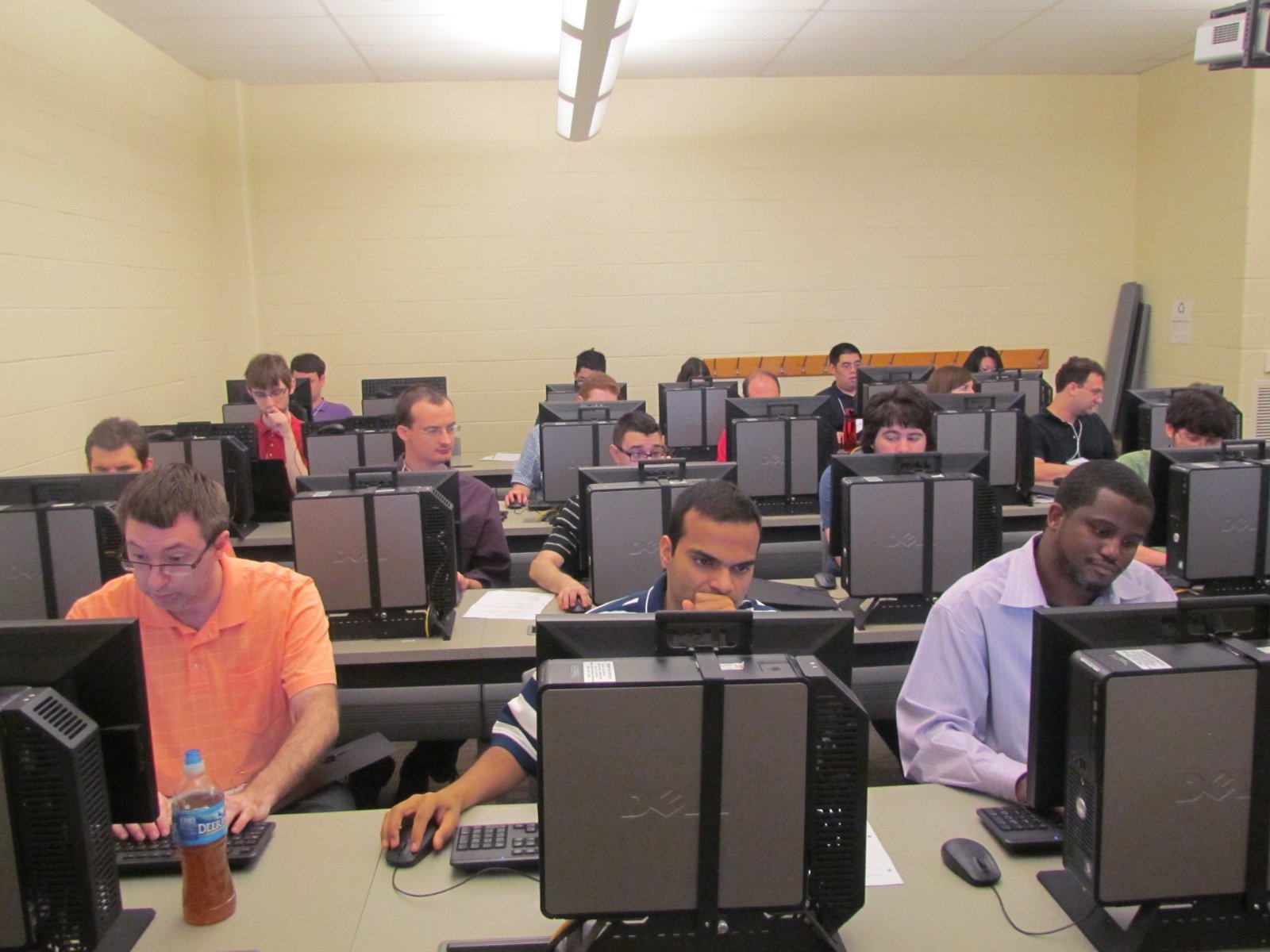
Trainees working on personal plans in computer lab.

Of the 25 individuals who attended this training, 5 are already employed through theSAP “Autism at Work” Program. The others will begin internships at SAP or other companies open to hiring people with autism who have technical skills in the near future. It’s a win-win. Companies get dedicated workers who are grateful to be employed with good skills and attention to details. Government costs for services are decreased, and families can breathe a sigh of relief.

Socializing after the week-long training was completed

The autism and special needs community has a long way to go to provide a meaningful future for those able to work. Going forward, I will be working with Stephen Shore and the Arc of Philadelphia to develop this training so that it can be replicated by other trainers in various locations and for a wide range of  jobs.

Click to sign up for Dr. Naseef’s monthly email newsletter.

18 responses to “Autism and Employment: Hope on the Horizon”

  1. Eileen Ercolani

    Aug 18, 2015 at 1:18 pm

    Edit


    As my grandson’s advocate, I often think, “What will happen when I die?” Now our children have more than hope for a successful future. Thank you for your tireless efforts for our autism community.

    Like

    Reply

  2. Connie Hammer

    Aug 19, 2015 at 2:07 pm

    Edit


    What a wonderful project! It should be replicated as much as possible to help those with autism succeed socially so they can share their amazing gifts/technical skills in the workplace. Thank you!

    Like

    Reply

  3. Anna Krupa

    Aug 19, 2015 at 6:42 pm

    Edit


    Thank you for the article. Sounds like a great thing! Any plans to repeat this program? Do you have plans to run this program in New York? Thank you again!

    Like

    Reply

    1. Robert Naseef, Ph.D.

      Aug 19, 2015 at 10:40 pm

      Edit


      We have no specific plans at the moment, but we hope this program can be spread far and wide.

      Like

      Reply

      1. Lynda L.

        Aug 21, 2015 at 8:00 pm

        Edit


        Do you foresee any possibilities of the program being implemented in New Jersey?

        Like

      2. Robert Naseef, Ph.D.

        Aug 23, 2015 at 4:35 am

        Edit


        There are no definite plans at the moment. We are looking for funding to continue to offer this kind of training.

        Like

  4. Emily Iland, M.A.

    Aug 23, 2015 at 4:18 pm

    Edit


    This is wonderful, Robert! I will contact you soon about another training opportunity for these young people coming to the Philly area in October, to help them be safe in the community and the workplace!

    Like

    Reply

    1. Robert Naseef, Ph.D.

      Aug 24, 2015 at 3:07 pm

      Edit


      Thanks Emily. Let me know the details an d I will spread the word.

      Like

      Reply

      1. Anna Krupa

        Aug 24, 2015 at 3:37 pm

        Edit


        Would you be accepting people that don’t live in Philadelphia ?

        Like

  5. Robert Naseef, Ph.D.

    Aug 24, 2015 at 4:51 pm

    Edit


    If you are referring the Emily Iland’s training on safety, that will be open to anyone who can get here.

    Like

    Reply

    1. Anna Krupa

      Aug 24, 2015 at 4:58 pm

      Edit


      No I was asking about employme

Comment

How did the vaccine controversy start and why won’t it go away?

Robert Naseef February 17, 2015

Facts are stubborn things, but study after study and warning after warning doesn’t kill the intense fear that many parents have about vaccinating their children. My son, Tariq, received the MMR vaccine (Measles, Mumps, Rubella) in 1981 around the same time that he lost his speech and started flapping.  From my experience since then, I have gained insight into ‘the vaccine issue’ that makes it at least understandable and may help to even do something about it.

Generally, the first signs or “Red Flags” of autism, that my son began to show as a toddler, appearing in the second year of life often around 18 months when the measles vaccine is routinely given. Herein lays the connection which some parents and professionals were making by the mid-1980s. Some were convinced that the vaccine was the cause or the smoking gun.

Autism has no singular cause and no known cure. Not every individual with autism is disabled, but many are. Not every diagnosis is a trauma or tragedy, but many are. While every child is a unique and special human being with gifts as well as challenges, the unemployment rate for adults with autism hovers between 70 and 80%. As parents, we want to have a cause for the problem. With a cause, we can have the hope that a cure is possible.

In 1998, Dr. Andrew Wakefield published a study in a prestigious British medical journal, The Lancet, which proposed a causal link between the MMR vaccination and autism.  Even though most of Wakefield’s co-authors wrote a retraction and disagreed with the conclusion, parent activists, including high profile celebrities, were especially alarmed about the idea that the MMR vaccine caused autism. There was a perfect storm as the number of children diagnosed with autism was increasing rapidly due to several factors including increased awareness and changes in diagnostic criteria.

Besides the discredited research, several large studies found no evidence of a causal relationship between the MMR and autism. In 2010, The Lancet retracted the 1998 article because it was based on fraudulent data, and Wakefield’s medical license was revoked in the UK. But the parent community remained terrified that their children could be infected with autism through vaccinations.  Some parents felt certain and signed onto litigation against the pharmaceutical companies that made the vaccine. Vaccines do have documented but rare side effects and a small number of parents won their cases.

So why does the controversy continue?

When professionals and politicians merely recite facts and do not show an understanding or respect for the legitimate fears and needs of parents we cannot expect this controversy to go away.  From my own scientific training, I knew that the timing did not prove causation.  Like others, when my son changed at 18 months, I wondered about the causal link between autism and the vaccination.  As a social scientist, however, I was not convinced and read the scientific research with great interest. Still, I lived in fear that lightning could strike twice as it actually has for many parents.

I have a view from the trenches of autism, and I feel the pulse of the parent community. Most of us love our children as much as life itself.  Tariq, now 35, does not speak, or read, or write, and he lives in a group home outside Philadelphia. It has not been an easy journey, but I don’t look back to his vaccinations.

As I have found through my work, compassion for parents’ point of view and honoring their perspective helps terrified parents to think through their options and make better-informed choices. All of which still amounts to taking a chance at your best future. There are no guarantees. Everyone wants to welcome a happy, healthy child with a bright future into their family.  The outcome of any birth and any day for that matter remains uncertain– not just because of autism but because of any of life’s unpredictable events.

Click to sign up for Dr. Naseef’s monthly email newsletter.

Comment

Fathers Talking about Post-Traumatic Growth

Robert Naseef December 17, 2014

There was more than enough suffering to go around. For the most part, the shock and awe of the original diagnosis had worn off as 49 fathers of special needs children shared their stories at the annual conference of the Washington State Fathers Network in Seattle on October 11.

Most men embrace the role of problem solvers and want to solve the problems of their child’s special needs. But it’s not that simple. The disability is a gritty and unwelcome reality that brings up difficult feelings that are hard to talk about.

For most men, it’s ok to be angry but the sadness and the worry of day-to-day life just stick in our throats. As the men on the opening panel discussion struggled to give voice to their experiences, it seemed that everyone’s heart opened as they listened.

This typical difficulty voicing feelings is often the root of male depression and a huge problem in relationships.  The diagnosis was not wanted or expected; nonetheless, these guys had fallen in love with their children all over again. Despite and even because of the trauma of diagnosis, accepting a child drastically different from the one expected often makes incredible growth possible.

Learning to speak and listen from the heart can bring us so much closer to our families. Sharing our experiences- whether they are the heartbreaking frustrations or the little breakthroughs and celebrations- is the best medicine for the isolation which is so profound at the beginning of this journey.

During an open mic session, one man shared that his 18-year-old son with autism had just failed his driver’s test. He is determined to pass next time. Learning to drive was a small inconceivable miracle when his son was in early intervention.

The father of a medically fragile daughter with cerebral palsy who is not able to speak shared his anger about the birth injury.  In his next breath, he bragged about how his daughter is 100 pages ahead of the rest of her mainstream class in math.

Another man’s feelings emerged in telling the story of how his son with Down syndrome took over the top bunk when his older brother went away to college. The conversation asking for permission between his sons confirmed their brotherhood and touched everyone listening.

Every day, children with special needs teach parents profound lessons. That growth from the original trauma forges a loving identity we can be proud of.

Click to sign up for Dr. Naseef’s monthly email newsletter.

Comment

Resilience: Bouncing Back from Adversity

Robert Naseef October 30, 2014

People bounce back from adversity and are even transformed by it far more often than we might guess.  How do they do it? Take, for example, Malala Yousufzai, this year’s winner of the Nobel Peace Prize. In October 2012, in Pakistan, a Taliban gunman shot her in the head on a school bus as she sat with her friends because of her outspoken advocacy of girls’ education. She attended the school that her father had founded.

Malala did not give up.  The bullets have intensified her commitment and garnered the support of the international community.  Closer to home, there are many unsung heroes who were celebrated at the 3rd Annual Family Resilience Conference sponsored by the Devereux Foundation on October 18, 2014.

The keynote speaker was Andrew Solomon, the best-selling author of Far From the Tree: Parents, Children and the Search for Identity. His talk to about 175 parents and professionals was titled, “Our Differences Unite Us.” In his research about parenting children with special needs, he found difficult lives full of pain and complexity, but he was amazed at how much joy he discovered.

Solomon articulated the dilemma of parents needing to change and teach their children versus accepting them and loving them for who they are.  He found a vast gray area and concluded that equanimity is hard won between fixing (the illness model) and acceptance (the identity model).

While every child is a surprise and not as anticipated, he observed parents strongly attached to the child they have. He described how parents became in his words “grateful for the lives they would’ve done anything to avoid.” As the father of an adult child with autism, this has certainly been my experience.

What summed it up was Solomon’s statement that resilience is a shared commodity in that one person generates it in another. The individual, the family, and the broader society each facilitate the ability to bounce back and be transformed in the process.

After lunch, Paul LeBuffe, the Director of the Devereux Center for Resilient Children (http://www.centerforresilientchildren.org/),  facilitated a town hall meeting and panel discussion about personal and family resilience. Inspired by the keynote address, there was a spirited discussion about how families keep it together in the face of the ongoing stress.

The overall lesson of the day is captured in this quote from Andrew Solomon’s landmark book:

 “Having always imagined myself in a fairly slim minority, I suddenly saw that I was in a vast company. Difference unites us. While each of these experiences can isolate those who are affected, together they compose an aggregate of millions whose struggles connect them profoundly. The exceptional is ubiquitous; to be entirely typical is the rare and lonely state.”

Click to sign up for Dr. Naseef’s monthly email newsletter.

Comment
  • Dr. Naseef's Blog
  • Older
  • Newer
facebook youtube instagram

\

Alternative Choices in Psychotherapy and Autism Evaluation

Philadelphia, PA

Alternative Choices | 319 Vine Street #110, Philadelphia, PA 19106, USA

facebook youtube instagram