Alternative Choices in Psychotherapy and Autism Evaluation

Philadelphia, PA
  • Home
  • Autism Diagnosis
  • Who We Are
    • Robert Naseef, Ph.D
    • Cindy Ariel, Ph.D
    • Robert Sher, Ph.D
  • Dr. Naseef's Blog
  • Public Speaking
    • About Dr. Robert Naseef
    • Keynote Topics
    • Previous Speaking Engagements
    • Endorsements
    • Videos
    • Contact
  • Our 4 Books
  • Contact
  • Home
  • Autism Diagnosis
    • Robert Naseef, Ph.D
    • Cindy Ariel, Ph.D
    • Robert Sher, Ph.D
  • Dr. Naseef's Blog
    • About Dr. Robert Naseef
    • Keynote Topics
    • Previous Speaking Engagements
    • Endorsements
    • Videos
    • Contact
  • Our 4 Books
  • Contact

Dr. Naseef's Blog

Robert Naseef's blog provides insightful views on neurodevelopmental disorders, especially Autism Spectrum Disorders. Combining personal experience and professional insight, he explores challenges faced by individuals on the spectrum and their families. The blog highlights understanding, acceptance, and practical support, serving as a valuable resource for caregivers and professionals seeking deeper awareness and effective strategies.

  • All
  • Acceptance
  • ADHD
  • AuDHD
  • autism
  • autism parents
  • autistic adults
  • autistic children
  • Autistic children
  • civil rights
  • Diagnosis
  • disability justice
  • disability rights
  • Fathers
  • medicaid
  • racism
  • Resilience
  • scientific integrity
  • social justice

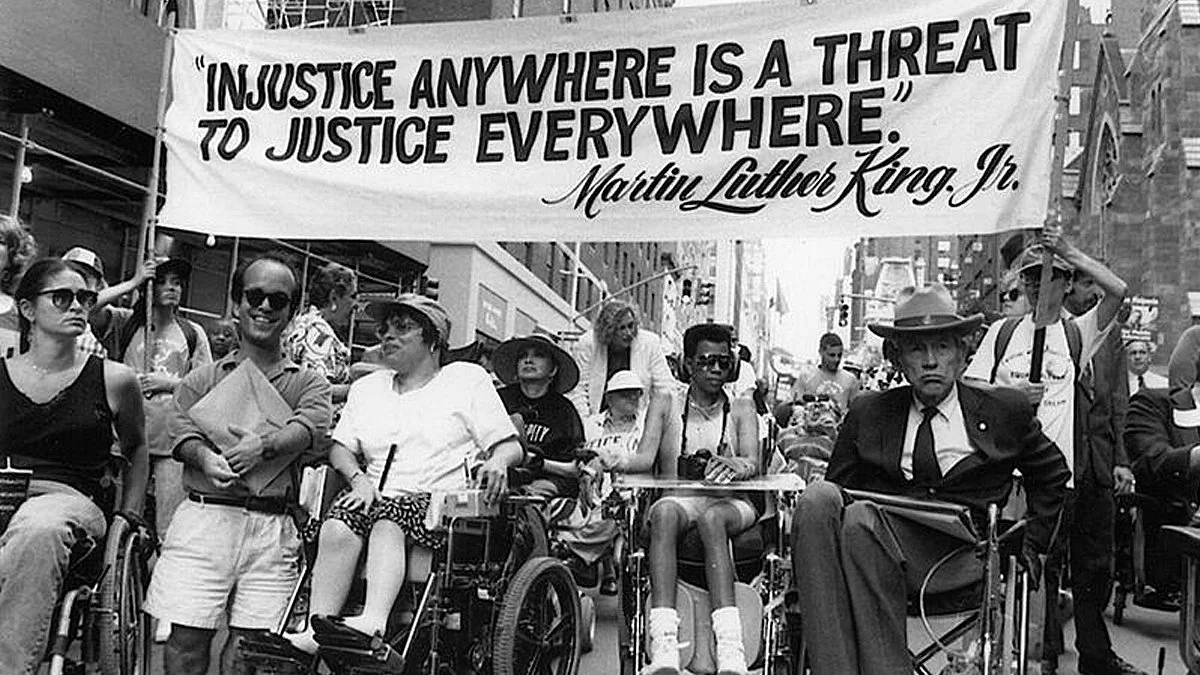
A Disability Pride Parade in New York City

Honoring MLK: Now More Than Ever

Robert Naseef January 16, 2026

As Reverend Dr. Martin Luther King, Jr. weekend is observed, there are many reasons to feel enraged, upset, anxious, and even hopeless. Although Dr. King was assassinated on April 4, 1968, it is not hard to imagine where he would stand on the issues we face as a society today. In Memphis that day, he gave a speech in support of the striking sanitation workers in which he talked about a "human rights revolution."  As our cities and communities are taken over by masked heavily armed men who are killing, injuring, and deporting people, we are facing an existential and moral crisis. There have already been hundreds of demonstrations against ICE, and more every day, drawing on his principles as we commemorate his memory. Dr. King’s memory has been sanitized so thoroughly that most recall little more than his famous “I have a dream” speech in 1963. Let’s review Dr. King’s powerful vision for justice. 

1. The real Dr. King was far more radical than most of us remember or were taught.

Beyond the fight against racial segregation, Dr. King diagnosed a deep-seated "triple prong sickness" within American society: racism, excessive materialism, and militarism. He argued that these three evils were not separate problems but inextricably linked. By 1964, MLK became one of the most prominent critics of the Vietnam War, viewing it as an "enemy of the poor." He spoke out that a nation that spent more on military aggression than on human services was facing "spiritual death." In his words, "What they truly advocate is socialism for the rich and capitalism for the poor." This vision as a radical critic of the system is usually left out.  His actual legacy is more challenging. He challenged us to not just oppose bigotry but to question the very structure of our society. 

2. Justice movements are inextricably intertwined. This sense of a shared mission was deeply felt by leaders across movements. In a telegram to Cesar Chavez who was organizing migrant farmworkers in California, Dr. King affirmed their common cause. Chavez later quoted King's words in a speech honoring him: “Our separate struggles are really one. A struggle for freedom, for dignity, and for humanity.” This intersectionality was built on tangible acts of solidarity. The disability rights movement in America did not just happen alongside the Civil Rights Movement; it was born from it. Disability activists took the legal strategies, moral language, and protest tactics of the Black freedom struggle and applied them to the fight for accessibility and dignity. The crucial role of Black activists in the disability rights struggle is a powerful part of this history. During the landmark 1977 Section 504 sit-in in San Francisco, Black Panther Party member, Brad Lomax, was a key organizer, and the Black Panther Party provided hot meals and supplies to the protestors, helping them sustain their 28-day occupation of a federal building. This alliance demonstrated that the fight for justice is strongest when intersecting communities recognize their destinies are inseparable. Autistic self-advocates insist "Nothing About Us Without Us"in the  spirit of self-determination modeled after the Civil Rights Movement’s insistence that oppressed people must be the ones to lead their own liberation.

3. Change demands disruption, not just talk. Following in the footsteps of Frederick Douglas, Dr. King understood that power rarely concedes anything without a demand. He led with a strategy  of nonviolent direct action with a clear purpose. This meant disrupting business as usual to force society to confront injustices. This principle has always been a driving force in successful movements for change. In 1990, when the Americans with Disabilities Act (ADA) was stalled in Congress, dozens of activists abandoned their wheelchairs and other mobility aids and began crawling up the 83 steps of the U.S. Capitol. This direct action, known as the "Capitol Crawl," physically demonstrated the architectural and societal barriers they faced daily. Protester Jennifer Keelan, age 8, declared, “I’ll take all night if I have to.” The powerful images of this action helped pressure Congress to finally pass the landmark ADA legislation.

4. True compassion requires restructuring society, not just charity. One of Dr. King's most profound ideas was his distinction between charity and transformative justice. King understood true compassion as a radical commitment to social reconstruction. "True compassion is more than flinging a coin to a beggar... it understands that an edifice which produces beggars needs restructuring." This deeply radical concept calls on us to move beyond individual acts of kindness and confront the political and economic systems that create and perpetuate racism, poverty, homelessness, and despair. The 504 Sit-In and the Capitol Crawl were actions designed not just to help individuals, but to rebuild a world for everyone.

5. Taking a stand is rarely safe or popular. The sanitized version of history often forgets the immense cost of moral courage. When Dr. King broke his silence on the Vietnam War, he paid a steep price. After his 1967 "Beyond Vietnam" speech, where he charged the U.S. government as "the greatest purveyor of violence in the world today," he was fiercely condemned, but he was guided by a moral imperative. Near the end of his life, he explained, "Cowardice asks the question, is it safe? Expediency asks the question, is it political? Vanity asks the question, is it popular? But conscience asks the question, is it right?” 

In conclusion, the history of the fight for social justice is complex, demanding, and intertwined. It is a story still being written now with radical critiques, disruptive actions, and profound moral courage in the face of overwhelming opposition and force. To truly honor the legacy of the Reverend Dr. Martin Luther King, Jr. is to engage in the struggles of today and join in community. In his Letter from Birmingham Jail, he wrote: "Injustice anywhere is a threat to justice everywhere. We are caught in an inescapable network of mutuality, tied in a single garment of destiny."
Click to sign up for Dr. Naseef’s monthly email newsletter, Special Families Guide.

In disability justice, disability rights, civil rights, racism, social justice, autism
2 Comments

from the Autism Self Advocacy Network (ASAN)

Autism Community Faces Crisis and Opportunity

Robert Naseef April 17, 2025

Lots of folks are asking me how I react and process react RFK’s press conference and plans to address the increasing incidence of autism, especially with huge cuts in Medicaid looming. This may sound off base, but I see something very positive going on. Check out the April 17th statement from the Autism Self Advocacy Network. This is the first time in my 4 decades of experience in the autism community in which all of the major organizations and many others have come together. Let’s all watch closely for what action steps emerge from this amazing coalition.

Wise people have said that in crisis there is opportunity.

Here is the full statement from the Autism Self Advocacy Network:

April 17, 2025, Washington, D.C. – As national organizations dedicated to advancing the well-being of Autistic individuals, the Autistic Self Advocacy Network, Autism Society of America, Autism Speaks, The Arc of the United States, Autistic Women and Non-Binary Network, Autistic People of Color Fund, and partners across the disability and public health sectors stand united in our call for science-based decision-making and increased investment in the research, programs and services the Autism community needs to live fully.

While our organizations reflect a broad range of perspectives and experiences, we are aligned in the following principles:

  • Vaccines Do Not Cause Autism. Decades of scientific research confirm there is no causal link. Public health messaging must be grounded in science and protect all communities.

  • Autistic Individuals Deserve Respect and Support. Public dialogue and policy must reflect the inherent value, rights, and diverse needs of Autistic people.

  • Evidence-Based Policy Is Essential. We call on policymakers to work in collaboration with Autistic individuals, families, researchers, clinicians, and disability organizations to ensure policy is grounded in science and responsive to community needs.

We are deeply concerned by growing public rhetoric and policy decisions that challenge these shared principles. Claims that Autism is “preventable” is not supported by scientific consensus and perpetuate stigma. Language framing Autism as a “chronic disease,” a “childhood disease” or “epidemic” distorts public understanding and undermines respect for Autistic people.

At the same time, federal proposals to reduce funding for programs like Medicaid, the Department of Education, and the Administration for Community Living threaten the very services that Autistic individuals and their families rely on. Research must be guided by credentialed experts and inclusive of the complexity and diversity of the lived experiences of the Autism community—not redirected by misinformation or ideology. As leaders in the fields of Autism and public health, we are committed to contributing meaningfully to the ongoing dialogue and initiatives led by HHS.

We urge public leaders, institutions, and media to uphold scientific integrity and work together to strengthen—not weaken—the infrastructure of support for the entire Autism community.

Signed By:
Autistic Self Advocacy Network, Colin Killick, Executive Director
Autism Society of America, Christopher Banks, President and CEO
Autism Speaks, Keith Wargo, President and CEO
The Arc of the United States, Katy Neas, Chief Executive Officer
Autistic Women & Nonbinary Network, Sharon daVanport, Executive Director
Autistic People of Color Fund, Ly Xīnzhèn Zhǎngsūn Brown, Founding Executive Director
Autism Empowerment, Karen Krejcha, Co-Founder, Executive Director
Dan Marino Foundation, Mary Partin, CEO
Pivot Neurodiversity
Association for Autism and Neurodiversity
Organization for Autism Research
Els for Autism
Autistic Doctors International
Hussman Institute for Autism

Full List of Endorsing Organizations (Rolling Sign On):
American Association of People with Disabilities
Association of University Centers on Disabilities
National Association of Councils on Developmental Disabilities
TASH
Allies for Independence
Institute for Exceptional Care
Disability Rights Education and Defense Fund (DREDF)
American Association on Health and Disability
Lakeshore Foundation
National Health Law Program
Family Voices National
National Down Syndrome Congress
Bazelon Center for Mental Health Law
American Network of Community Options and Resources (ANCOR)
Epilepsy Foundation
The Center for Learner Equity
Self-Advocates Becoming Empowered
Caring Across Generations
SPAN Parent Advocacy Network (SPAN)
National Disability Rights Network
American Music Therapy Association
Access Ready Inc
Mission Alpha Advocacy
Center for Public Representation
Division for Early Childhood of the Council for Exceptional Children
The Kelsey
The National Alliance to Advance Adolescent Health
American Academy of Pediatric Dentistry
International Council on Development and Learning
Applied Self-Direction
Association of Programs for Rural Independent Living (APRIL)

Click to sign up for Dr. Naseef’s monthly email newsletter, Special Families Guide.

In disability justice, disability rights, scientific integrity, autism parents, autistic adults, autistic children Tags autism community, autism organizations, autism advocacy
Comment
facebook youtube instagram

\

Alternative Choices in Psychotherapy and Autism Evaluation

Philadelphia, PA

Alternative Choices | 319 Vine Street #110, Philadelphia, PA 19106, USA

facebook youtube instagram