Alternative Choices in Psychotherapy and Autism Evaluation

Philadelphia, PA
  • Home
  • Autism Diagnosis
  • Who We Are
    • Robert Naseef, Ph.D
    • Cindy Ariel, Ph.D
    • Robert Sher, Ph.D
  • Dr. Naseef's Blog
  • Public Speaking
    • About Dr. Robert Naseef
    • Keynote Topics
    • Previous Speaking Engagements
    • Endorsements
    • Videos
    • Contact
  • Our 4 Books
  • Contact
  • Home
  • Autism Diagnosis
    • Robert Naseef, Ph.D
    • Cindy Ariel, Ph.D
    • Robert Sher, Ph.D
  • Dr. Naseef's Blog
    • About Dr. Robert Naseef
    • Keynote Topics
    • Previous Speaking Engagements
    • Endorsements
    • Videos
    • Contact
  • Our 4 Books
  • Contact

Dr. Naseef's Blog

Robert Naseef's blog provides insightful views on neurodevelopmental disorders, especially Autism Spectrum Disorders. Combining personal experience and professional insight, he explores challenges faced by individuals on the spectrum and their families. The blog highlights understanding, acceptance, and practical support, serving as a valuable resource for caregivers and professionals seeking deeper awareness and effective strategies.

  • All
  • Acceptance
  • ADHD
  • AuDHD
  • autism
  • autism parents
  • autistic adults
  • autistic children
  • Autistic children
  • civil rights
  • Diagnosis
  • disability justice
  • disability rights
  • Fathers
  • medicaid
  • racism
  • Resilience
  • scientific integrity
  • social justice

Fathers are Stepping Up Around the World: and Raising Children with Autism

Robert Naseef June 14, 2017

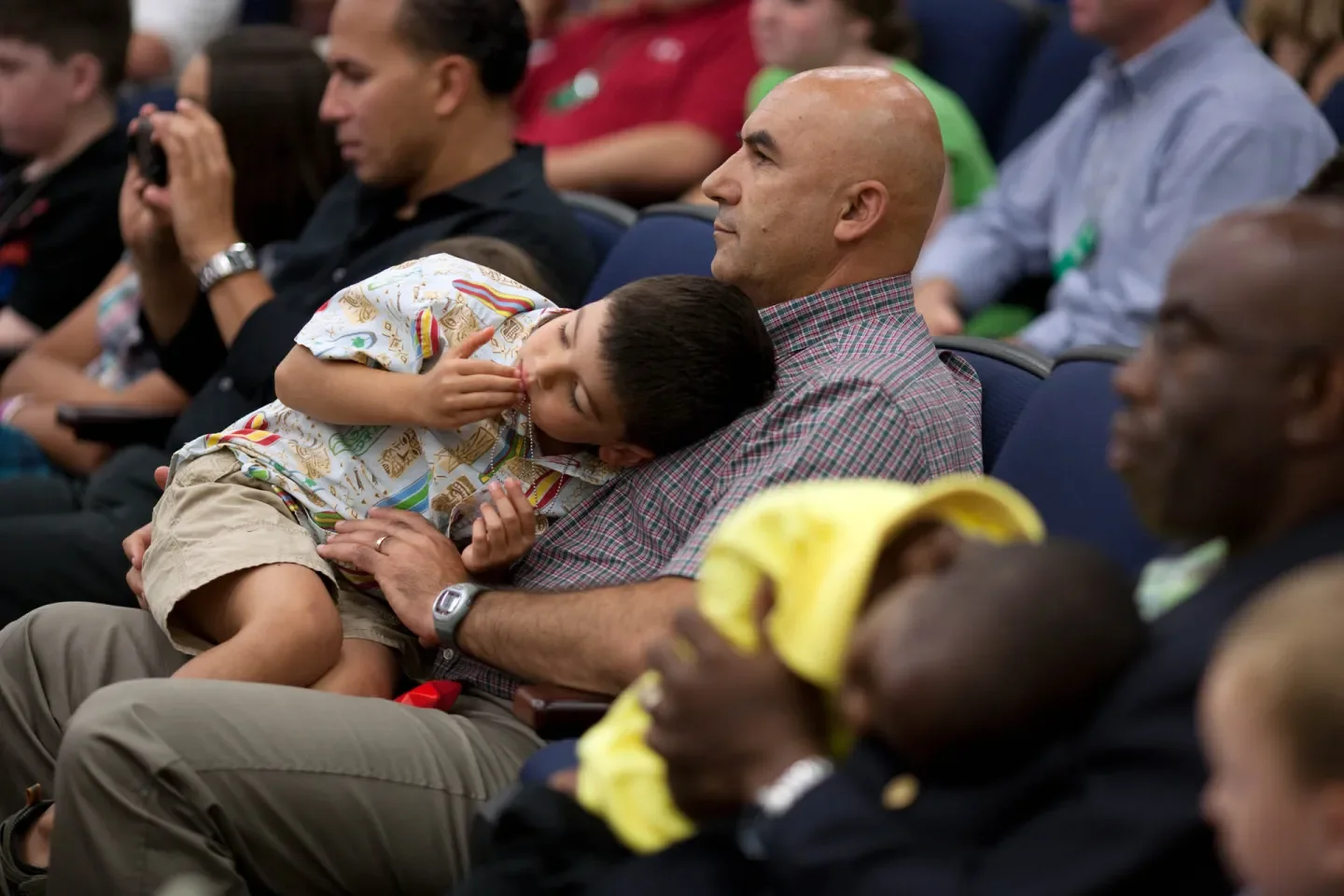
According to a new 2017 global survey, men are taking “greater responsibility for the home and childcare” than previously in both emerging and developed economies as reported by Reuters. In 2013, the CDC reported a nationally representative survey which found that a large majority of fathers reported being heavily involved in hands-on parenting. (Jones and Mosher, 2013). Father involvement has been shown to result in better academic success, fewer behavior problems, and healthier eating habits for children in general. Recent studies, as reported in last June’s Autism Notebook, have pointed to similar positive outcomes for children growing up with autism.    

Nonetheless, men still have a hard time facing things they can’t fix. The hurdles that accompany autism often leave men feeling powerless and speechless. It’s not unusual for a father to find himself at a loss of how to interact with a child who is different from the one he expected. However, as dads learn to deal with this sense of powerlessness, they discover what they CAN do to help their child (80% of whom are boys), their family, and themselves.

Focusing on what an individual can do opens up opportunities to live fulfilling and productive lives. The concept of neurodiversity as Steve Silberman described in NeuroTribes is “the notion that conditions like autism, dyslexia, and ADHD should be regarded as naturally occurring cognitive variations with distinctive strengths that have contributed to the evolution of technology and culture rather than mere checklists of deficits and dysfunctions.”

Corporations, government agencies, small businesses, and nonprofits are discovering the strengths that young people on the autism spectrum bring to employment, and they are starting to actively recruit them. The quirks that come with autism sometimes mask hidden strengths, such as intense focus, or a special skill with numbers and patterns.  People with autism also like repetition which is an advantage in many workplaces. They can be great at catching errors; they don’t waste time socializing on the job; and they are loyal employees who are retained longer by their employer. This saves employers significant costs in recruitment and training.

Many of these initiatives are led by fathers and mothers of children with autism at Specialisterne, SAP Autism at Work, HP, Rising Tide Car Wash, etc. Despite these positive trends, we have a long way to go. A large percentage of individuals with high functioning or mild autism have extreme difficulty finding work. Many lack the social or soft skills that go into a typical job search. In 2015, Autism Speaks launched a website to match workers who have autism with prospective employers. (https://www.thespectrumcareers.com/ )

Fathers can help through action at the ground level 

Traditionally, fathers have tended to “specialize” in play, whereas mothers “specialize” in caretaking and nurturance. A father’s play with his child is typically more active and rough-and-tumble, which gives them a distinctive role in supporting their child’s development through play. However, it tends to be more difficult to engage in play with a child who has more repetitive, and less varied play, as well as other challenging behaviors. Oftentimes fathers feel overwhelmed and are unaware of how to address these issues. As a result, the necessary but narrow focus on trying to eliminate troubling symptoms can place the father’s emotional life, marriage, and other children on hold indefinitely.

Taking action is one of the main ways that men show their love for their families. Here is an outline of a plan:

  1. Acknowledge your frustrations. Celebrate what’s going right! Give yourself permission to open up to the full range of your thoughts and feelings which may include fear, guilt, depression, anger, anxiety, hope and love. Some take autism in stride, but often it can feel like an emotional bomb at first. Unpleasant feelings will ebb and flow, often opening the door to hope and celebration in the little steps of developmental progress.

  1. Spend some time each day joining your child on the floor or at the table having fun, following your child’s lead, and building a connection. Your child with autism is still a child and needs more than therapy and school. Parents cannot control the outcome for any child, but they can certainly make a difference and have a rewarding relationship.

  1. Try to spend at least a little time each day with your other Typically developing brothers and sisters often feel rejected when their sibling doesn’t engage with them, sadness over not having a playmate, and sometimes embarrassment outside the home, not to mention having stressed out parents.

  1. Work at understanding the different perspective of your partner. Mothers, including those who work outside the home, are consumed by the day-to-day needs of raising a child with special needs. It’s hard to take a break from needs that do not diminish.  While reports of an 80% divorce rate are unfounded, evidence does support increased stress, anxiety, and depression in both men and women as a result of raising a child with special needs.

  1. Take care of yourself and your relationship. Appreciate what your partner is doing right. Make time for each other, as you need each other more now than ever. All children need active, positive, energetic parents. In a very real sense, children cannot thrive if their parents are drowning. It might be impossible to have “date nights,” but it is conceivable to do little things for each other, thus nurturing your relationship.

  1. Attend as many appointments and IEP meetings as you can. Don’t hide behind your work as a reason not to participate. Your partner will feel less alone and more supported, plus your child will tend to get a better deal at the table with 2 active, involved parents.

  2. Find a way to connect with other fathers; whether it’s at a meeting or just hanging out at a school or community event. Share your story, acknowledge your needs, and talk about what works in your situation. 

Conclusion 

From my experience facilitating support groups, workshops, and counseling fathers several lessons stand out:

  • Focusing on what’s going right

  • Celebrating every success, large or small

  • Not taking problems and behaviors personally

  • Tempering expectations

  • Becoming more humble

  • Learning increased levels of patience

  • Trusting the process their family is going through

  • Embracing what “is” versus what is “supposed to be”

  • Deepening commitment to their children and families

For me, my journey with my son’s autism has taught me to accept what I cannot change and to become a better man and a better father in the process. This has become clear as I see him happy most of the time and autistic all of the time. What I have seen in myself and others is that the long trajectory of loving and raising a child with autism bends toward acceptance.

References: 

Jones, J. & Mosher, W. D. (2013). Fathers’ involvement with their children: United States, 2006-2010. National Health Statistic Reports; no. 71. Hyattsville, MD: National Center for Health Statistics.

Silberman, S. (2015). NeuroTribes: The Legacy of Autism and the Future of Neurodiversity. New York: Penguin Random House.

Taylor, L. Men more involved in parenting than ever before: Global survey. Reuters, May 2, 2017. http://www.reuters.com/article/us-global-women-survey-idUSKBN17Y1RR?utm

Image: https://obamawhitehouse.archives.gov/blog/2011/06/15/strong-fathers-strong-families

*******

Robert Naseef, Ph.D., is a keynote speaker, psychologist, and father of an adult son with autism.  His TEDx talk, “How autism teaches us about being human” is on YouTube. His latest book is Autism in the Family: Caring and Coping Together (2013) by Brookes Publishing.

2 responses to “Fathers are Stepping Up Around the World: and Raising Children with Autism”

  1. Fathers of Children with Autism – FamilyAffaires.com

    Jun 18, 2017 at 11:09 am

    Edit

    […] According to a new 2017 global survey, men are taking “greater responsibility for the home and childcare” than previously in both emerging and developed economies as reported by Reuters. In 2013, the CDC reported a nationally representative survey which found that a large majority of fathers reported being heavily involved in hands-on parenting. (Jones and Mosher, 2013). Father involvement has been shown to result in better academic success, fewer behavior problems, and healthier eating habits for children in general. Recent studies, as reported in last June’s Autism Notebook, have pointed to similar positive outcomes for children growing up with autism. Read More….. […]

    Like

    Reply

  2. Kevin Fretz

    Jun 18, 2017 at 1:28 pm

    Edit

    Bob – perfect post. Through my life parenting a child on the spectrum, I have found all these things to be spot on. Hope all is well with you and Happy Father’s Day!

    Like
Comment

“Love doesn’t keep score. Siblings do.”

Robert Naseef May 10, 2017

400 people seemed to nod in agreement when Caroline McGraw used these words to describe some of her difficulties growing up with a younger brother who has autism. Few among us would deny this truth of family life-whether there is a disability or not. The scene was the Kern Autism Network Annual Conference in Bakersfield California on March 14, 2014. The theme of the conference was “Understanding DSM-5 and Family Dynamics.”

With examples from her own life, Caroline enumerated what’s hard in an honest clear voice:

  • the unfairness of sharing attention

  • being a third parent

  • feeling one doesn’t belong or fit in with peers

  • guilt and shame

  • acceptance of your sibling as they are

Caroline loved her brother dearly, yet she did not want her friends to see the chaos that his meltdowns caused. She was jealous of the attention his condition required of her parents. On the other hand, she felt responsible at times for her brother’s care and disappointed in herself when it was too much for her. With a calm presence, she explained her own three key coping strategies:

  • Honest conversations with parents and others about the struggles and joys

  • Invaluable  feeling of solidarity when connecting with fellow siblings

  • Experience working as a caregiver for other individuals with special needs contributed to a balanced perspective.

Despite the difficulties, she wouldn’t want a different brother. She could live without the meltdowns, but her love for Willie was palpable as she explained how she has come to appreciate “the inadequacy of language to express our deepest feelings and truths.”

Her tale of anger, rivalry, and jealousy mixed with warm loving feelings can be difficult to acknowledge but an integral part of the reality that bonds siblings.

Check out Caroline McGraw’s blog “A Wish Come Clear”, inspired by Willie.

*********

The  Sibling Support Project is a national effort dedicated to the life-long concerns of brothers and sisters of people who have special health, developmental, or mental health concerns.

2 responses to ““Love doesn’t keep score. Siblings do.””

  1. Eileen Bernstein Ercolani

    May 13, 2017 at 3:31 pm

    Edit

    Important timely tarticle – must take care to listen & hear the hearts of the siblings. Different challenges when it’s the older brother – affecting the younger siblings.

    Like

    Reply

  2. Julia

    Aug 2, 2017 at 12:26 am

    Edit

    Enjoyed your session yesterday at The National Autism Conference very much, Thank you! Thank you for your time and for hearing some of our story. Blessings.

    Like

Comment

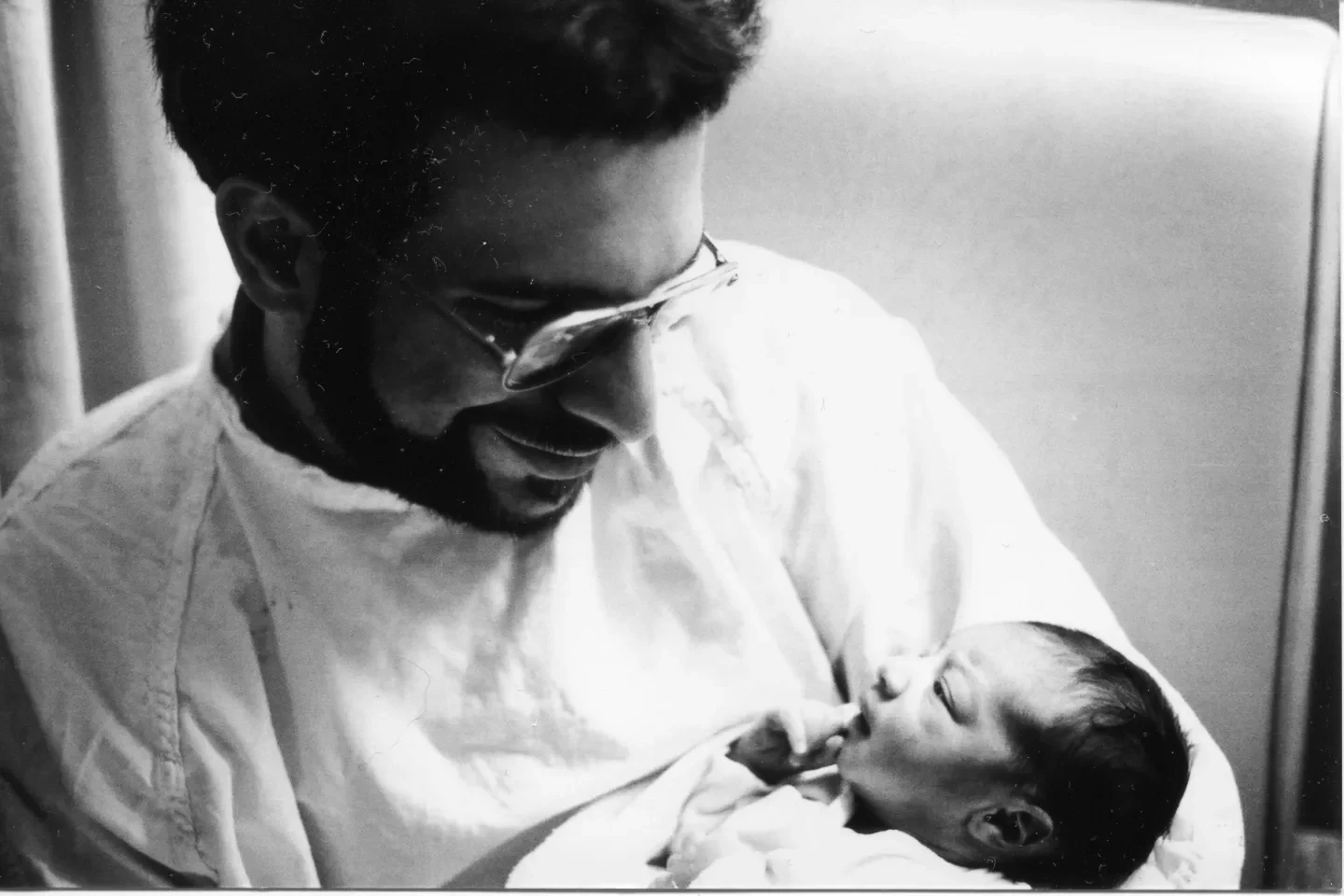
y son Tariq making eye contact at one day old

How Autism Teaches Us About Being Human

Robert Naseef April 28, 2017

On April 2, World Autism Awareness Day, I gave a TEDx talk at Arcadia University on the theme of “The Big Idea.” My title was “How autism teaches us about being human.” Looking forward to this day, I had written, memorized, planned, and rehearsed.

Nonetheless, as I began telling my story, I was momentarily flooded with emotion. The picture of me holding Tariq at 1 day old with him making eye contact, triggered something I hadn’t planned. It was this time of year in 1981 when my son, Tariq, stopped speaking and started pacing, spinning, and flapping. The words stuck in my throat…

Regaining my balance, I went on to a somewhat different talk than pre-planned. Upon reflection, I wish I had the presence of mind to say right them and there that grief has no schedule. Like autism it’s part of our human nature.

I hope you find my talk helpful and would love hearing your reactions.

Click to sign up for Dr. Naseef’s monthly email newsletter.

Comment

Journaling Your Way Through Stress

Robert Naseef April 9, 2017

“Support groups don’t seem to work for me.  I do get something out of them when I’m there, but day in and day out, sometimes it feels like more than I can bear.  Is there anything else that I can try?”

This is a question I commonly hear from parents of children with autism or other special needs.  Often we are told to take one day at a time, and that is a helpful concept when we are trying not to be overwhelmed about the future.  But what can you do when one day is just too long and too hard?  Try reaching for a pen and paper.  Keeping a diary, or “journaling”, can be an extremely effective tool for discovering our innermost thoughts and releasing tensions. Setting aside 10-15 minutes to put your thoughts into words may just help to reduce your stress or get its physical symptoms under control.

Many people believe that it is easier to hold in their feelings, but nothing could be further from the truth.  In ancient Greece, Hippocrates, the father of medicine, stressed that emotional factors could be a contributing cause in disease as well as a factor in recovery.  In more recent times, research psychologist James Pennebaker and others have found a mountain of evidence that demonstrates that disclosing our pain when we=re suffering through a major upheaval can greatly improve our physical and mental health.  Conversely, holding it in can lead to recurrent health problems as serious as colds, flu, high blood pressure, ulcers, and even cancer.

Having a child with a disability certainly qualifies as a “major upheaval.”  The inhibition of our upsetting thoughts and feelings is physical work, the burden of which can lead to long-term health problems.  People who can open up in a group generally report that they enjoy it and learn from it.  In addition, their health notably improves–which incidentally provides the scientific basis for the rapid increase of self-help groups for all sorts of problems.  But “one size does not fit all.”  Not everyone can open up in a group, and even for those who get great benefit, the group isn’t always there at the time you may need comfort and support.

According to Pennebaker in Opening Up: The Healing Power of Confiding in Others (New York: Avon, 1990), writing about our inner turmoil can also be therapeutic.  Writing helps us to organize and understand our thoughts and feelings.  Keeping a journal that we write in with some regularity can thus be extremely helpful for our physical and emotional well-being.  By translating the feelings about the events into words, we can gain perspective and understanding about ourselves and what has happened.    When we confront upsetting circumstances by talking or in writing, we are often relieved to discover or rediscover that we are not alone, and this helps us gain insight.  We can see ourselves as just ordinary people who happen to be going through a difficult ordeal, and this may be a great consolation.

On a practical note, don’t let journaling become a stressor in itself.  Writing as a method of emotional release should be done when you feel the urge. It can be daily, weekly, monthly, or just when you feel like it.  One technique is to try writing in response to a question.  Here’s a few to get you started:

  1. What’s been really hard about being a mother or a father today?

  2. What have I learned from this?

  3. What moment that gave me pleasure or satisfaction?

  4. What contributions have I made to my child and my family today?

  5. How do I feel about my life in general?

Another way to approach this is to complete a sentence stem.  Here are a few that I use in the workshops I present:

  1. The best thing about my child is…….

  2. The worst thing about my child is……

  3. A feeling or thought that I am embarrassed about is…..

  4. Something that made me proud lately happened when…..

  5. The worst thing about my spouse is……..

  6. The best thing about my spouse is……

  7. The nicest thing someone said to me lately was….

  8. I hope that……

  9. I grieve about my dream that will never be….

  10. 10.I dream a new dream that…..

  11. My child has taught me that…

  12. I am becoming a better person because…

Try to just let it flow. What comes out may surprise or enlighten you.  Often in a conversation the flow of the interaction will unleash thoughts we never knew we had.  Writing expressively can do the same thing.  Thoughts and feelings will emerge from your inner self.  The important thing is to look for meaning and growth.  Merely writing about the same painful things over and over will not bring healing.  Focus on thought as well as emotion in order to tap into your inner healing power.  Keep track of your growth or change as you write about your experiences.  Searching for new realizations and understandings will keep you on a path of healing.

Web sites about journaling can help you get started.  http://healing.about.com/cs/selfactualization/a/journaling.htm , for example, offers techniques, and tips.  If you don’t take to journaling, or if you tend to get more upset instead of less, then try another approach:  go to a support group, talk to a fellow parent or close friend, read a good book on the subject, or seek assistance.  Sometimes a mental health professional (a social worker, psychologist, or psychiatrist) or a member of the clergy can be helpful to you in understanding your needs.  Some people are reluctant to take this step, but when it becomes hard to function from day to day, this kind of help may be in order.  Just as you would consult a specialist for your child if necessary, do likewise for yourself.  It is intelligent and wise to acknowledge your own needs as well as your child’s.  You deserve it.

Click to sign up for Dr. Naseef’s monthly email newsletter.

Comment

Making a Difference with Autism: Lessons in Acceptance

Robert Naseef October 24, 2016

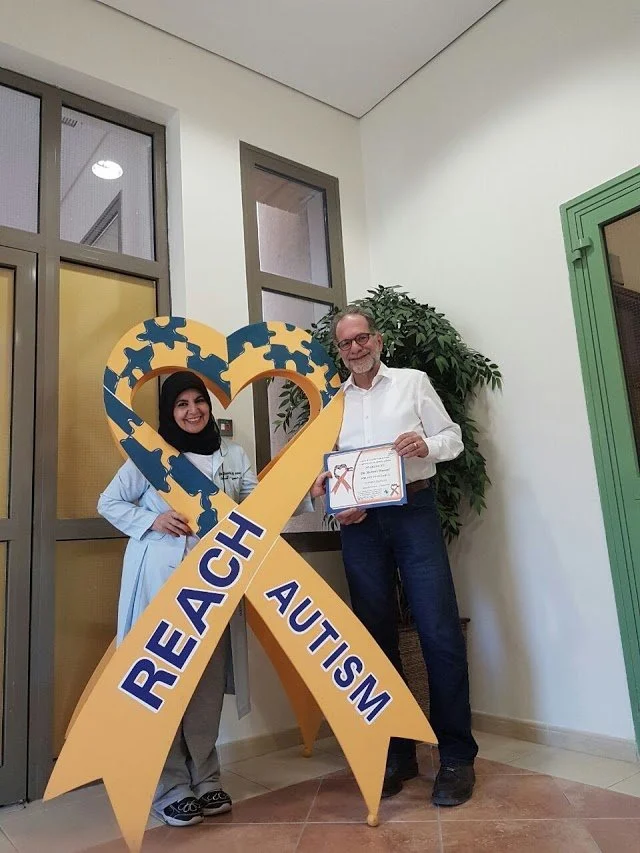
Logo of the Kuwait Centre for Autism

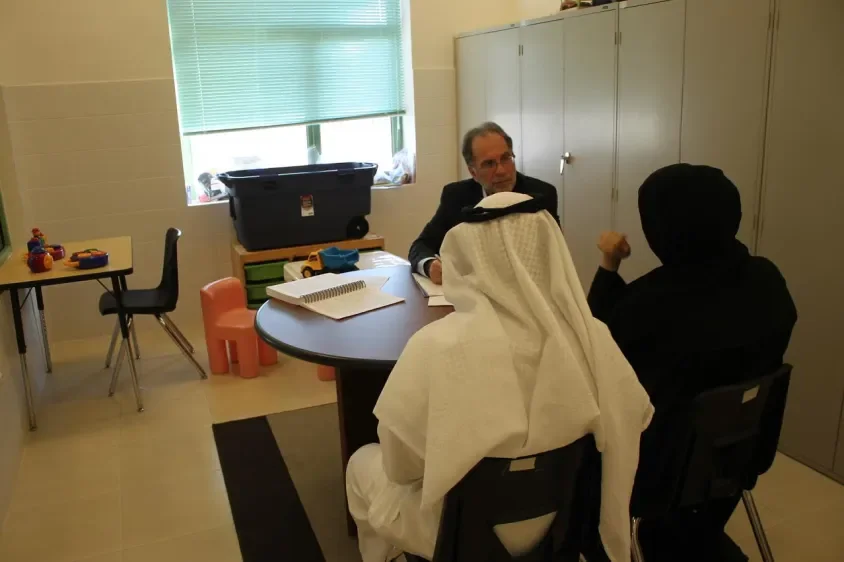
Hearing that autism cannot be cured is a bomb for families at the moment of diagnosis. On the other hand, learning that we can make a difference is the first step on the path to acceptance. This message is crystallized in the logo of the Kuwait Center for Autism which I visit twice a year doing consultations, evaluations, and second opinions for families. This center was founded in 1994 by Dr. Samira Al Saad, to meet the needs of her own daughter and others in the Arab world.

Mothers and fathers there are asking the same questions I anguished about over 30 years ago when my son was diagnosed with autism.

Questions like:

  • Is there a cure?

  • Will my child ever talk?

  • What level is it?

  • Did vaccines cause this?

  • What about special diets?

  • Can medication help?

  • Can my child have a relationship?

  • Will my child ever be independent?

  • What’s the risk if we have another child?

  • Finally, how can we help our child?

As I listen, inevitably I relive parts of my own journey living, learning, and accepting day by day the differences that autism has made for my family. Many people in Kuwait speak English; others come with a family member or friend to translate; all speak from the heart. Like other human experiences, there are no borders. While we have cultural and language differences, we have far more in common than different. As one father of a five-year-old boy told me, “We are still grieving, but we must take action.”

These are questions I ask:

  • What does your child like to do?

  • What’s the best thing about your child?

  • What do you enjoy doing with your child?

  • When are things going pretty smoothly

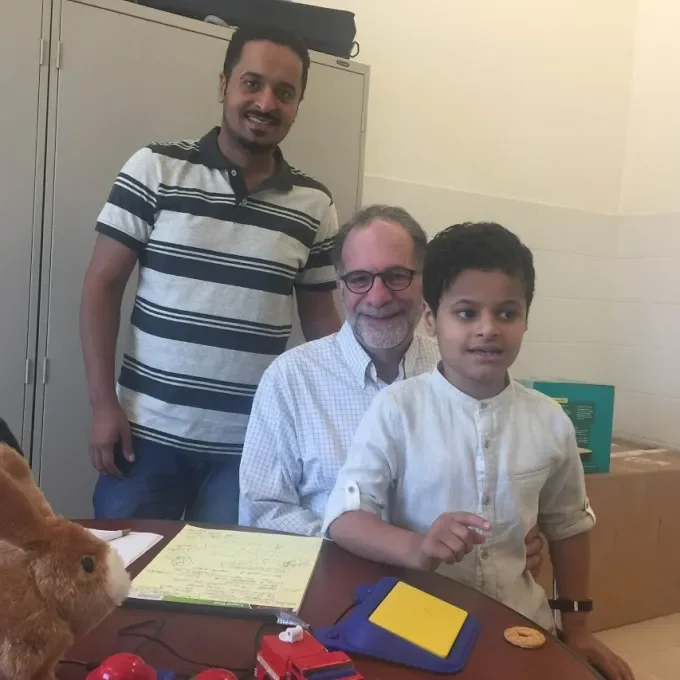
This father brought his family from Bahrain for a consultation.

The discussion of these questions points the road to acceptance by helping parents to think beyond the diagnosis. Too much emphasis on trying to change or fix the child spoils the loving which is at the core of the relationship between parent and child. Children growing up with autism need positive, energetic parents enjoying and loving them as they are and simultaneously cheering them on for every little achievement. Scientific evidence points to the trend that individuals with autism, just like typically developing individuals, can learn and progress through their lifetime. Early diagnosis, intensive evidence-based services, and parent involvement are all essential.

Autism Speaks, the world’s largest autism organization has finally come to the point of view that curing autism is not as important as acceptance. As self-advocate and Autism Speaks board member Stephen Shore recently stated in the Huffington Post, “the organization grew to believe that autism is something to be worked with for promoting fulfilling and productive lives of people on the spectrum…Autism is here to stay and may be considered a part of the diversity of the human gene pool.”  Of course, breakthroughs in research are  more than welcome, especially since medical complications and comorbidities can severely limit some individuals who deserve and need more supports through their life time.

Saying good bye,”ma’al-salamah,” to Dr. Samira at the end of my visit.

It’s been an honor and a privilege to listen to the challenges facing families in Kuwait and to help them find hope through increased understanding of autism alongside love and acceptance. Listening I continually find a deepened understanding of our shared humanity. Remembering that we are hardwired to respond with compassion to each other’s joys and sorrows, the growing connectedness in the world has the potential to tear down barriers and unite us.

Click to sign up for Dr. Naseef’s monthly email newsletter.

4 responses to “Making a difference with autism: Lessons in acceptance”

  1. dkauer

    Oct 26, 2016 at 12:55 pm

    Edit


    Did I read this correctly? Autism Speaks a very well funded and well respected autism group that has until more recently directed their funds for researching a “cure” for Autism now embraces Autism and people with Autism in itself as a human condition like “Autism lives matter” and they are now promoting fulfilling and productive lives for our loved ones living on the spectrum? I am so grateful for powerful people who are willing to change and do what is good for children (adult) like mine and I am most grateful for advocates Dr. Robert Naseef who has quietly worked in the trenches with families like mine in the Philadelphia area until more recently when other countries in other parts of the world with families like mine started tugging on his heart and needing his help. I honor Dr. Naseef and Dr. Shore for their patience and love for all of us who have been affected and afflicted. Finally I would welcome a “cure” but to focus on these last 20 plus years waiting for a cure would have left me bitter and angry. Instead I am so grateful for my son and grateful for the help I get when challenging situations present themselves.

    Like

    Reply

  2. piwright04gmailcom

    Oct 26, 2016 at 2:09 pm

    Edit


    Great post-Robert. As a professional, I have to walk alongside families on this journey, without your insight as both a professional and parent. These families are so fortunate to have you providing professional support with an incredibly personal perspective.

    Liked by 1 person

    Reply

  3. denisepowersfabianD

    Oct 27, 2016 at 1:33 am

    Edit


    As a social worker with children/families experiencing chronic/complex disabilities who also wears the parent role of a 28 year old profound autism, I surely resonate with your reliving the journey, continual learning and accepting. I have always advocated that our focus should be on applied research. I remember a self-advocate with Asperger’s stating in a presentation,”Do you know what it does to your psyche to constantly be told your natural way of thinking or doing is always wrong?” I cannot emphasize also the importance of controlling/modifying environments for those on the autism spectrum. Bob, you are a hero to both me and my Caleb.

    Like

    Reply


Comment
  • Dr. Naseef's Blog
  • Older
  • Newer
facebook youtube instagram

Alternative Choices in Psychotherapy and Autism Evaluation

Philadelphia, PA

Alternative Choices | 319 Vine Street #110, Philadelphia, PA 19106, USA

facebook youtube instagram