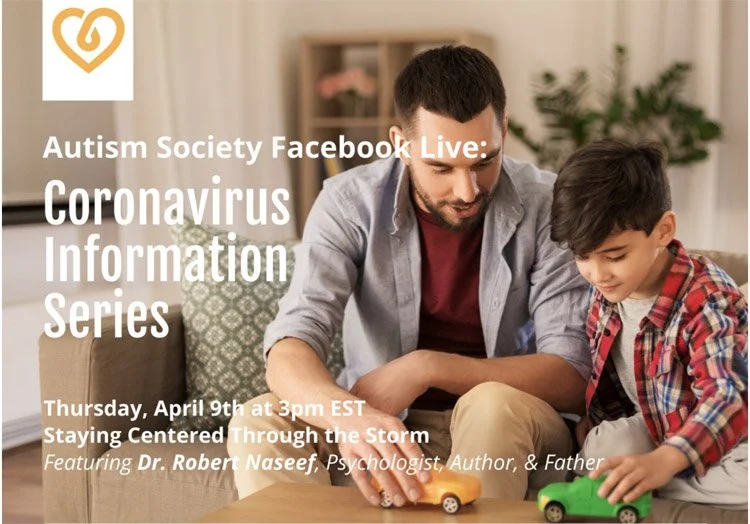
COVID-19 presents huge challenges and added layers of vulnerability for children and adults with autism and other special needs and their families. Some experience more adversity than others because of race and social class. However, it is my belief that neurodiversity has some built-in advantages for families with neurodiverse members. It is in that sense that we may be stronger than we think. On April 9, I spoke about this on a Facebook Live event for the Autism Society of America. Here are the highlights of that conversation.
We know the emotional ups and downs of life with neurological differences. Some children and adults find distance learning and working from home to be easier than predicted because of less pressure to socialize. Others are lost without their routines. Far too many are also devoid of access to the technology that helps folks to function under these conditions.
Children and families with neurodiverse members are resilient. It's been baked into our very beings by the challenges we have faced over and over. It’s been a process in which we’ve learned lots of coping skills that help us to face adversity and bounce back. Let's reflect on the challenges our families understand very well and take a deeper look.
We know how to face loneliness and alienation. We have a lot of practice at from the moment of diagnosis for parents, and often from playground experiences for children and teens. Self-isolation and sheltering-in-place are not totally new for us.
We have to be very careful as parents because our children often don't understand danger, so we have lots of practice at being alert to danger. Now we all need to be careful about everything we touch, wash our hands frequently, and avoid touching our faces. Families of children with rare diseases and others who are immune compromised have lots of experience with this. Reinforcing safety and health with our children is a constant.
We have learned to adjust expectations, and we have practiced celebrating whatever we can do. Right now, instead of focusing on what little we can do as we shelter-in-place, we focus on all of the things we can still do.
We have learned to face our fears and regulate our emotions again with lots of practice. Now we need to deal with our emotions while also dealing with the fear of being infected with COVID-19. It’s harder, but it’s a struggle we know well.
We have learned that we do not have control, and we have learned and practice acceptance which includes working hard to do our best with what's in our control. Right now, that means staying safe and learning how to live during this time
We do better with schedules and routines. We have a lot of practice at that. Now we have to make new schedules and new routines to meet the present challenges. The transition to new routines may be hard, but lots of us are good at creating routines and sticking to them.
We have also faced setbacks, and we have practice at persisting and moving forward despite our disappointments. Science tells us that neurodiverse children and adults can continue to learn and develop through the lifespan. We will persist and move forward.
We have learned to go easy on ourselves because this is another issue we cannot fix with hard work, but we must step up and work hard.
People with autism have been saying for some time, that things that would benefit autistic people at home, work and school, would also benefit everyone else. Children need routines in lives that have been disrupted; varying levels of routine helps all of us. We need safety and predictability. We can and must meet the challenges of COVID-19. We are living through a period of both danger and opportun