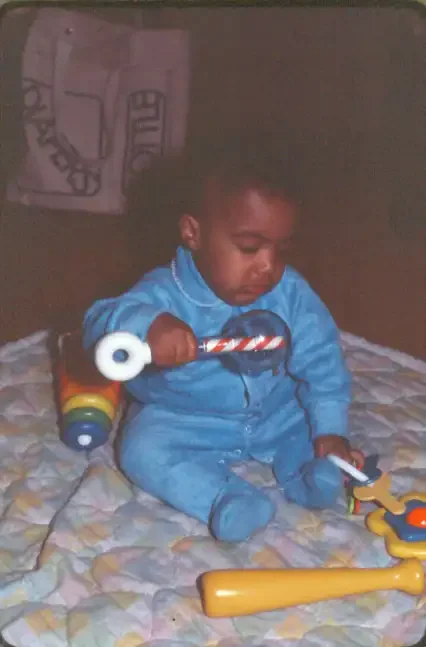
When my son was born in November 1979, I jumped for joy. When he was diagnosed with autism 5 years later, I thought my head was going to explode. I couldn’t get the word autism out of my mouth for months.
In general, it is harder for men to talk about problems than women. Women seem able to talk about problems and find comfort without needing to fix them. Of course, women do want to fix problems. As for men, when we can’t fix something, we don’t want to talk about it—and this is a factor in male depression and a problem in relationships.
As Nelson Mandela wrote, “A boy may cry; a man conceals his pain.” Boys are still taught at a young age to feel ashamed of their tender feelings, especially their gentleness, caring, vulnerability, and fear. What is acceptable is showing their tough, action-oriented side along with physical strength. All emotions save anger are to be hidden even from themselves. So what’s a man to do when his child is diagnosed? How do you handle that choked up feeling? Men tend to withdraw and cry on the inside. On the outside, we may be grumpy and irritable, but on the inside, we are hurting. This is part of the secret life of men raising a child with autism.
I wanted to be a better version of my father when I held my son Tariq for the first time. I looked at my son and saw myself, only better. His diagnosis of classic autism shattered that reflected vision, like a broken mirror. There were no words.
Asking a male how he feels usually evokes an automatic “I don’t know.” What helps men express themselves when experiencing a broken mirror with an autistic child, 80% of whom are boys? Try “Guy talk” such as:
• What’s it like for you? (Curiosity works better than empathy)
• Tell me more.
• I need to know to be closer to you as your / wife/ friend/ brother, etc.
• Your child needs you.
• Let’s figure out a plan.
Men respond to making an action plan.This is a positive part of the male code and not outmoded. Our families need us to be present, and as fathers, we are yearning for connection but lost about where to start with a child who is so different.
To find clues, I ask men about their warmest memories of their fathers. Almost without exception they recount doing things with their dads such as taking a ride or a walk, building or fixing stuff, going on errands, cleaning up the yard, watching TV, or throwing a ball around.