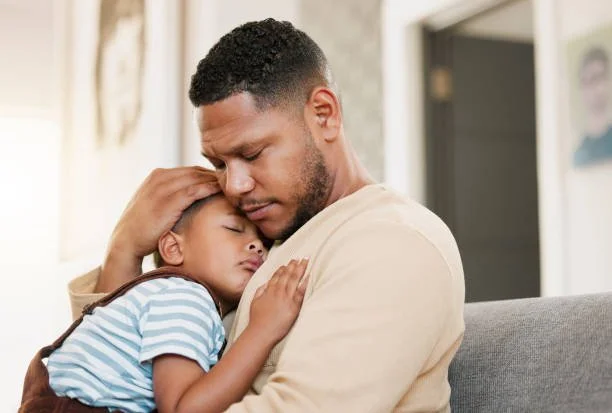
March 24, 2011. Cincinnati. Ten fathers of children with developmental disabilities and 2 male behavior specialists sat around a table on Friday evening waiting to hear what I had to say about being the father of an adult child with autism. They were wondering out loud what it would be like. Only a few had ever been to such a gathering. 10 out of 10 had children on the autism spectrum ranging in age from 6 to 24. Before the discussion began I told them that nothing they said would be wrong. They seemed relieved; then I invited them to share their experiences.
No accident that “When I hug my son, he doesn’t hug me back” resonated in the hearts of these men. Autism at its core is a social disorder of relating and communicating. Mothers have the same heartbreaking moments. It’s just that fathers are far less likely to verbalize their experience.
It’s a stereotype that children and adults with autism don’t connect. But they are not easy to bond with. Another father pointed out that his 7 year old son connects in some ways and not others. This was a rare opportunity for fathers to bond with each other and experience a sense of fellowship.
It felt good to be able to create that space for men by sharing bits of my own journey. Some of their children are nonverbal, some speak slowly, and others can’t stop talking. As one father mentioned his son who is slow to speak forces others to slow down. Because our children connect and speak differently, we have to pay attention closely. They actually engage us in a different way.
The men talked about their struggles and what they are learning. For example, the type of discipline many of their fathers used with them just didn’t work. Some spoke of “belt lessons” they received, and others described the shame they felt when not meeting their fathers’ expectations.