Alternative Choices in Psychotherapy and Autism Evaluation

Philadelphia, PA
  • Home
  • Autism Diagnosis
  • Who We Are
    • Robert Naseef, Ph.D
    • Cindy Ariel, Ph.D
    • Robert Sher, Ph.D
  • Dr. Naseef's Blog
  • Public Speaking
    • About Dr. Robert Naseef
    • Keynote Topics
    • Previous Speaking Engagements
    • Endorsements
    • Videos
    • Contact
  • Our 4 Books
  • Contact
  • Home
  • Autism Diagnosis
    • Robert Naseef, Ph.D
    • Cindy Ariel, Ph.D
    • Robert Sher, Ph.D
  • Dr. Naseef's Blog
    • About Dr. Robert Naseef
    • Keynote Topics
    • Previous Speaking Engagements
    • Endorsements
    • Videos
    • Contact
  • Our 4 Books
  • Contact

Dr. Naseef's Blog

Robert Naseef's blog provides insightful views on neurodevelopmental disorders, especially Autism Spectrum Disorders. Combining personal experience and professional insight, he explores challenges faced by individuals on the spectrum and their families. The blog highlights understanding, acceptance, and practical support, serving as a valuable resource for caregivers and professionals seeking deeper awareness and effective strategies.

  • All
  • Acceptance
  • ADHD
  • AuDHD
  • autism
  • autism parents
  • autistic adults
  • autistic children
  • Autistic children
  • civil rights
  • Diagnosis
  • disability justice
  • disability rights
  • Fathers
  • medicaid
  • racism
  • Resilience
  • scientific integrity
  • social justice

From Appreciation to Conversation

Robert Naseef March 12, 2013

November 3, 2012, the Lancaster County Autism Mommies, The Tommy Foundation, and Autism Spectrum Connections sponsored a parent workshop which I facilitated about taking care of your marriage while raising a child on the autism spectrum. Everyone present, myself included, learned how appreciating your partner can lead to necessary conversations that have been difficult to impossible to have.

The day began with men and women attending two separate workshops. I facilitated a fathers group where men opened up about their shattered visions after the autism diagnosis. The men also discussed why it would be hard to be a mother raising a child with autism. Simultaneously, psychotherapist Roane Funk facilitated a mother’s group about finding the balance from hope to acceptance. The women had a conversation about why it would be hard to be a father.

The initial workshops warmed up the participants for what was to come.  After taking a break, both groups came together as couples in the workshop I then facilitated.  The men’s group led off by sharing why they thought it would be hard to be a mom while the women listened. The women took their turn after the men.

Then I asked everyone present to share what they appreciated about their partner. For example, women heard men who appreciated their leadership in caring for the child they both love dearly. Men also showed appreciation for how hard it is for a mother to take a break. Men heard how women understood their pride was wounded especially when they could not fix or protect their families. Men and women alike talked about how there was less closeness between them while living in a crisis mode. There was incredible tenderness in the room as couples came together for a group photo.

A week later I talked to Shelley Koch, the president and co-founder of the organization. The Lancaster County Autism Mommies is concerned about taking care of the whole family while raising a child on the spectrum.  This includes taking care of the couple and the typically developing siblings. Shelley observed how the experience people had in the workshop inspired conversations later.

According to Shelley, when you hear that your partner understands, you are willing to be more vulnerable. This openness makes it possible to engage in the kind of conversations that can solve prickly problems and restore some of the closeness lost while living in a crisis mode. Our morning together was the beginning. Of course, it is up to each couple to find the support they need to take care of their marriage and family.

Comment

Just Appreciate Me

Robert Naseef March 12, 2013

They’ve been standing on the brink of divorce. For seven years, they had devoted themselves tirelessly to their son with autism. They were worn out; all the joy had left their lives despite their son having made dramatic progress. Their boy was included in a regular class with supports; something they never dreamed of.

Their marriage was another story. He thought she no longer cared about their marriage. She thought he never noticed and appreciated what she was doing for their children. They both agreed that their only interaction was about their disagreements. They decided to take a step back from ending their marriage and came back to my office where four years ago they had recovered from their initial devastating response to their son’s diagnosis on the autism spectrum.

The tension they have been living with had become unbearable. They were tired and irritable with each other, but they said that they still loved each other. They decided to give it another shot. They had experienced many good years together, and they wanted to believe they could be happy with each other again. They wanted their children to live under the same roof with both of them, but they couldn’t go on being miserable with each other.

With some guidance and a neutral mediator, they began talking to each other more kindly. It made a difference. They began sharing responsibilities, and they were less volatile with each other. Nonetheless, Harry couldn’t understand why Marianne was not returning his affection. Despite his efforts to repair the marriage, she just wasn’t feeling it.

About a month ago, Marianne’s aunt went into hospice care, so she took a three-day weekend to go from Philadelphia to Chicago to be there and say goodbye. Harry stepped up and took their boy to his weekly speech therapy expecting to return to his office after the session. Unfortunately, there was an emergency in the clinic which took time to resolve, and therefore Harry had to miss an important meeting at work. Filling in for his wife, full-time for three days seemed to lead to an epiphany.

When Marianne returned and they sat with me the next week for their couples’ session, Harry spoke openly and honestly about how frustrated he had been taking care of everything by himself. He had gotten a glimpse of what his wife handles day in and day out in addition to her demanding job. He praised everything she had been doing for years including tolerating his irritability.

Marianne breathed a sigh of relief. She wiped a tear from her eye, and then put her hand in his. “I just wanted to be appreciated,” she told him, “maybe now we can be closer again. I sure hope so.” There was more work to be done in repairing their relationship, but they had turned the corner and began looking forward to the first time in years.

Comment

Denial Versus Get Out of My Way: A Couple's Struggle

Robert Naseef October 15, 2012

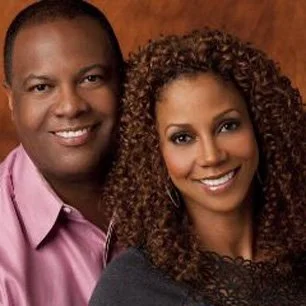
On October 11, 2012, at the Autism New Jersey Annual Conference, Rodney Peete spoke candidly to 1000 of us present about how he was in denial after the diagnosis of his son RJ with autism.  His wife, Holly Robinson Peete, quickly countered by saying “I was on Get Out of My Way Avenue!”  She didn’t have time to wait for him.  Having a child is special needs clearly impacted them just like many other couples.  It was inspiring to hear them talk about working through this and saving their marriage.  It was also refreshing to hear a man talking about his vulnerable side.

Rodney Peete played the quarterback position in professional football for 16 years. Holly Robinson Peete has been in show business her whole life.  Her father was the original Gordon on Sesame Street. While Rodney traveled around the country playing professional football, Holly dealt with the struggle to learn everything she could about autism while getting the best services possible for their boy.  Although it took him longer, Rodney was able to enter his son’s world once he gave up his dreams of taking his son into the locker room after games.

When RJ was nine years old and included in a fourth-grade classroom, Holly and Rodney went to speak to the class about autism so that his classmates could understand RJ better. Rodney commented that his knees were shaking, and he was never more scared in his life. This came from a man who was used to playing in football stadiums in front of 100,000 people with 300-pound defensive linemen trying to hit him as hard as they could.

Admitting our vulnerable feelings is crucial for all men, especially fathers of children with autism. Coming to grips with these difficulties helps us to “get in the game” and do something positive for our children and families.  Rodney had to rethink what it meant to be a father to his boy since he could not duplicate the fond memories of what his father did with him.  Indeed this is the journey of all parents, but autism makes it more complicated.

Rodney Peete’s book, Not My Boy: A Dad’s Journey with Autism, tells the down to earth story of his struggle to accept his boy’s autism.  RJ’s sister, Ryan Elizabeth, along with her mother Holly Robinson Peete wrote the children’s book, My Brother Charlie.  Through their books and the HollyRod Foundation, the combination of a strong passionate woman and a man who can voice his vulnerabilities make them a role model for couples.

Comment

Revisiting Masculinity: The father’s journey with autism

Robert Naseef June 11, 2012

When my son was born in November 1979, I jumped for joy.  When he was diagnosed with autism 5 years later, I thought my head was going to explode.  I couldn’t get the word autism out of my mouth for months.

In general, it is harder for men to talk about problems than women. Women seem able to talk about problems and find comfort without needing to fix them. Of course, women do want to fix problems. As for men, when we can’t fix something, we don’t want to talk about it—and this is a factor in male depression and a problem in relationships.

As Nelson Mandela wrote, “A boy may cry; a man conceals his pain.”   Boys are still taught at a young age to feel ashamed of their tender feelings, especially their gentleness, caring, vulnerability, and fear.  What is acceptable is showing their tough, action-oriented side along with physical strength.  All emotions save anger are to be hidden even from themselves. So what’s a man to do when his child is diagnosed?   How do you handle that choked up feeling?  Men tend to withdraw and cry on the inside.  On the outside, we may be grumpy and irritable, but on the inside, we are hurting. This is part of the secret life of men raising a child with autism.

I wanted to be a better version of my father when I held my son Tariq for the first time.  I looked at my son and saw myself, only better.  His diagnosis of classic autism shattered that reflected vision, like a broken mirror.  There were no words.

Asking a male how he feels usually evokes an automatic “I don’t know.” What helps men express themselves when experiencing a broken mirror with an autistic child, 80% of whom are boys?  Try “Guy talk” such as:

•           What’s it like for you? (Curiosity works better than empathy)

•           Tell me more.

•           I need to know to be closer to you as your / wife/ friend/ brother, etc.

•           Your child needs you.

•           Let’s figure out a plan.

Men respond to making an action plan.This is a positive part of the male code and not outmoded. Our families need us to be present, and as fathers, we are yearning for connection but lost about where to start with a child who is so different.

To find clues, I ask men about their warmest memories of their fathers.  Almost without exception they recount doing things with their dads such as taking a ride or a walk, building or fixing stuff, going on errands, cleaning up the yard, watching TV, or throwing a ball around.

Comment

Mother Day Hints for Men

Robert Naseef May 8, 2012

When my son was born in November 1979, I jumped for joy.  When he was diagnosed with autism 4 years later, I thought my head was going to explode.  I couldn’t get the word autism out of my mouth for months.

In general, it is harder for men to talk about problems than women. Women seem able to talk about problems and find comfort without needing to fix them. Of course, women do want to fix problems. As for men, when we can’t fix something, we don’t want to talk about it—and this is a factor in male depression and a problem in relationships.

As Nelson Mandela wrote, “A boy may cry; a man conceals his pain.”   Boys are still taught at a young age to feel ashamed of their tender feelings, especially their gentleness, caring, vulnerability, and fear.  What is acceptable is showing their tough, action-oriented side along with physical strength.  All emotions save anger are to be hidden even from themselves. So what’s a man to do when his child is diagnosed?   How do you handle that choked up feeling?  Men tend to withdraw and cry on the inside.  On the outside, we may be grumpy and irritable, but on the inside, we are hurting. This is part of the secret life of men raising a child with autism.

I wanted to be a better version of my father when I held my son Tariq for the first time.  I looked at my son and saw myself, only better.  His diagnosis of classic autism shattered that reflected vision, like a broken mirror.  There were no words.

Asking a male how he feels usually evokes an automatic “I don’t know.” What helps men express themselves when experiencing a broken mirror with an autistic child, 80% of whom are boys?  Try “Guy talk” such as:

•           What’s it like for you? (Curiosity works better than empathy)

•           Tell me more.

•           I need to know to be closer to you as your / wife/ friend/ brother, etc.

•           Your child needs you.

•           Let’s figure out a plan.

Men respond to making an action plan.This is a positive part of the male code and not outmoded. Our families need us to be present, and as fathers, we are yearning for connection but lost about where to start with a child who is so different.

To find clues, I ask men about their warmest memories of their fathers.  Almost without exception they recount doing things with their dads such as taking a ride or a walk, building or fixing stuff, going on errands, cleaning up the yard, watching TV, or throwing a ball around.

Comment
  • Dr. Naseef's Blog
  • Older
  • Newer
facebook youtube instagram

Alternative Choices in Psychotherapy and Autism Evaluation

Philadelphia, PA

Alternative Choices | 319 Vine Street #110, Philadelphia, PA 19106, USA

facebook youtube instagram