Alternative Choices in Psychotherapy and Autism Evaluation

Philadelphia, PA
  • Home
  • Autism Diagnosis
  • Who We Are
    • Robert Naseef, Ph.D
    • Cindy Ariel, Ph.D
    • Robert Sher, Ph.D
  • Dr. Naseef's Blog
  • Public Speaking
    • About Dr. Robert Naseef
    • Keynote Topics
    • Previous Speaking Engagements
    • Endorsements
    • Videos
    • Contact
  • Our 4 Books
  • Contact
  • Home
  • Autism Diagnosis
    • Robert Naseef, Ph.D
    • Cindy Ariel, Ph.D
    • Robert Sher, Ph.D
  • Dr. Naseef's Blog
    • About Dr. Robert Naseef
    • Keynote Topics
    • Previous Speaking Engagements
    • Endorsements
    • Videos
    • Contact
  • Our 4 Books
  • Contact

Dr. Naseef's Blog

Robert Naseef's blog provides insightful views on neurodevelopmental disorders, especially Autism Spectrum Disorders. Combining personal experience and professional insight, he explores challenges faced by individuals on the spectrum and their families. The blog highlights understanding, acceptance, and practical support, serving as a valuable resource for caregivers and professionals seeking deeper awareness and effective strategies.

  • All
  • Acceptance
  • ADHD
  • AuDHD
  • autism
  • autism parents
  • autistic adults
  • autistic children
  • Autistic children
  • civil rights
  • Diagnosis
  • disability justice
  • disability rights
  • Fathers
  • medicaid
  • racism
  • Resilience
  • scientific integrity
  • social justice

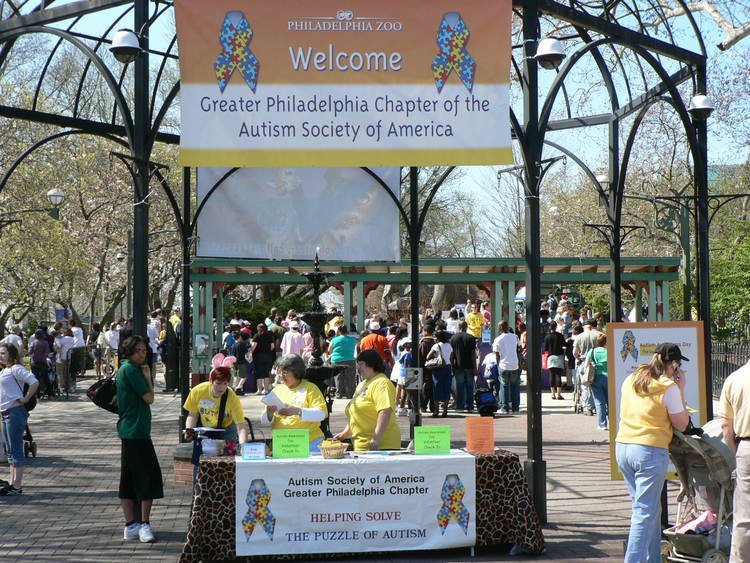
Autism Awareness and Acceptance

Robert Naseef April 1, 2013

On Monday, March 25, 2013, I was part of “Voices in the Family” a public radio show with host Dan Gottlieb. Eustacia Cutler also lent her voice to the discussion. Eustacia is the mother of Temple Grandin, a well-known adult with autism, an author and speaker. Dan has been living with quadriplegia for 33 years, and I have a 33-year-old adult son with autism.  We had a wide-ranging and soul-searching conversation discussing the worries and the heartaches as well as the extraordinary lessons that children with autism teach us about acceptance and about what it means to be family. The podcast of that discussion is now available through the WHYY website.


What does it mean to be aware of and to accept autism?  Last March 1 in 88 children in the U. S. were diagnosed with autism. Just last week the federal government again revised the prevalence of autism upward, saying the developmental disorder now affects 1 in 50 children. All of these children and their families are profoundly affected—their parents, their brothers and sisters, their grandparents, their friends, and the larger community. How do we deal with awareness or acceptance of an issue that may not change or only changes slowly?

While the interventions for autism understandably focus on the symptoms, services tend to ignore the big picture of the family which includes parents and siblings, and the family’s overall health. Each child with autism lives with a family, and that family lives with each child. While the symptoms change and often lessen over time, they don’t go away, so families must learn to live with these problems long term.

Eustacia Cutler, the author of A Thorn in My Pocket, talked about what it was like to raise her daughter in the 50s when autism was not part of the national conversation. She explained how she was thrown off by the lack of connection between herself and her daughter. In her words, “I forgot who I thought I was when I finally faced it. A baby needs a mother in order to know that she is a baby, and a mother needs a baby to know she’s a mother.” The loss of connection impacts the entire family—not just the child with autism.  We must go on, but how?

What does it mean to accept autism, or any incurable condition for that matter? How do you avoid getting stuck in it? For starters acceptance does not mean giving up. It does not mean resignation. It does not mean liking the situation you’re in. Acceptance does mean the responsibility to do our best, facing each day with courage, and changing what is changeable. We can rebuild and nourish the bonds within our families noticing what is right and what is working at any given moment. It means getting together whether on the floor or at the table and enjoying each other’s company and interactions.

Ultimately acceptance is not about making peace or war with autism. Sometimes we may be at peace, and in the blink of an eye we may feel at war with a situation or problem. Learning to look into and face your specific circumstances will help calm any storm of thoughts, emotions, and sensations.  Then we can see our options, and make a reasonable choice. Thus acceptance involves holding everything about our lives gently with balance and a measure of serenity. The love we give to a family member with autism and the love we get back can indeed ground us to the earth and all humanity.

At the end of the show, Dan Gottlieb spoke about “Zorba the Greek” who used  the phrase “full catastrophe” to describe the wide spectrum of life—all the joys,  sorrows, tragedies, and possibilities that open as we live. This complexity and fullness doesn’t take years to experience.  When we learn to pay attention to what is going on, awareness of autism and its impact on us and our family can occur in days, hours, or even minutes. We can be angry, relieved, sad, hopeful, ashamed, scared, and peaceful before we even manage to get dressed and have breakfast in the morning.

What I’ve learned and what I see families learning on their way to awareness and even acceptance is to respect the diversity of viewpoints they may hold.  We  may each have a unique point of view, and healthy families learn to honor each member individually. Awareness includes the understanding that everyone is not seeing and feeling the same thing at the same time. Our perspectives are different, but they do not have to be the root of conflict and struggle; they can form the strong base of acceptance and family bonds.

Tense uncomfortable feelings among family members often come from longing for things to be different from how they actually are and sometimes even blaming each other for that reality. Most likely we are all doing our best under trying circumstances. Giving everyone the benefit of that doubt, including the family member with autism, that’s acceptance in the family.

Comment

Will these behaviors ever stop? Getting the big picture of behavior and autism

Robert Naseef March 14, 2013

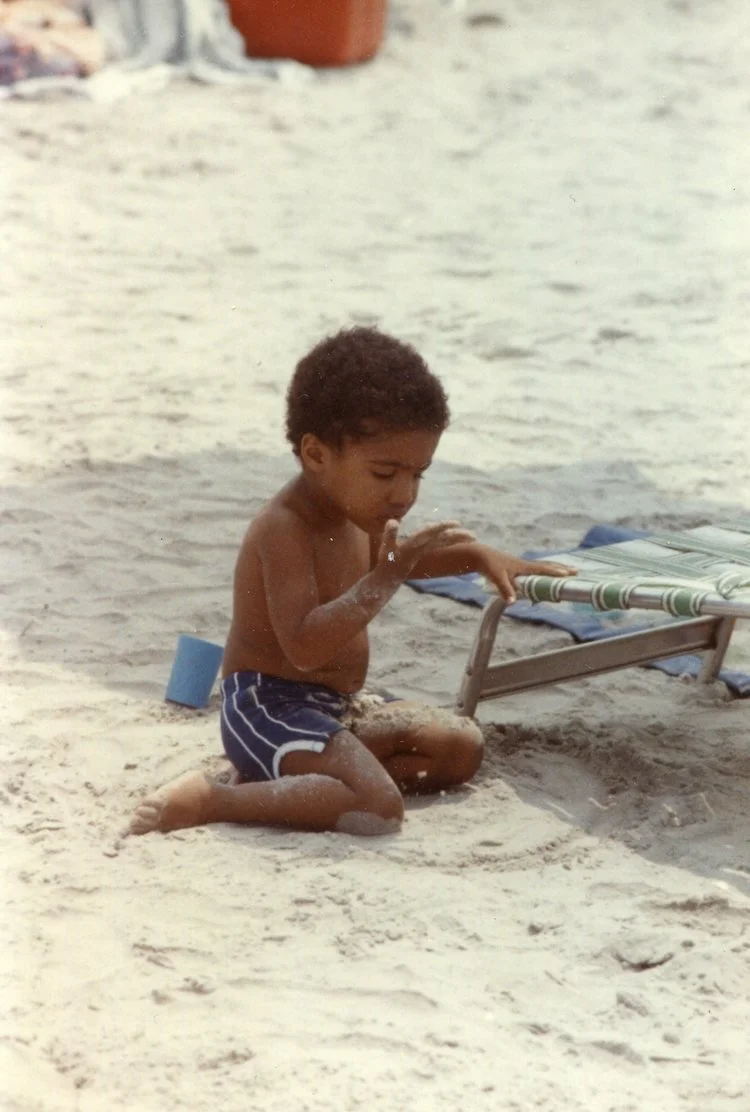
Tariq timming with the sand.

My head felt like it was going to explode when my son was diagnosed with autism in the mid-1980s. The diagnosis explained why he was flapping and spinning, but the “A” word stuck in my throat. Some parents, mostly mothers, have told me they were relieved when they finally received an official diagnosis because they knew something was wrong. Regardless of where one fits on the spectrum of reactions, the mind goes fast forward to the future and can’t help wondering what will happen:


  • How well will my child be able to communicate

  • Will these behaviors ever go away?

  • What will happen when we are gone?

  • Will she live independently?

  • Can he have an intimate relationship

Since autism is invisible and diagnosed through behavioral observations, it is natural to focus on behavior. It’s natural to imagine that if we can make the behavior go away or at least minimize it, then a child may recover. Some of the behaviors of our children on the autism spectrum can also be so disruptive that this becomes our entire family focus. This article will attempt to provide a perspective on these questions which trouble most parents.

Initially most autism treatment focuses on reducing problem behaviors. Our children need to learn adaptive behaviors to be accepted by others and to bond with their families.   The positive behavior supports approach helps parents and professionals address issues in a relatively new way. Instead of using traditional rewards and punishments, positive behavior supports assumes that all behavior is communication. Parents, teachers, and therapists collaborate to determine what the child is attempting to communicate and teach skills and alternative behaviors to meet the child’s needs.

What we know from recent research

Children with autism grow and mature as we all do; the symptoms may change but rarely disappear completely.  Recent research from Deborah Fein and colleagues (2013) shows that a small percentage of children diagnosed with autism does move off the spectrum.  According to the researchers, these children learned to communicate and socialize much like their typically developing peers, but they remained mildly affected by conditions, such as anxiety, depression, or impulsivity, which slightly affected their social functioning. The children who lost their diagnosis had milder symptoms in early childhood, learned to process faces through intensive intervention, and had fewer self-stimulatory or repetitive behaviors.

Seltzer and colleagues (2000) found a pattern of change from childhood to adolescence and adulthood. 82% improved in communication and social interaction, and 55% showed less repetitive behaviors. These researchers concluded that the symptoms of autism lesson in severity over time and that the best outcomes occur for those with higher IQ scores and better language skills. Overall this shows compelling evidence that the troubling behaviors parents struggle with are likely to change over time.  These research findings are cause for optimism if supported by adequate services in adolescence and adulthood.

Another team of researchers, Taylor and Seltzer (2010) found overall improvement in autism symptoms and internalized behaviors in young people over a 10 year period. Rates of improvement slowed after leaving school though improvements did seem to continue, just not as much or as quickly. By age 21, young people with autism who do not have an intellectual disability stop receiving services. After that point in time, these individuals improved at a slower rate than individuals with intellectual disability who still had services.  So given what we know today about how children with autism grow and develop, with adequate resources and support, it is realistic to expect progress and lessening behavioral challenges.

Surviving and Thriving

In the meantime, while we wait for the hoped for change, how do we live with the uncertainty of what the future holds for family and child? How do we handle the next tantrum or meltdown? What about the struggle for services? Here’s the approach that I have developed for myself and that I teach families through my writing, speaking, and counseling:

Like the weather, your unpleasant feelings will pass.

Sometimes it may seem that no progress is being made; the child may take 2 steps forward, 1 step back. Over time our children do grow and change, just like everyone. It takes hard work by all involved—families, professionals, and children, teens, and adults living with autism.  Sometimes it helps to remember that we are all doing our best.

Facing the Future 

Parents cannot control the outcome for any child, but we can have a full and rewarding relationship with a child growing up with autism. There is solid scientific evidence that individuals with autism continue to develop in adulthood. This makes it reasonable to expect continued slow steady progress just as with typically developing adults. We never stop being parents—our job just slowly changes through the ages and stages.

Comment

From Appreciation to Conversation

Robert Naseef March 12, 2013

November 3, 2012, the Lancaster County Autism Mommies, The Tommy Foundation, and Autism Spectrum Connections sponsored a parent workshop which I facilitated about taking care of your marriage while raising a child on the autism spectrum. Everyone present, myself included, learned how appreciating your partner can lead to necessary conversations that have been difficult to impossible to have.

The day began with men and women attending two separate workshops. I facilitated a fathers group where men opened up about their shattered visions after the autism diagnosis. The men also discussed why it would be hard to be a mother raising a child with autism. Simultaneously, psychotherapist Roane Funk facilitated a mother’s group about finding the balance from hope to acceptance. The women had a conversation about why it would be hard to be a father.

The initial workshops warmed up the participants for what was to come.  After taking a break, both groups came together as couples in the workshop I then facilitated.  The men’s group led off by sharing why they thought it would be hard to be a mom while the women listened. The women took their turn after the men.

Then I asked everyone present to share what they appreciated about their partner. For example, women heard men who appreciated their leadership in caring for the child they both love dearly. Men also showed appreciation for how hard it is for a mother to take a break. Men heard how women understood their pride was wounded especially when they could not fix or protect their families. Men and women alike talked about how there was less closeness between them while living in a crisis mode. There was incredible tenderness in the room as couples came together for a group photo.

A week later I talked to Shelley Koch, the president and co-founder of the organization. The Lancaster County Autism Mommies is concerned about taking care of the whole family while raising a child on the spectrum.  This includes taking care of the couple and the typically developing siblings. Shelley observed how the experience people had in the workshop inspired conversations later.

According to Shelley, when you hear that your partner understands, you are willing to be more vulnerable. This openness makes it possible to engage in the kind of conversations that can solve prickly problems and restore some of the closeness lost while living in a crisis mode. Our morning together was the beginning. Of course, it is up to each couple to find the support they need to take care of their marriage and family.

Comment

Just Appreciate Me

Robert Naseef March 12, 2013

They’ve been standing on the brink of divorce. For seven years, they had devoted themselves tirelessly to their son with autism. They were worn out; all the joy had left their lives despite their son having made dramatic progress. Their boy was included in a regular class with supports; something they never dreamed of.

Their marriage was another story. He thought she no longer cared about their marriage. She thought he never noticed and appreciated what she was doing for their children. They both agreed that their only interaction was about their disagreements. They decided to take a step back from ending their marriage and came back to my office where four years ago they had recovered from their initial devastating response to their son’s diagnosis on the autism spectrum.

The tension they have been living with had become unbearable. They were tired and irritable with each other, but they said that they still loved each other. They decided to give it another shot. They had experienced many good years together, and they wanted to believe they could be happy with each other again. They wanted their children to live under the same roof with both of them, but they couldn’t go on being miserable with each other.

With some guidance and a neutral mediator, they began talking to each other more kindly. It made a difference. They began sharing responsibilities, and they were less volatile with each other. Nonetheless, Harry couldn’t understand why Marianne was not returning his affection. Despite his efforts to repair the marriage, she just wasn’t feeling it.

About a month ago, Marianne’s aunt went into hospice care, so she took a three-day weekend to go from Philadelphia to Chicago to be there and say goodbye. Harry stepped up and took their boy to his weekly speech therapy expecting to return to his office after the session. Unfortunately, there was an emergency in the clinic which took time to resolve, and therefore Harry had to miss an important meeting at work. Filling in for his wife, full-time for three days seemed to lead to an epiphany.

When Marianne returned and they sat with me the next week for their couples’ session, Harry spoke openly and honestly about how frustrated he had been taking care of everything by himself. He had gotten a glimpse of what his wife handles day in and day out in addition to her demanding job. He praised everything she had been doing for years including tolerating his irritability.

Marianne breathed a sigh of relief. She wiped a tear from her eye, and then put her hand in his. “I just wanted to be appreciated,” she told him, “maybe now we can be closer again. I sure hope so.” There was more work to be done in repairing their relationship, but they had turned the corner and began looking forward to the first time in years.

Comment

Denial Versus Get Out of My Way: A Couple's Struggle

Robert Naseef October 15, 2012

On October 11, 2012, at the Autism New Jersey Annual Conference, Rodney Peete spoke candidly to 1000 of us present about how he was in denial after the diagnosis of his son RJ with autism.  His wife, Holly Robinson Peete, quickly countered by saying “I was on Get Out of My Way Avenue!”  She didn’t have time to wait for him.  Having a child is special needs clearly impacted them just like many other couples.  It was inspiring to hear them talk about working through this and saving their marriage.  It was also refreshing to hear a man talking about his vulnerable side.

Rodney Peete played the quarterback position in professional football for 16 years. Holly Robinson Peete has been in show business her whole life.  Her father was the original Gordon on Sesame Street. While Rodney traveled around the country playing professional football, Holly dealt with the struggle to learn everything she could about autism while getting the best services possible for their boy.  Although it took him longer, Rodney was able to enter his son’s world once he gave up his dreams of taking his son into the locker room after games.

When RJ was nine years old and included in a fourth-grade classroom, Holly and Rodney went to speak to the class about autism so that his classmates could understand RJ better. Rodney commented that his knees were shaking, and he was never more scared in his life. This came from a man who was used to playing in football stadiums in front of 100,000 people with 300-pound defensive linemen trying to hit him as hard as they could.

Admitting our vulnerable feelings is crucial for all men, especially fathers of children with autism. Coming to grips with these difficulties helps us to “get in the game” and do something positive for our children and families.  Rodney had to rethink what it meant to be a father to his boy since he could not duplicate the fond memories of what his father did with him.  Indeed this is the journey of all parents, but autism makes it more complicated.

Rodney Peete’s book, Not My Boy: A Dad’s Journey with Autism, tells the down to earth story of his struggle to accept his boy’s autism.  RJ’s sister, Ryan Elizabeth, along with her mother Holly Robinson Peete wrote the children’s book, My Brother Charlie.  Through their books and the HollyRod Foundation, the combination of a strong passionate woman and a man who can voice his vulnerabilities make them a role model for couples.

Comment
  • Dr. Naseef's Blog
  • Older
  • Newer
facebook youtube instagram

Alternative Choices in Psychotherapy and Autism Evaluation

Philadelphia, PA

Alternative Choices | 319 Vine Street #110, Philadelphia, PA 19106, USA

facebook youtube instagram