Alternative Choices in Psychotherapy and Autism Evaluation

Philadelphia, PA
  • Home
  • Autism Diagnosis
  • Who We Are
    • Robert Naseef, Ph.D
    • Cindy Ariel, Ph.D
    • Robert Sher, Ph.D
  • Dr. Naseef's Blog
  • Public Speaking
    • About Dr. Robert Naseef
    • Keynote Topics
    • Previous Speaking Engagements
    • Endorsements
    • Videos
    • Contact
  • Our 4 Books
  • Contact
  • Home
  • Autism Diagnosis
    • Robert Naseef, Ph.D
    • Cindy Ariel, Ph.D
    • Robert Sher, Ph.D
  • Dr. Naseef's Blog
    • About Dr. Robert Naseef
    • Keynote Topics
    • Previous Speaking Engagements
    • Endorsements
    • Videos
    • Contact
  • Our 4 Books
  • Contact

Dr. Naseef's Blog

Robert Naseef's blog provides insightful views on neurodevelopmental disorders, especially Autism Spectrum Disorders. Combining personal experience and professional insight, he explores challenges faced by individuals on the spectrum and their families. The blog highlights understanding, acceptance, and practical support, serving as a valuable resource for caregivers and professionals seeking deeper awareness and effective strategies.

  • All
  • Acceptance
  • ADHD
  • AuDHD
  • autism
  • autism parents
  • autistic adults
  • autistic children
  • Autistic children
  • civil rights
  • Diagnosis
  • disability justice
  • disability rights
  • Fathers
  • medicaid
  • racism
  • Resilience
  • scientific integrity
  • social justice

Revisiting Masculinity: The father’s journey with autism

Robert Naseef June 11, 2012

When my son was born in November 1979, I jumped for joy.  When he was diagnosed with autism 5 years later, I thought my head was going to explode.  I couldn’t get the word autism out of my mouth for months.

In general, it is harder for men to talk about problems than women. Women seem able to talk about problems and find comfort without needing to fix them. Of course, women do want to fix problems. As for men, when we can’t fix something, we don’t want to talk about it—and this is a factor in male depression and a problem in relationships.

As Nelson Mandela wrote, “A boy may cry; a man conceals his pain.”   Boys are still taught at a young age to feel ashamed of their tender feelings, especially their gentleness, caring, vulnerability, and fear.  What is acceptable is showing their tough, action-oriented side along with physical strength.  All emotions save anger are to be hidden even from themselves. So what’s a man to do when his child is diagnosed?   How do you handle that choked up feeling?  Men tend to withdraw and cry on the inside.  On the outside, we may be grumpy and irritable, but on the inside, we are hurting. This is part of the secret life of men raising a child with autism.

I wanted to be a better version of my father when I held my son Tariq for the first time.  I looked at my son and saw myself, only better.  His diagnosis of classic autism shattered that reflected vision, like a broken mirror.  There were no words.

Asking a male how he feels usually evokes an automatic “I don’t know.” What helps men express themselves when experiencing a broken mirror with an autistic child, 80% of whom are boys?  Try “Guy talk” such as:

•           What’s it like for you? (Curiosity works better than empathy)

•           Tell me more.

•           I need to know to be closer to you as your / wife/ friend/ brother, etc.

•           Your child needs you.

•           Let’s figure out a plan.

Men respond to making an action plan.This is a positive part of the male code and not outmoded. Our families need us to be present, and as fathers, we are yearning for connection but lost about where to start with a child who is so different.

To find clues, I ask men about their warmest memories of their fathers.  Almost without exception they recount doing things with their dads such as taking a ride or a walk, building or fixing stuff, going on errands, cleaning up the yard, watching TV, or throwing a ball around.


Comment

Mother Day Hints for Men

Robert Naseef May 8, 2012

When my son was born in November 1979, I jumped for joy.  When he was diagnosed with autism 4 years later, I thought my head was going to explode.  I couldn’t get the word autism out of my mouth for months.

In general, it is harder for men to talk about problems than women. Women seem able to talk about problems and find comfort without needing to fix them. Of course, women do want to fix problems. As for men, when we can’t fix something, we don’t want to talk about it—and this is a factor in male depression and a problem in relationships.

As Nelson Mandela wrote, “A boy may cry; a man conceals his pain.”   Boys are still taught at a young age to feel ashamed of their tender feelings, especially their gentleness, caring, vulnerability, and fear.  What is acceptable is showing their tough, action-oriented side along with physical strength.  All emotions save anger are to be hidden even from themselves. So what’s a man to do when his child is diagnosed?   How do you handle that choked up feeling?  Men tend to withdraw and cry on the inside.  On the outside, we may be grumpy and irritable, but on the inside, we are hurting. This is part of the secret life of men raising a child with autism.

I wanted to be a better version of my father when I held my son Tariq for the first time.  I looked at my son and saw myself, only better.  His diagnosis of classic autism shattered that reflected vision, like a broken mirror.  There were no words.

Asking a male how he feels usually evokes an automatic “I don’t know.” What helps men express themselves when experiencing a broken mirror with an autistic child, 80% of whom are boys?  Try “Guy talk” such as:

•           What’s it like for you? (Curiosity works better than empathy)

•           Tell me more.

•           I need to know to be closer to you as your / wife/ friend/ brother, etc.

•           Your child needs you.

•           Let’s figure out a plan.

Men respond to making an action plan.This is a positive part of the male code and not outmoded. Our families need us to be present, and as fathers, we are yearning for connection but lost about where to start with a child who is so different.

To find clues, I ask men about their warmest memories of their fathers.  Almost without exception they recount doing things with their dads such as taking a ride or a walk, building or fixing stuff, going on errands, cleaning up the yard, watching TV, or throwing a ball around.
Comment

Helping Fathers Bond with Autistic Children

Robert Naseef April 27, 2012

With men, there is often an awkward pause before they can find the words to speak.  Not about sports—that’s usually easy—but about what it is like to be doing their best to face autism with no “fix,” no exit, just life-altering challenges.  Then they share their struggles and what they are learning about how to relate to their children and families. This is some of the work I do as a psychologist who happens to also be the father of an adult child with autism.

As Nelson Mandela observed, “A boy may cry; a man conceals his pain.”  There is a traditional male imperative to “suck it up,” so men tend to cry on the inside.  On the outside we may be grumpy and irritable, but on the inside we are hurting.  Life doesn’t stand still and wait for us.  Families need fathers to express themselves, and to spend time teaching, playing, and otherwise engaged. Children with autism hunger for their fathers’ involvement and approval just like every other child.

In opening up, possibilities emerge for fathers about ways to connect with their children who relate and experience the world differently because of autism.  For example:

•Their children may be drawn to Lego’s or video games as opposed to sports, and they want us to be there with them.

•They may struggle with language to express themselves, so we have to learn to read their nonverbal clues.

•Sensory differences and difficulty regulating emotion may trigger shutdowns and meltdowns so we have to learn to be sensitive to these issues.

Children with autism are also just children; growing up is about more than just the necessary therapies.  So find something parent and child can do together and enjoy.  It could be as simple as taking a walk or a ride in the car.  Or get on the floor and play with cars or blocks in whatever way your child likes for starters.

By entering the autistic world of our children and understanding how their minds work, as opposed to trying to make them who we want them to be, we learn how to be with them.  Only then can we grow together.  Fathers involved in the daily lives of children inspire with their love and devotion.

Comment

DSM 5: My view from the trenches

Robert Naseef February 16, 2012

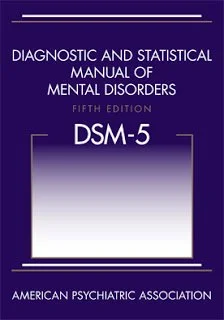
A New York Times article on January 19, 2012 entitled “New Definition of Autism May Exclude Many” has started a panic in the autism community about the changes in the definition of autism scheduled for release in the DSM 5.  Are our children in danger of losing services?   Can we hurry science? Is anything really changing? These questions and more are perplexing the autism community and professionals as well.  I write from the perspective of a practicing psychologist and as the parent of an adult child with autism.

            Let’s not lose sight of the bigger picture. The struggle to get and keep good services for a child diagnosed with autism has been the story of my life with my son for over 30 years. Anyone who cannot afford to pay for the services themselves has faced and continues to face the same uphill battle. I doubt that this will change in either direction with the new criteria.

Debates between experts are not new in autism but can be disturbing to families who are caught in the middle and don’t know what to believe. The firestorm we are witnessing is based upon an unpublished study founded upon questionable data that has not been reviewed by other scientists.  Psychiatrist Fred Volkmar from the Child Study Center at the Yale School of Medicine stepped down from the DSM committee, presented this data to the Icelandic Medical Association and then participated in the NY Times article.  It looks like Dr. Volkmar decided to take his issues with the DSM 5 autism criteria to the court of public opinion.

Based on this study, the New York Times reported that “about a quarter of those identified with classic autism in 1993 would not be so identified under the proposed criteria; about three-quarters of those with Asperger syndrome would not qualify; and 85 percent of those with P.D.D.-N.O.S. would not.”  No wonder that people are scared.  Access to services for all affected by the symptoms of autism is vital and any threat to this is terrifying. But we don’t really have evidence that this is what will happen with the DSM changes.   DSM 5 field trials are underway, and Autism Speaks and the Autism Society advocate for an in-depth assessment of the impact of the DSM 5 changes upon those currently receiving services.

Every time I think I have my mind wrapped around the controversy, I read something else and become re-confused—at least temporarily.  Many colleagues who are mental health professionals are having the same reaction to DSM 5 changes in general, not just the autism criteria.  Change that can impact your family can be difficult, let alone when researchers and well known doctors are arguing on public forums.  If well-read professionals feel confused and concerned how are parents and others supposed to feel?

In reviewing the children and adults diagnosed with autism in our psychology practice over the past 20 years, I have not come across anyone who would lose the autism diagnosis.  On the contrary, we have served many families whose children were misdiagnosed and undiagnosed several times before finally being correctly diagnosed with autism.  In recent years, because of the increased awareness of the symptoms of autism, we have also ruled out autism when it was suspected and not confirmed upon careful evaluation.

We have also observed for several years, that the autism diagnosis by itself does not lead to the level of services experts recommend. A two year old child just diagnosed with autism, for example, in most parts of the United States gets only a few hours of home based services per week, while experts recommend 25 hours of programming per week. Despite the increasing ability to diagnose autism spectrum disorders accurately in very young children, the actual practice lags behind.  Parents and professionals know all too well that the lack of or removal of services has been an ongoing threat.  Parents have had to argue the challenges faced by their child and their symptoms in order to get what their child needs regardless of the autism label. Many schools are poorly funded, especially in the inner cities and rural areas.  Staff is often inadequately trained, and there are too few opportunities for developing social skills by including children with autism with their same aged peers.  Even in relatively better funded school districts, services are often cut back especially when children make progress.

From my perspective, it is preposterous to say that over-diagnosis of autism is a major problem.  That position is in denial of the everyday life of families who love and care for children with the symptoms of autism.  Scientifically, we do not know how many currently diagnosed children and adults will no longer meet the new criteria.  The issue hinges upon how professionals will interpret the new definition.  That problem is nothing new.  DSM 4 and DSM 3 had the same problem.

Comment

Boys are taught that you are a sissy if you cry

Robert Naseef June 14, 2011

Times are changing but most men have still been raised to hold in their emotions or risk ridicule. On Thursday, July 7, 2011, I had the privilege of moderating a panel on fatherhood at the 42nd annual Autism Society Conference.  The panel was made up of fathers with the courage to open up along with autistic self-advocates, and service providers.

As the fathers opened up, men and women listened intently.  I shared how hard I had tried to change my son, Tariq, now 31.  In the end, it was he who changed me, made me a father and the man I needed to be.

Charles Jones shared his sadness and confusion about the diagnosis, his love for his son, Malik, and his joy in Malik’s progress.  Charles is determined to make a difference in raising awareness about the needs of fathers.  His voice came through with passion in the teaser for his documentary in production—“Autistic Like Me.”

Ven Squenzia is the father of a young woman with autism and the president of the Florida Chapter of the Autism Society (http://www.autismsocietyofflorida.com/).  Ven cannot imagine who he would be today if his daughter, Amy, did not have autism.  He is a tireless advocate for families with countless friends and acquaintances in the autism community.  He read a poem by his daughter expressing her love.

Dr. Stephen Shore, non-verbal until 4, has fond remembrances of his father.  Today he is professor of special education at Adelphi University and travels the world building autism awareness.  He credits both parents for believing in him.  His father’s beard felt like needles and created what Stephen refers to as a sensory violation.  Stephen did wish that his father had gotten more involved with his special interests in his youth.  His web home is http://www.autismasperger.net/

Alex Plank was diagnosed with Asperger’s at 9.  He is the creator of www.wrongplanet.net, a social networking site for people with Asperger’s with over 52,000 members.  Alex shared some of his social struggles growing up with funny stories and good humor.  Like many young men on the spectrum I know, he wished his father had been more helpful to him in terms of how to begin dating.

Craig Gibson spoke as a triple agent.  He himself grew up with a learning disability and openly shared how he was mercilessly bullied and how he relates to fathers’ worries about their children.  He also has a son with a speech delay, and he has served as the lead evaluator for a preschool program for children with special needs.  Craig blogs regularly at www.autismspot.com and www.sensoryspot.com.

Dr. Diane Adreon has an adult son with autism and over 30 years experience working with children and adults with autism at CARD, the Center for Autism and Related Disabilities in Miami (http://www.umcard.org/).  She talked about the important leadership roles played by fathers in the autism community of South Florida.  These men were open and comfortable speaking to her.

Speaking on behalf of the panel, I expressed gratitude for the opportunity for our voices to be heard.  When fathers open up, everyone benefits.  We will continue to express the vulnerable feelings, as we encourage others to do the same to further the needs of children and families.

Comment
  • Dr. Naseef's Blog
  • Older
  • Newer
facebook youtube instagram

Alternative Choices in Psychotherapy and Autism Evaluation

Philadelphia, PA

Alternative Choices | 319 Vine Street #110, Philadelphia, PA 19106, USA

facebook youtube instagram