Alternative Choices in Psychotherapy and Autism Evaluation

Philadelphia, PA
  • Home
  • Autism Diagnosis
  • Who We Are
    • Robert Naseef, Ph.D
    • Cindy Ariel, Ph.D
    • Robert Sher, Ph.D
  • Dr. Naseef's Blog
  • Public Speaking
    • About Dr. Robert Naseef
    • Keynote Topics
    • Previous Speaking Engagements
    • Endorsements
    • Videos
    • Contact
  • Our 4 Books
  • Contact
  • Home
  • Autism Diagnosis
    • Robert Naseef, Ph.D
    • Cindy Ariel, Ph.D
    • Robert Sher, Ph.D
  • Dr. Naseef's Blog
    • About Dr. Robert Naseef
    • Keynote Topics
    • Previous Speaking Engagements
    • Endorsements
    • Videos
    • Contact
  • Our 4 Books
  • Contact

Dr. Naseef's Blog

Robert Naseef's blog provides insightful views on neurodevelopmental disorders, especially Autism Spectrum Disorders. Combining personal experience and professional insight, he explores challenges faced by individuals on the spectrum and their families. The blog highlights understanding, acceptance, and practical support, serving as a valuable resource for caregivers and professionals seeking deeper awareness and effective strategies.

  • All
  • Acceptance
  • ADHD
  • AuDHD
  • autism
  • autism parents
  • autistic adults
  • autistic children
  • Autistic children
  • civil rights
  • Diagnosis
  • disability justice
  • disability rights
  • Fathers
  • medicaid
  • racism
  • Resilience
  • scientific integrity
  • social justice

Has Your Life Ever Felt Like Groundhog Day? (Part 1)

Robert Naseef January 2, 2016

“Groundhog Day” has become part of our everyday lingo, based upon the 1993 movie. The term has come to mean an unpleasant situation that repeats over and over again. Have you ever thought what it would be like if you were weatherman Phil Connors? Stuck and re-living the same day for who knows how many days or months? Do you wonder what you would do if you were stuck and suffering literally through the same day over and over again?

Here’s the original trailer to refresh your memory and get a few laughs.

I have a friend who has a son with classic autism and other medical complications. Some days his son will have horrible tantrums and bang his head on the wall. The walls in his house have been patched, but the memories and the worries live on. He says that his life feels like “Groundhog Day.”

In the movie Bill Murray plays Phil, who is an arrogant and sarcastic weather forecaster. Phil spends the night in Punxsutawney, Pennsylvania in order to broadcast the annual ritual of the coming out of the groundhog. When he wakes up the next morning at 6 AM again, he is annoyed to discover that he is trapped for a second night because of a snowstorm. It turns out to be the morning of the day before, and everything that happened the day before happens all over again.

This goes on day after day no matter what Phil does. If he does nothing different events repeat as on the first day. But if he changes his behavior, people respond differently and then all kinds of possibilities open up. Either way each day he remembers what happened in the previous editions of the same day.

As the days pass, out of desperation, when he cannot seduce her, Phil opens up to his producer, Rita. Through the intimacy, something changes. Phil begins to live more fully each day in a way that he has never done. When he comes across a street person, he takes him out to eat. His compassion for the old man makes him want to help people. Having suffered, he finally becomes able to empathize with other people’s suffering. He becomes a local hero.

What is so powerful about Groundhog Day is the window it gives us into the experience of what it would be like to make a breakthrough like this in our own lives. When we get beyond the denial and resentment over the conditions of our lives, and accept our situation, then life becomes authentic and full of meaning and compassion.

The pain of my son’s autism over 30 years ago kicked open that door for me. My awareness has grown ever since. When we can’t change or fix something, it’s common to believe that tomorrow will be exactly like today. If I just try hard enough, I’ll get through it. Thinking like this binds us to the stories of our past, clouds the present, and limits our vision of the possible. We cannot control what autism or another serious issue can do to our lives. We cannot determine what emotions will arise within us. We are often rendered powerless.

What we can do is to relate to our lives differently. This means accepting that change is inevitable and to believe that it’s possible. Our feelings come and go: happiness, sorrow, laughter, worry… We may be fearful or worried in the morning, and that feeling may go by the afternoon. Hopelessness may be replaced by a glimmer of optimism. Even the most challenging situation is always unfolding and shifting.

Even in our pain and suffering, we can find a way to go on and keep trying to look for the possible. This is not a Pollyanna where everything will be just fine. Nor is it about replacing negative thoughts with positive thoughts. But going on with courage, then as long as we are alive, the possibility of change is alive. We cannot control the thoughts and emotions within us nor the universal truth that everything evolves and changes. We can, however, just be aware and alert.

My friend’s son can be having a good day, sweet and innocent as only a child with autism can be. And then out of nowhere, this boy erupts in pain into a horrible tantrum, banging his head. This boy’s mother and father suffer deeply, but they don’t give up. They love him, and each other, and they keep living as best they can, helping others, and trying to help their boy.

So when you find yourself stuck in your personal “Groundhog Day.” Take a step back; check in to your thoughts and feelings; question your perspective and the story you are telling yourself. Look for a fresh viewpoint; reach out for support. Search for the light by coming out of that hole you’re in. As Mahatma Gandhi implored us, “Be the change you want to see in the world.”

Click to sign up for Dr. Naseef’s monthly email newsletter.

Comment

New Ways to Teach Children with Autism: Echolalia as a Learning Strategy

Robert Naseef October 2, 2015

Looking for a good read? Life Animated: A Story of Sidekicks, Heroes, and Autism by Ron Suskind is a real gem. It’s a compelling memoir of how a family tapped into the benefits of echolalia for their son. Instead of making it go away, they discovered how useful it could become.

Owen Suskind stopped speaking just before his third birthday, had trouble sleeping, and cried inconsolably. However, he remained fascinated with Disney animated movies which he loved before the autism emerged. His father’s account of how the family connected with him through this special interest led to a series of breakthroughs. The family watched those movies over and over and began to communicate with their son through the movie scripts.

The concept of joining with a child’s interest came from developmental psychology and has become an accepted part of most autism treatment programs. What is remarkable in this story is the intimate account of how this worked day in and day out in a family: their thoughts, feelings, frustrations, and experiences.

There is real grit devoid of a storybook ending; Owen Suskind does not recover from autism. He does make amazing progress, graduates from high school, attends a transitional program, and meets a Disney producer. He does not become a Disney animator as he had dreamed. Owen will likely never become completely independent as his parents had dreamed.

Nonetheless and maybe because of this, Owen, like my adult son with autism who is nonverbal, is a good son and a good brother who has taught his family incredibly profound lessons.

In another important new book, Uniquely Human: A Different Way of Seeing Autism, Barry Prizant reframes echolalia—the tendency of a person with autism to repeat words, phrases, or whole sentences over and over. It is considered one of the red flags of autism when a child repeats or echoes the words or phrases of others. This often frustrates parents as well as professionals, and for years the common wisdom has been to try to stop echolalia.

Conversely, Prizant helps us understand that children with autism communicate in all sorts of ways. Sometimes their repetitions are a way of rehearsing what they are going to say or indicating that they understand. When we listen carefully and observe the context, it becomes clear that individuals with autism are using language for the same purposes as everyone else but in a different way. They may be experiencing or reliving excitement, pain, anxiety, or joy. By listening carefully, it often becomes clear what the child is trying to communicate in his or her own way.

For families, echolalia can be extremely difficult to live with. Understanding that this kind of communication serves a purpose can help family members to be patient when they feel like pulling their hair out. There is often progress toward more typical conversation. Some children echo less as they mature, but under stress they may tend to revert to echoing. Prizant helps readers understand the developmental purpose of echolalia as a start in using speech to express wants and needs. Animated movies are often part of the process because the exaggerated vocal, facial, and body language are easier for children on the autism spectrum to decode and feel confident that they understand the message.

Having read hundreds of autism books from parents, researchers, teachers, professionals, and people with autism, and having written a few myself, I would have to say both of these are at the top of my list—Suskind’s from a parent’s perspective and Prizant’s from a professional perspective. More than just good books, the perspectives embodied by these writers have a broad applicability across the autism spectrum and across cultures and social classes and about what it means to be human.

Comment

“New Reflections on a Timeless Role: Fathering Children with Special Needs”

Robert Naseef September 28, 2015

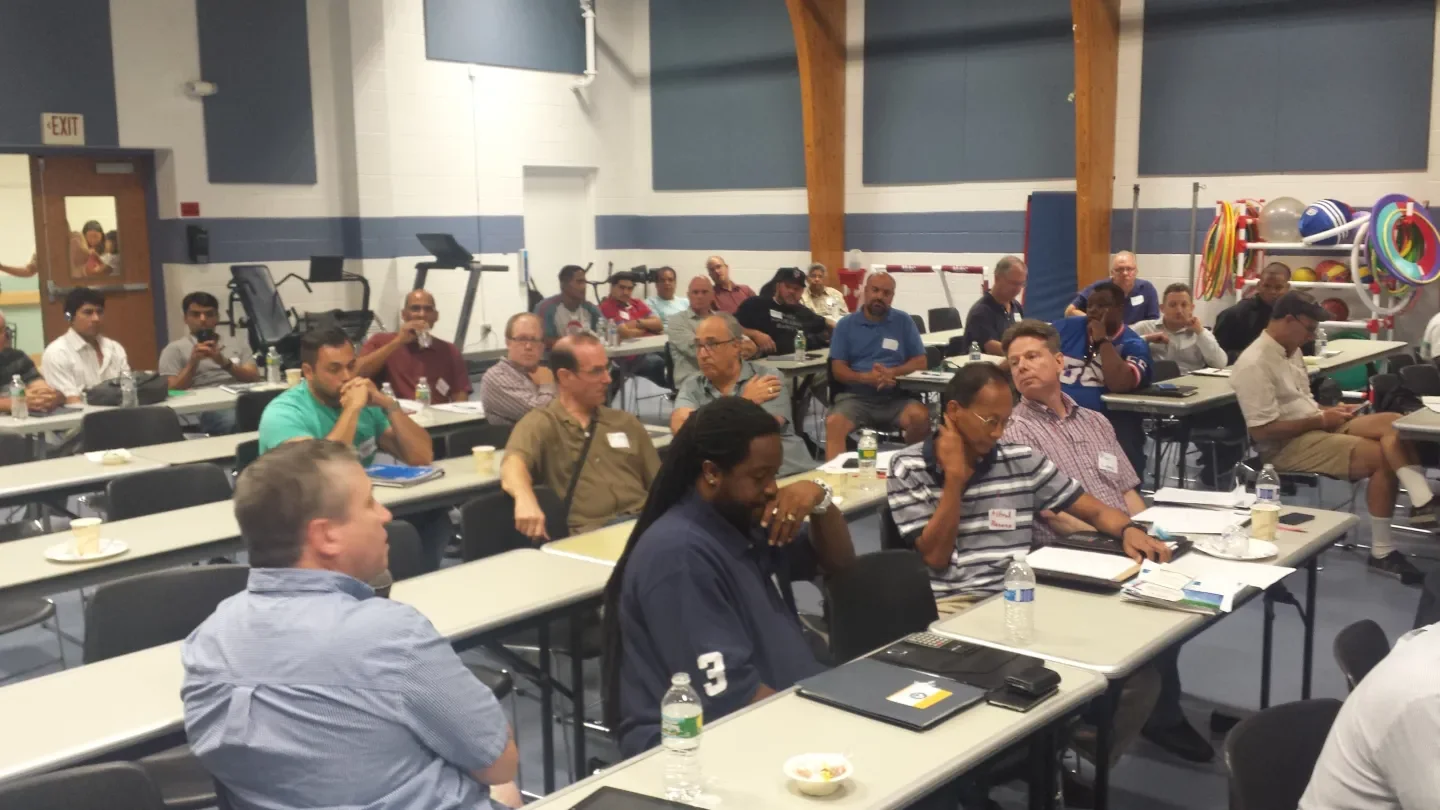
On September 12, 2015, I had the opportunity to attend and present at the 3rd Annual New Jersey Statewide Parent to Parent Conference for Fathers of Children with Special Needs. Approximately 75 fathers were inspired by the keynote presentation, “New Reflections on a Timeless Role: Fathering Children with Special Needs” by Michael Hannon, Ph.D., Professor of Counseling at Montclair State University. Mike and his wife LaChan, parents of a child on the autism spectrum, are also the co-founders of the Greater Expectations Teaching & Advocacy Center for Childhood Disabilities, Inc.  in Burlington County, NJ.

This video clip gives you the feel of his talk:


Dr. Hannon urged the men present to consider 4 important themes of fatherhood:

  • Our children (with or without special needs) absolutely need and benefit from our presence. He challenged fathers to think about “Who gets your best?” Is it your job, your golf game, your lawn, or your wife and children? The traditional role of being a provider and a protector is no longer enough. Acknowledge how important you are and give your best.

  • Know what triggers our frustration and anger in this experience so that we can find ways to address it in a healthy way. What makes you vulnerable and how does it influence you? Developing this awareness and the necessary coping strategies is vital to providing the kind of emotional support our families need.

  • Seek and find rewards in the experience that are worth celebrating. Seeing your child accomplish a task that you used to take for granted can be extremely rewarding. Children with special needs learn and grow in their own way and can enrich family life by teaching patience, perseverance, gratitude, and compassion. Learn to appreciate and celebrate their lives.

  • Find and connect with a community for support. Connecting with other parents in similar situations can provide powerful support. We are wired to be part of community. Where do you get help and support? Mike talked about how getting together with other families of children with special needs can be an “apology free day”- a term he and LaChan coined because no one needs to apologize for meltdowns or other challenges their children may experience.

After the keynote, the men were eager to participate in a workshop which I facilitated entitled, First Aid for Your Relationship: The Male Perspective on Challenges, Coping, and Enhancing Intimacy. (to be continued in my next blog)

Click to sign up for Dr. Naseef’s monthly email newsletter.

Comment

Autism in the Family: Getting the Big Picture

Robert Naseef August 28, 2015

This post appeared orginally on the Autism Speaks Blog.

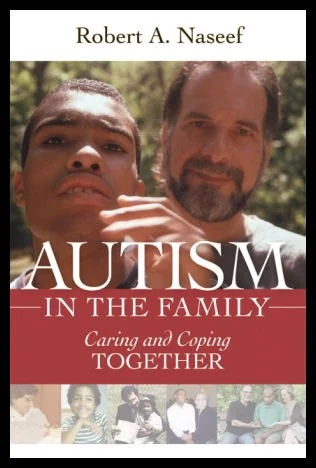
I became a typical father in 1979.  It was a dream come true—those magical first smiles, first steps, first words. Then in 1981, my son stopped talking, stopped playing normally, and began flapping his arms.  From those first red flags of autism until now, I have not stopped experiencing autism and the family—the central theme of my life and work—counseling, teaching, and writing about the impact of autism on families.

The behavioral challenges of autism are often so consuming that it can be next to impossible to keep the needs of your family in perspective.  From the outside, it may look like the child is the boss or king of the family. Parents often live holding their breath until the next problem or meltdown. The whole family can be immobilized by the unrelenting stress.

No small wonder that the interventions focus primarily on reducing problem behaviors and promoting learning and development. This necessary, but narrow focus on trying to eliminate troubling symptoms can feel like drowning in quicksand. While in the big picture, your emotional life, your marriage, and your other children are on hold indefinitely. Here are some lessons I have been learning and teaching regarding the big picture:

  • Give yourself permission to open up to your thoughts and feelings, which fall along the parents’ spectrum of fear, guilt, depression, anger, and anxiety over the lost dream.  Take a few slow breaths and notice your reactions. Some take the diagnosis in stride, but more commonly it’s an emotional bomb, and it takes time to regain your footing and go on to an uncertain future.  Like the weather, your unpleasant feelings will pass, and open the door to hope and celebration in every little step of developmental progress.

  • Spend some time each day joining your child on the floor having fun, following your child’s lead, and building connection. Your child with autism is still a child and needs more than therapy in her day. Parents cannot control the outcome for any child, but we can restore a full and rewarding relationship with a child growing up with autism.

  • Try to spend at least a little time each day with your other children or attending even minimally to their unique needs. Typically developing brothers and sisters feel rejection when their sibling doesn’t engage with them, sadness over not having a playmate at times, and sometimes embarrassment outside the home. There are special lessons to be learned from each child.

  • Work to understand the different perspective of your partner. Mothers are consumed by the day-to-day needs of raising a different kind of child.  It’s hard to take a break from needs that do not diminish.  Fathers have a difficult time talking about their feelings especially when unable to fix the problem.  While reports of an 80% divorce rate are unfounded, evidence does support increased stress, anxiety, and depression in men and women.

  • Take care of yourself and your relationship. Appreciate what your partner is doing right. Make time for each other. You need each other more than ever. All children need active, positive, energetic parents. In a very real sense, children cannot thrive if their parents are drowning.  It might be impossible to have “date nights,” but it is conceivable to do little things for each other and together, thus nurturing your relationship.

This is the big picture of what I believe it takes to survive and thrive with autism in the family. Trying to focus too much on behavior and trying to change someone with autism can block a family’s happiness. This may seem impossible with your child’s behavioral issues, but doing as much as possible to nurture your entire family can make the impact a little easier for all. This does not mean denying real problems. It just means paying attention and cultivating the moments we might overlook or ignore, when problems are absent, such as our children running to us when we get home, or our partner glad to see us after a long day at work or home or both. This is a lifelong search for meaning and connection, while becoming our best selves as family.

Speaking from my own experience, I thought I would change my son, but after years of relentless effort I realized that he changed me. He never spoke again, but this is how his autism has spoken to me day by day.

Comment

Autism and Employment: Hope on the Horizon

Robert Naseef August 16, 2015

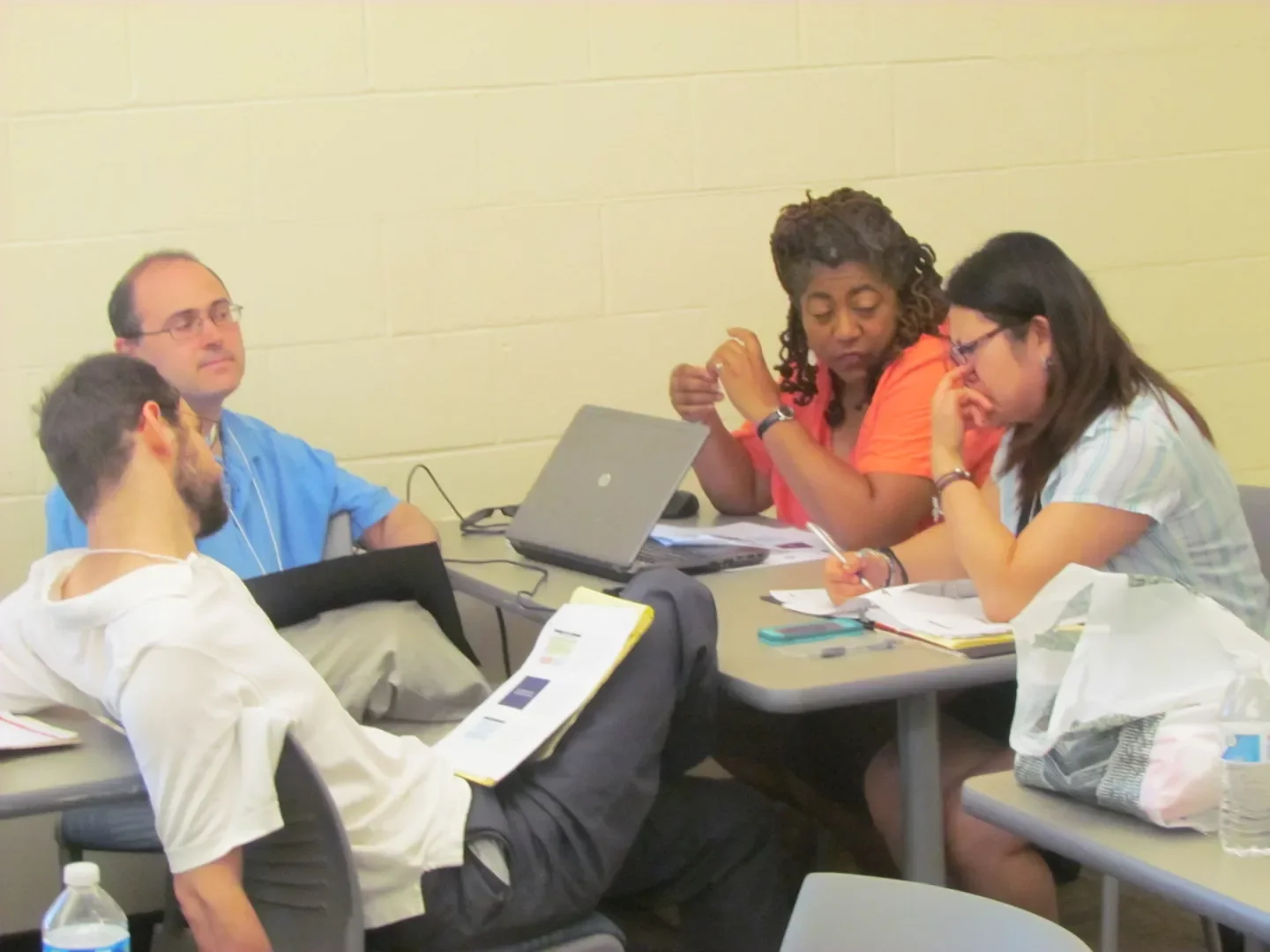
Trainees working in small groups with trainer.

August 17, 2015. From August 3-7, I was involved in an exciting project training young adults with autism for high tech jobs. This intensive 5 day program was organized by the Arc of Philadelphia and titled “Soft Skills for the Workplace.”  This event was the fruit of collaboration between a non-profit (Arc), private industry (SAP), the Bureau of Vocational Rehabilitation, and Montgomery County Community College. I and self-advocate Dr. Stephen Shore were the lead trainers along with The Arc of Philadelphia staff, Tanya Regli (executive director), Tom Cory, and Sabra Townsend.

For 5 days, from 8 AM to 3 PM, 25 young people were energetically engaged learning and developing the social or “soft skills” they need to put their “hard skills” to use in the workplace where they have previously been unemployed or underemployed. Using a variety of teaching strategies, the unique curriculum topics such as:

With co-presenter Stephen Shore.

  • Improving conversation skills

  • Sensory differences and coping strategies

  • Self-advocacy and self-disclosure skills

  • Stress management (or meltdown prevention)

  • Do’s and Don’ts of Social Media

(An in-depth report on the transition to adulthood for young adults with autism is available through the A.J. Drexel Autism Institute.)

Autism does not end when a child reaches adulthood; unemployment and underemployment are extremely high for adults with autism even for those with college degrees. Stress for families goes up once formal education is over and services are few and far between especially for those without cognitive disability. Many parents live in a state of chronic desperation. From the families I meet at conferences or in my psychology practice, I frequently hear “I cannot even die” or “Our nest will never be empty.”

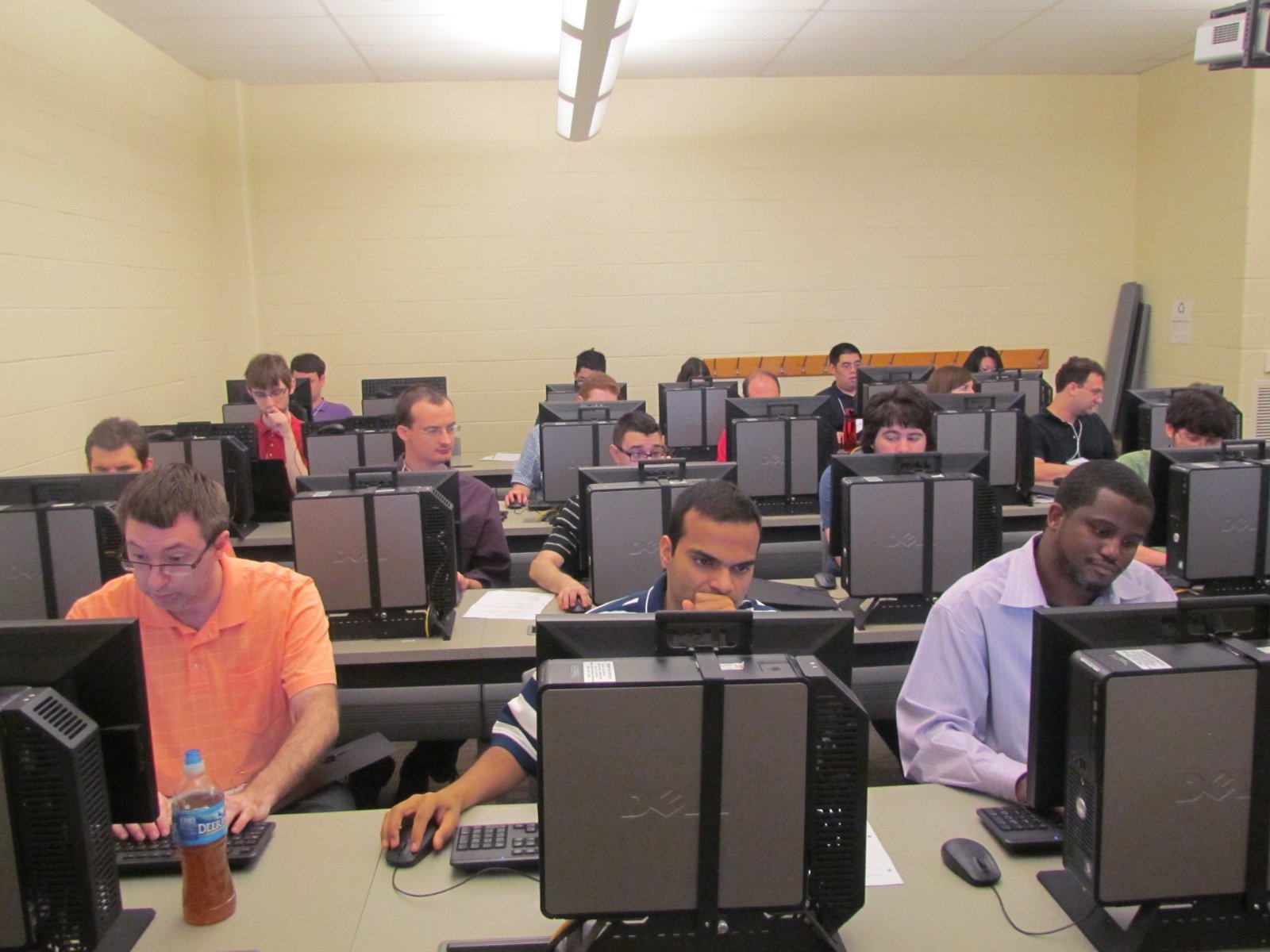
Trainees working on personal plans in computer lab.

Of the 25 individuals who attended this training, 5 are already employed through theSAP “Autism at Work” Program. The others will begin internships at SAP or other companies open to hiring people with autism who have technical skills in the near future. It’s a win-win. Companies get dedicated workers who are grateful to be employed with good skills and attention to details. Government costs for services are decreased, and families can breathe a sigh of relief.

Socializing after the week-long training was completed

The autism and special needs community has a long way to go to provide a meaningful future for those able to work. Going forward, I will be working with Stephen Shore and the Arc of Philadelphia to develop this training so that it can be replicated by other trainers in various locations and for a wide range of  jobs.

Click to sign up for Dr. Naseef’s monthly email newsletter.

18 responses to “Autism and Employment: Hope on the Horizon”

  1. Eileen Ercolani

    Aug 18, 2015 at 1:18 pm

    Edit


    As my grandson’s advocate, I often think, “What will happen when I die?” Now our children have more than hope for a successful future. Thank you for your tireless efforts for our autism community.

    Like

    Reply

  2. Connie Hammer

    Aug 19, 2015 at 2:07 pm

    Edit


    What a wonderful project! It should be replicated as much as possible to help those with autism succeed socially so they can share their amazing gifts/technical skills in the workplace. Thank you!

    Like

    Reply

  3. Anna Krupa

    Aug 19, 2015 at 6:42 pm

    Edit


    Thank you for the article. Sounds like a great thing! Any plans to repeat this program? Do you have plans to run this program in New York? Thank you again!

    Like

    Reply

    1. Robert Naseef, Ph.D.

      Aug 19, 2015 at 10:40 pm

      Edit


      We have no specific plans at the moment, but we hope this program can be spread far and wide.

      Like

      Reply

      1. Lynda L.

        Aug 21, 2015 at 8:00 pm

        Edit


        Do you foresee any possibilities of the program being implemented in New Jersey?

        Like

      2. Robert Naseef, Ph.D.

        Aug 23, 2015 at 4:35 am

        Edit


        There are no definite plans at the moment. We are looking for funding to continue to offer this kind of training.

        Like

  4. Emily Iland, M.A.

    Aug 23, 2015 at 4:18 pm

    Edit


    This is wonderful, Robert! I will contact you soon about another training opportunity for these young people coming to the Philly area in October, to help them be safe in the community and the workplace!

    Like

    Reply

    1. Robert Naseef, Ph.D.

      Aug 24, 2015 at 3:07 pm

      Edit


      Thanks Emily. Let me know the details an d I will spread the word.

      Like

      Reply

      1. Anna Krupa

        Aug 24, 2015 at 3:37 pm

        Edit


        Would you be accepting people that don’t live in Philadelphia ?

        Like

  5. Robert Naseef, Ph.D.

    Aug 24, 2015 at 4:51 pm

    Edit


    If you are referring the Emily Iland’s training on safety, that will be open to anyone who can get here.

    Like

    Reply

    1. Anna Krupa

      Aug 24, 2015 at 4:58 pm

      Edit


      No I was asking about employme

Comment
  • Dr. Naseef's Blog
  • Older
  • Newer
facebook youtube instagram

Alternative Choices in Psychotherapy and Autism Evaluation

Philadelphia, PA

Alternative Choices | 319 Vine Street #110, Philadelphia, PA 19106, USA

facebook youtube instagram