Alternative Choices in Psychotherapy and Autism Evaluation

Philadelphia, PA
  • Home
  • Autism Diagnosis
  • Who We Are
    • Robert Naseef, Ph.D
    • Cindy Ariel, Ph.D
    • Robert Sher, Ph.D
  • Dr. Naseef's Blog
  • Public Speaking
    • About Dr. Robert Naseef
    • Keynote Topics
    • Previous Speaking Engagements
    • Endorsements
    • Videos
    • Contact
  • Our 4 Books
  • Contact
  • Home
  • Autism Diagnosis
    • Robert Naseef, Ph.D
    • Cindy Ariel, Ph.D
    • Robert Sher, Ph.D
  • Dr. Naseef's Blog
    • About Dr. Robert Naseef
    • Keynote Topics
    • Previous Speaking Engagements
    • Endorsements
    • Videos
    • Contact
  • Our 4 Books
  • Contact

Dr. Naseef's Blog

Robert Naseef's blog provides insightful views on neurodevelopmental disorders, especially Autism Spectrum Disorders. Combining personal experience and professional insight, he explores challenges faced by individuals on the spectrum and their families. The blog highlights understanding, acceptance, and practical support, serving as a valuable resource for caregivers and professionals seeking deeper awareness and effective strategies.

  • All
  • Acceptance
  • ADHD
  • AuDHD
  • autism
  • autism parents
  • autistic adults
  • autistic children
  • Autistic children
  • civil rights
  • Diagnosis
  • disability justice
  • disability rights
  • Fathers
  • medicaid
  • racism
  • Resilience
  • scientific integrity
  • social justice

Person-First vs. Identity-First Language

Robert Naseef October 10, 2019

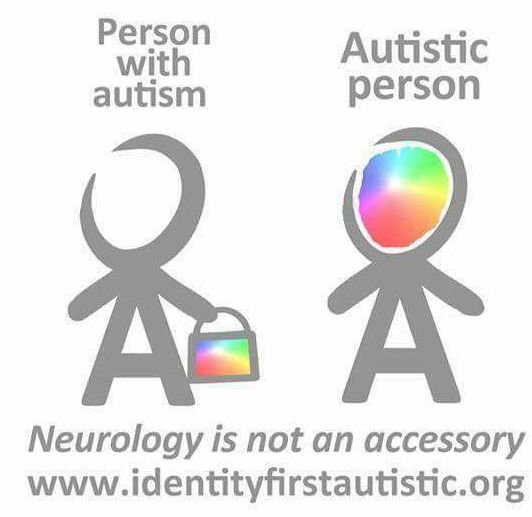
People are often taken back or even insulted by the controversy about whether to refer to someone as an “autistic individual” versus an “individual with autism.” This is not just semantics. The autism community is split on whether to use person-first or identity-first language, and language can play a major role in forming societal attitudes and biases. Along with several others, I was recently interviewed by Felipe Maya for an Autism Speaks podcast on this issue.

The Autism Self-Advocacy Network favors identity-first language because autism in an inherent part of a person’s identity. This is similar to referring to individuals as Muslims, Black, Hispanic, LGBTQ, Italian, etc. In contrast, many parents of Autistic individuals and professionals prefer “person with autism” or “individual with ASD” because they do not consider autism to be part of an individual’s identity and do not want their children to be identified or referred to as “Autistic.” They prefer “person-first language,” that puts the emphasis on the humanity of their children.

A majority of people in the Blind and Deaf communities, as well as Autism Self Advocates, prefer identity-first language.  They feel they cannot be separated from their blindness, deafness, or autism. They are proud of these aspects of themselves and want their identities to be respected and honored. People on the person-first side of the issue feel that putting a label first in some way diminishes the person. They want people to be considered first, before any label.

All want the same thing—for the innate worth as human beings to be respected and honored. Let’s not divide our community.  Each individual’s preference should be honored and respected for their unique human qualities.

Click to sign up for Dr. Naseef’s monthly email newsletter.

4 responses to “Person-First vs. Identity-First Language”

  1. Bob Mancuso

    Oct 14, 2019 at 3:53 pm

    Edit

    As a parent of two children with autism, I personally do not like my kids to be referred to as Autistic. Simply put, would others ever refer to children with Cancer as being “cancerous” or “canceristic?” Nope! Just like I do not refer to my children as being “Autistic” but instead refer to them as “children with autism,” society prefers the term ‘children with cancer” over “cancerous children” right?!

    Like

    Reply

    1. Bryce Nickel

      Oct 14, 2019 at 4:21 pm

      Edit

      Do you refer to bind people as people with blindness? Autism is not a disease, it is a neurological difference. Insulting autism is the same thing as insulting the person. You are teaching your children to hate themselves; which is partly why our suicide rates are so high.

      Like

      Reply

      1. Robert Naseef, Ph.D.

        Oct 27, 2019 at 3:11 pm

        Edit

        Thank you for weighing in on this important issue from an autistic perspective, Bryce.

        Like

    2. Robert Naseef, Ph.D.

      Oct 27, 2019 at 3:09 pm

      Edit

      As I mentioned in the podcast interview, it is up to every parent and every individual as to their preference.

      Like
Comment

Who sits down first in a job interview?

Robert Naseef April 4, 2019

According to Dr. Stephen Shore, “Who’s on first? What’s on second? How can autistic people make sense of the job interview process… and perhaps more importantly, how can employers better understand what people on the autism spectrum can contribute to the workplace?”

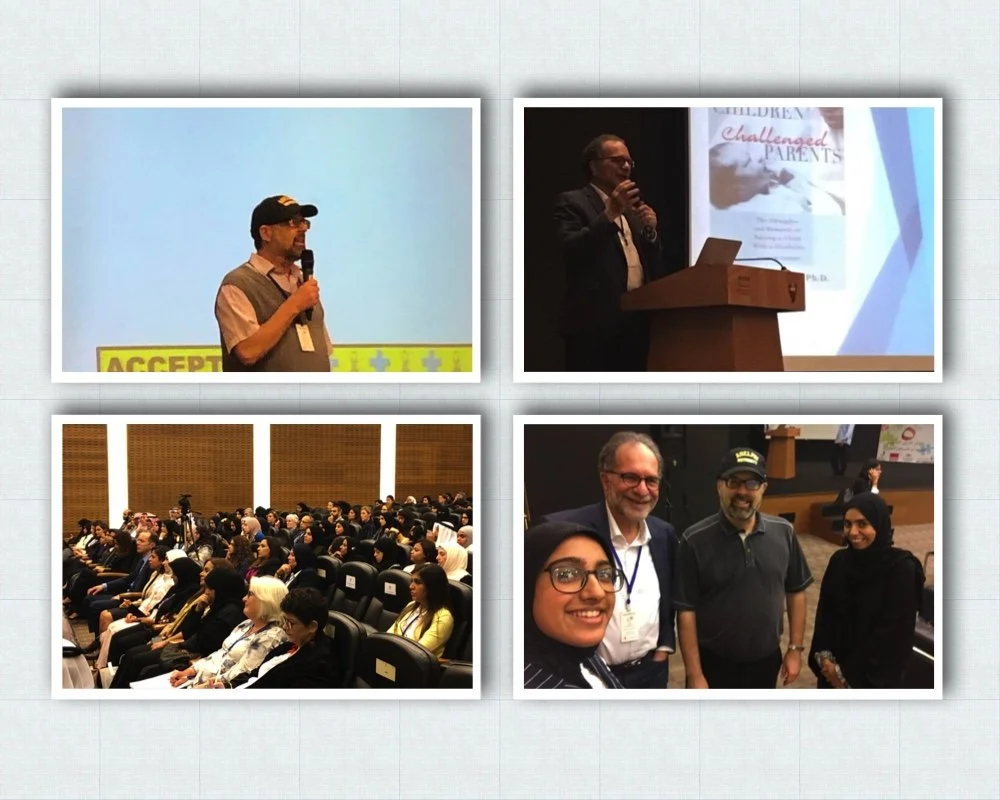
Stephen and I were around the world in Bahrain speaking at the “Untangle Autism” Conference when this podcast was released.

Check out this Shrinks on Third podcast in which the Shrinks interview Stephen M. Shore, EdD, an autistic professor of special education, and me about our work together creating a curriculum to prepare neurodiverse youth for the workplace. These are things neurotypical people take for granted and autistic people have to be taught directly. Listen to their conversation at https://lnkd.in/e_zD-tc. Stephen and I just returned from Bahrain where we presented on these issues to an enthusiastic international audience. The curriculum is available at https://www.neurodiversityarcphl.com/

Click to sign up for Dr. Naseef’s monthly email newsletter.

One response to “Who sits down first in a job interview?”

  1. CIPD Manchester Branch

    Jul 17, 2019 at 11:03 am

    Edit

    Thank for sharing

    Like

    Reply

Comment

No clear dividing line

Robert Naseef March 5, 2019

No Clear Dividing Line” is the title of the Shrinks on Third Podcast in which I talk about families living with and loving someone on the autism spectrum and what we can learn about our shared humanity. Topics include the diagnosis, race, class, cultural factors, and the myth of closure for such an ambiguous situation. Listen at https://lnkd.in/eQGeQJG or wherever you get your podcasts.

Click to sign up for Dr. Naseef’s monthly email newsletter.

Comment

Screen time for your children: No easy answers

Robert Naseef February 16, 2019

The American Academy of Pediatrics recommends strict limits on screen time for kids, and many parents are deeply worried for good reason. In July 2018, the World Health Organization concluded that “gaming disorder” is a new form of addiction for individuals whose jobs, educations, family or social lives have been negatively impacted by video games. Screen time can lead to a refusal to do homework, bathe, eat properly, etc. Some children have been victimized by online predators, and cyberbullying is common. Some parents have even worried to me that excessive screen time may have caused their child’s autism, which it does not.

On the other hand, I recently heard on a podcast, the pulse, that pediatric guidelines in the U.K. have no limits on screens, except for an hour before bedtime. Their belief is that the risks are overblown and that screens are now part of our culture and play an important role in society. In the first-ever guidelines, the Royal College of Paediatrics and Child Health (RCPCH) recommends four key questions for families to help sort out their children’s use of technology:

  1. Is screen time controlled?

  2. Does screen use interfere with what your family wants to do?

  3. Does screen use interfere with sleep?

  4. Are you able to control snacking during screen time?

On this side of the pond, a recent article in the Scientific American, “The Kids (Who Use Tech) Seem to Be All Right,” reported that a rigorous new paper, using a new scientific approach, concludes that the panic over teen screen time is likely overstated. This method, using data on over 350,000 adolescents, concluded that technology use has a nearly negligible effect on adolescent mental health including depressive symptoms, suicidal ideation, pro-social behavior, peer-relationship problems, etc. Nonetheless, video game addiction is real and may even require residential treatment, but there is scant evidence of what works for this disorder which often overlaps with depression, anxiety, ADHD.  

In my psychology practice, the question of screen time comes up frequently. In some families, screen time seems out of control, and there are withdrawal symptoms when parents then try to impose limits. In contrast, on a recent public television interview, I talked about therapy between a father and 20-year-old son, who had dropped out of college. Because he was playing computer games most of his waking hours, his parents thought he didn’t have real friends, and I agreed…until I talked to him and really listened.

Online gaming can promote social development.

He told me, “They’re real…we play a game where we talk to each other, and it’s all text-based. I don’t know their real names. They have avatars. They don’t know my real name. They don’t know what I look like, and that makes it easy for us to communicate because I have trouble processing language. Text-based — I can think about it, and I can answer.”  He told me that they talk about the game, as well as their disappointments, what makes them happy, and what makes them sad. When I asked if he ever wanted to meet and know their names and faces, he told me they were planning to go to a gaming tournament together. 

This young man totally exploded my idea that online friends weren’t real friends. Even if he wasn’t going to meet them in person, they were real relationships. They talk about their lives and support each other. This type of friendship and can offer needed support and feelings of connection.

While widespread panic seems overstated, ignoring what seems like excessive time spent on technology with negative impact is not healthy for your family. Here are some questions to consider:

  • Is screen time interfering with family time such as meals or other activities?

  • Is screen time causing a lack of sleep which might then result in mood changes?

  • Are grades in school declining?

  • Are social activities with peers lessening?

  • Do you know what your children are doing on their screens?

  • Are you engaging with them around these and other activities?

  • What games are your children playing, especially face to face games, and what are they learning from them?

In the case of children with developmental issues, there are many apps to encourage the development of language skills and reading. In general, using smartphones, tablets, and televisions as babysitters is not healthy. Adults should also self-monitor their own screen time and be positive role models because children need to use technology appropriately and crave our active involvement in all aspects of their lives.

I hope this brief discussion of screen time is useful. If you are concerned about possible addictive behaviors in your family, it is wise to consult a qualified professional.

Click to sign up for Dr. Naseef’s monthly email newsletter.

Comment

“When you argue with reality you lose”

Robert Naseef January 14, 2019

Holding and touching your baby for the first time can be one of the most powerful experiences of a lifetime whether as a birth or adoptive parent.  Feeling the baby’s soft skin and tiny body nestled against you is an unforgettable experience that lives inside us.  From those early days parents discover what pleases and displeases the baby.  Parents learn to pay attention to the baby’s needs to sleep, to eat, or to be changed. Our baby teaches us to be in the moment in order to notice and respond to these cues. This is a skill which has to be learned and relearned throughout the stages of parenthood as things rarely go as we imagined. As Ellen Galinsky teaches “our dreams are in a constant tug-of-war with realities.” …

As Jon Kabat-Zinn (2005) points out, we accept that no one controls the weather. He uses the metaphor of sailing to point out that good sailors will avoid storms if possible. But if the storm cannot be avoided, good sailors batten down the hatches and ride things out, controlling what is controllable and letting go of what is not.

From the perspective of mindfulness, acceptance means seeing things as they actually are. For example, if you are having trouble going to sleep, you accept your difficulty. If you’re overweight, this means accepting this as a description of your body in the present moment. Acceptance requires a willingness to see things as they actually are.  This frame of mind then makes it more likely to be able to figure out what can be done and what needs to be let go of.  We may have to go through intense emotions, such as denial, anger, shame, or depression to progress to terms with what really is in our lives.

Tara Brach (2003) describes this willingness to experience ourselves and our lives as “Radical Acceptance” and a moment of genuine freedom.  The root of our suffering in life is longing for things to be different from the way they really are. Seeing this clearly then frees us to begin seeing our choices about what is possible.  Radical acceptance is a quality of awareness when physical or emotional pain arises. As opposed to trying to push it away, we may recognize fear, for example, and notice that our thoughts are racing, our breathing speeding up, and that we want to run away.  Acceptance does not mean liking this fear but rather being kind and loving to ourselves in the moment to moment experience.  Although this way of thinking comes from Buddhist thought, psychologist Carl Rogers had a similar insight when he stated, “The curious paradox is that when I accept myself just as I am, then I can change.”

**********

This excerpted from my book, Autism in the family: Caring and coping together.

References

Brach, T. (2003) Radical acceptance: Embracing your life with the heart of the Buddha. New York: Bantam.

Gallinsky, E. (1987).  The Six Stages of Parenthood. New York: Addison Wesley.

Kabat-Zinn, J. (2005) Full catastrophe living: Using the wisdom of your body and mind to face stress, pain, and illness, 15th-anniversary edition. New York: Bantam Dell.

Related Posts:

https://drrobertnaseef.wordpress.com/2018/03/21/autism-acceptance-and-beyond/

https://drrobertnaseef.wordpress.com/2016/10/24/making-a-difference-with-autism-lessons-in-acceptance/

Click to sign up for Dr. Naseef’s monthly email newsletter.

Comment
  • Dr. Naseef's Blog
  • Older
  • Newer
facebook youtube instagram

Alternative Choices in Psychotherapy and Autism Evaluation

Philadelphia, PA

Alternative Choices | 319 Vine Street #110, Philadelphia, PA 19106, USA

facebook youtube instagram