Alternative Choices in Psychotherapy and Autism Evaluation

Philadelphia, PA
  • Home
  • Autism Diagnosis
  • Who We Are
    • Robert Naseef, Ph.D
    • Cindy Ariel, Ph.D
    • Robert Sher, Ph.D
  • Dr. Naseef's Blog
  • Public Speaking
    • About Dr. Robert Naseef
    • Keynote Topics
    • Previous Speaking Engagements
    • Endorsements
    • Videos
    • Contact
  • Our 4 Books
  • Contact
  • Home
  • Autism Diagnosis
    • Robert Naseef, Ph.D
    • Cindy Ariel, Ph.D
    • Robert Sher, Ph.D
  • Dr. Naseef's Blog
    • About Dr. Robert Naseef
    • Keynote Topics
    • Previous Speaking Engagements
    • Endorsements
    • Videos
    • Contact
  • Our 4 Books
  • Contact

Dr. Naseef's Blog

Robert Naseef's blog provides insightful views on neurodevelopmental disorders, especially Autism Spectrum Disorders. Combining personal experience and professional insight, he explores challenges faced by individuals on the spectrum and their families. The blog highlights understanding, acceptance, and practical support, serving as a valuable resource for caregivers and professionals seeking deeper awareness and effective strategies.

  • All
  • Acceptance
  • ADHD
  • AuDHD
  • autism
  • autism parents
  • autistic adults
  • autistic children
  • Autistic children
  • civil rights
  • Diagnosis
  • disability justice
  • disability rights
  • Fathers
  • medicaid
  • racism
  • Resilience
  • scientific integrity
  • social justice

Diversity is Awesome

Robert Naseef June 24, 2020

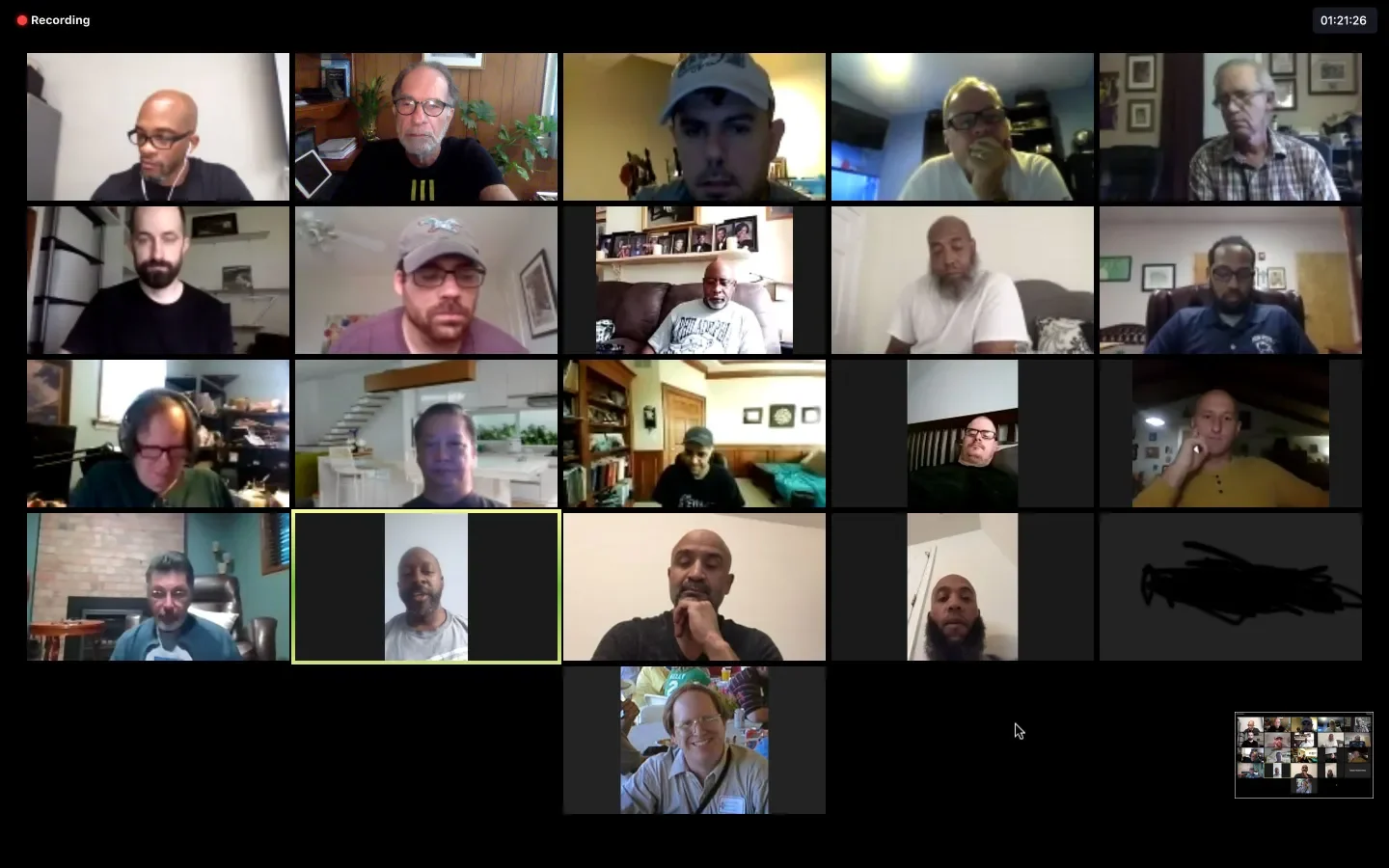
As one of our regular members put it, the Zoom Gallery view of our August fathers’ group was AWESOME. Our group, which started one year ago in Philadelphia at the AJ Drexel Autism Institute in Philadelphia, now draws men from as far away as Boston, Chicago, and Hawaii, where it was 4:00 AM, for this meeting. Another father shared that looking at the screen told him that we have more in common than we think as we listen to each other’s stories which touch home. Our conversation was not just about COVID and whether our children would learn virtually or in person and the dangers of going to school. Everything else going on in the world with racial injustice was clearly impacting the men who had come to this meeting on a deep level. 

One father explained his belief that diversity is what the world needs more than ever right now. He was inspired by everyone standing up to racial injustice from athletes and celebrities to everyday people. He has been moved and changed himself by what he has gotten out of our group that comes together for our children and our families with a vision of also making changes in the world that will benefit our children. 

Another man struck a deep chord when he said, “Finally a safe place!” He found it extremely encouraging and a great platform to say whatever he wanted without judgment to express his truth. The vulnerability shared in this meeting, contrary to the male stereotype, was actually a strength. As someone commented, “Depression and fear flourish in darkness. When you shine a light on it, it changes everything when you realize you are not alone.” Pride and joy in our children’s accomplishments as well as disappointment and sadness in some of our struggles got comparable airtime.

Our diversity was and is powerful and encouraging. We hope to see you at our next meeting, this Saturday, September 26, at 10:00 AM, Eastern. We are thankful for the safe and soulful space that our group is growing into and providing.

Wishing you safety and peace, brothers!

Robert & Michael

P.S. For login info, please email autisminstitute@drexel.edu

Comment

Being Part of the Change We Want to See

Robert Naseef June 9, 2020

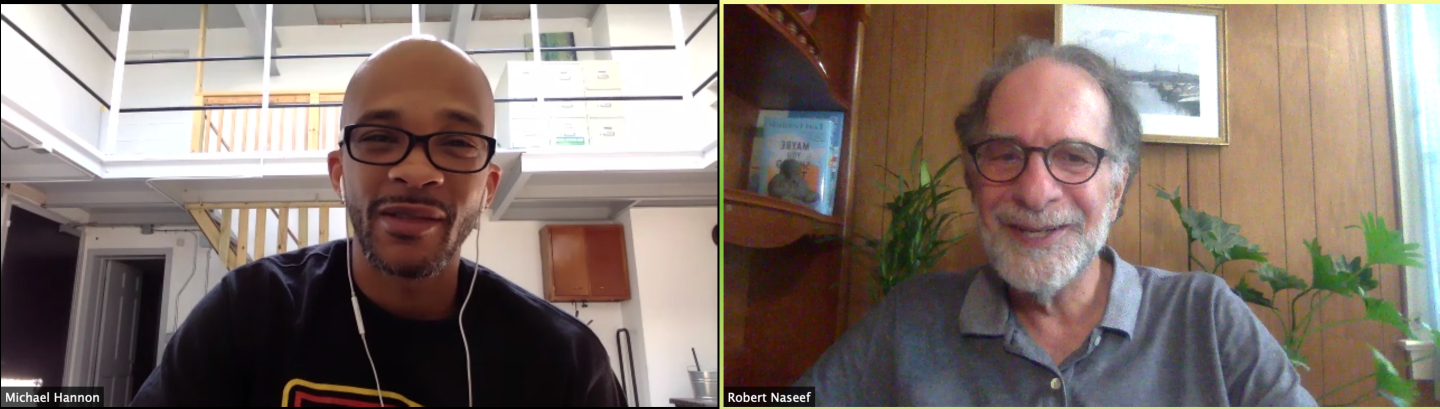
Brought together by our love for our children growing up on the autism spectrum, a diverse group of fathers has been meeting since September 2019 with the support of the A. J. Drexel Autism Institute. Drs. Michael Hannon and Robert Naseef have facilitated the group drawing from a depth of lived and professional experience. It’s generally rare, but so welcome and vital, to see racially and ethnically diverse men sharing the same space for support. Our group has often discussed the disparities that exist between children and families of color and White children and families in getting the ASD diagnosis as well as the vital intensive services necessary.

Our last meeting via Zoom on May 30, we aired our honest, pent up frustrations after over 10 weeks of quarantine. We all admitted some form of anger at the world, acute symptoms of anxiety and depression, less patience with loved ones, more alcohol consumption, all while cities across the country burned with the flames of protest against police violence against Black citizens in hopes for some semblance of justice.
 
Our virtual meetings are open to fathers everywhere to participate. That participation can come in the form of solely listening or actively contributing to our conversations. Mark your calendars for this Saturday, June 13 at 10:00 AM, Eastern. We are living through some horrible moments as “I can’t breathe!” echoes deep in our collective souls. Nonetheless, in these moments, there exist opportunities to be better men, fathers, partners, brothers, and friends. As we continue to be transformed by the journey of raising children on the spectrum, we have an opportunity to be a part of the change we want to see in the world in representing a multi-racial, multi-ethnic, and multi-faith group of fathers.

Stay safe, and peace brothers!

Michael & Robert

P.S. If you're a dad interested in joining the meeting this Saturday morning, you can email autisminstitute@drexel.edu for the login information.

Comment

Stronger than we think: The advantages of neurodiversity

Robert Naseef April 29, 2020

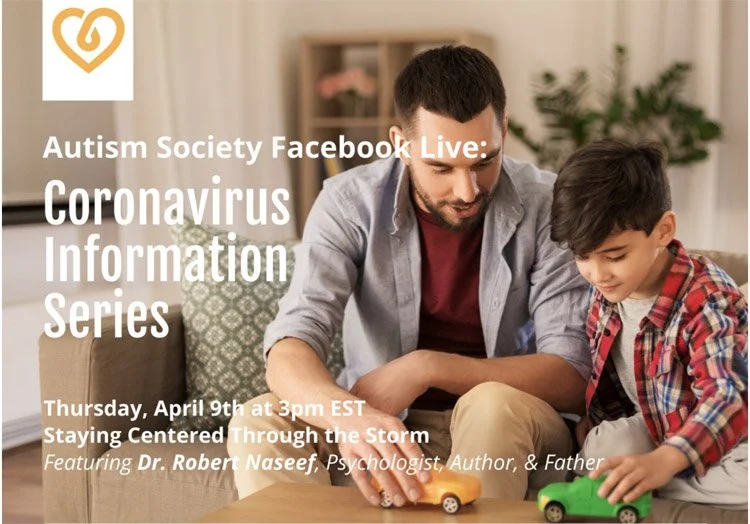
COVID-19 presents huge challenges and added layers of vulnerability for children and adults with autism and other special needs and their families. Some experience more adversity than others because of race and social class.  However, it is my belief that neurodiversity has some built-in advantages for families with neurodiverse members. It is in that sense that we may be stronger than we think. On April 9, I spoke about this on a Facebook Live event for the Autism Society of America. Here are the highlights of that conversation.

We know the emotional ups and downs of life with neurological differences. Some children and adults find distance learning and working from home to be easier than predicted because of less pressure to socialize. Others are lost without their routines. Far too many are also devoid of access to the technology that helps folks to function under these conditions.

Children and families with neurodiverse members are resilient. It's been baked into our very beings by the challenges we have faced over and over. It’s been a process in which we’ve learned lots of coping skills that help us to face adversity and bounce back. Let's reflect on the challenges our families understand very well and take a deeper look.

  • We know how to face loneliness and alienation. We have a lot of practice at from the moment of diagnosis for parents, and often from playground experiences for children and teens. Self-isolation and sheltering-in-place are not totally new for us.

  • We have to be very careful as parents because our children often don't understand danger, so we have lots of practice at being alert to danger. Now we all need to be careful about everything we touch, wash our hands frequently, and avoid touching our faces. Families of children with rare diseases and others who are immune compromised have lots of experience with this. Reinforcing safety and health with our children is a constant.

  • We have learned to adjust expectations, and we have practiced celebrating whatever we can do. Right now, instead of focusing on what little we can do as we shelter-in-place, we focus on all of the things we can still do.  

  • We have learned to face our fears and regulate our emotions again with lots of practice. Now we need to deal with our emotions while also dealing with the fear of being infected with COVID-19. It’s harder, but it’s a struggle we know well.

  • We have learned that we do not have control, and we have learned and practice acceptance which includes working hard to do our best with what's in our control. Right now, that means staying safe and learning how to live during this time

  • We do better with schedules and routines. We have a lot of practice at that. Now we have to make new schedules and new routines to meet the present challenges. The transition to new routines may be hard, but lots of us are good at creating routines and sticking to them.

  • We have also faced setbacks, and we have practice at persisting and moving forward despite our disappointments. Science tells us that neurodiverse children and adults can continue to learn and develop through the lifespan. We will persist and move forward.

  • We have learned to go easy on ourselves because this is another issue we cannot fix with hard work, but we must step up and work hard.

People with autism have been saying for some time, that things that would benefit autistic people at home, work and school, would also benefit everyone else. Children need routines in lives that have been disrupted; varying levels of routine helps all of us. We need safety and predictability. We can and must meet the challenges of COVID-19. We are living through a period of both danger and opportun

Comment

What COVID-19 Teaches Us About Being Human

Robert Naseef March 30, 2020

In the middle of the night, I toss, turn, and wonder what bad news I’ll hear or read in the morning. I breathe slowly and deeply watching my thoughts: whom have I possibly seen for the last time, what will the world be like after the pandemic, who will be president—then drifting back to sleep. I awaken every morning not completely rested but profoundly grateful to be alive and face the day with energy and determination to get through the crisis.

Working from home, in relative safety, I am privileged, able to keep working, with the opportunity to make a difference taking care of people as best I can through teletherapy while keeping social distancing. But, “How Do You Shelter in Place When You Don’t Have a Home?” writes Eliza Griswold in The New Yorker on 3/26/2020. This article describes the work of a free healthcare clinic in Philadelphia that is part of the Catholic Worker Movement, a social justice organization. Homeless people come to take showers and use the bathroom, in addition to basic healthcare. Around the country, shelters and nonprofits have been gearing up to serve an estimated 550,000 people who have 10 times more risk of contracting the virus. (photo)

At Jefferson Hospital in Philadelphia, as reported by 3CBS Philly, an emergency room nurse, Kristie Bowen, has been forced to make a painful decision to keep her family safe. Eight days ago, she decided for her children to stay with their grandparents for all of their safety. She shows up after work and sees them through the storm door. (photo)

These are the images that capture the moment we are living in, and stories like this place my own fears in perspective as my family and friends are safe and healthy, at least so far as we know. In my life as a psychologist, specializing in autism and various other special healthcare needs, people’s shared human experiences of the pandemic took center stage:

In the wake of mass traumas, such as earthquakes and tsunamis, people rush in and want to help. Now we're being told to keep a distance because it's the best way to help ourselves and others. The waves of COVID-19 are rising daily and have not crested yet. We are living in a state of heightened fear and hyperarousal—we haven't got to the “post” phase of the trauma. Posttraumatic stress has become a common expression, but less common is the posttraumatic growth that comes from it in the form of the lessons we learn from really hard experiences. We humans are a resilient bunch bouncing back from adversity over and over. This pandemic is unprecedented as we rise to meet the unknown challenges that lie ahead.

  • The fathers’ support group, I co-facilitate with Michael Hannon, Ph.D. met via Zoom and didn’t skip a beat as we talked about what it means to be fathers with new norms during the pandemic crisis. Those who must work outside the home must be especially cautious. HVAC technicians, airline attendants, and hospital employees in our group cannot work remotely. One father related how everything normal had been taken away and that being out of his comfort zone has made clear that we are not in control, but we are in it together through the chaos. He leans on his Muslim faith. Another father shared the sad news of relatives being tested for COVID-19, and how they no longer think the pandemic is a hoax.

Jack Freedman poses for a photo with nurse Dawn Law (right) and other workers from Lincoln Health Care. (Photo provided by Jack Freedman)

  • Fathers of medically fragile children quickly went into quarantine even without symptoms like the nurse mentioned above. One father started coping right away by reading his daughters bedtime stories via FaceTime.  Privately, he cried about not being able to be physically with them at bedtime, but he showed up every night on FaceTime and gave them the happiness of his attention even though they missed him. The home health care workers who serve these children are especially at risk as they must take public transportation in many cases and go in and out of various homes, as in this article featuring Jack Freedman, the son of my friend and colleague Al Freedman, Ph.D.

  • Online digital instruction has posed new challenges particularly for mothers, and especially when both parents might be working from home. Unfortunately, race and class have not taken a holiday from unequal distribution of online resources, both due to the digital divide as well as the inability of many urban school districts to provide this for children.  Children with autism who can speak for themselves and keep themselves occupied with online instruction or other activities, on the other hand, are often reported to be doing better than their neurotypical siblings. They report less pressure to interact socially which is a relief as well as the absence of any bullying. Conversely, autistic children with limited verbal skills are extremely challenging without any structure to their day, and this is a considerable burden for their families with no end in sight to the disruption of their schedule. Dr. Gil Tippy's For on the Floor videos are useful for children all along the autism spectrum for Floortime during the virus shutdown.

  • My good friend and colleague, Dr. Stephen Shore, told me that being sheltered in place with his wife in Newton, MA feels like being on a spaceship to another planet. We wonder together what life will be like on this planet afterward. Self- advocate Michael John Carley has an extremely useful Primer on COVID-19. He explains what's the same and what's different for spectrum adults and gives extremely good advice on how to consume recommended nonsensational news media calmly and intelligently, which is very helpful for everyone in these times.

  • The Kuwait Center for Autism is making a difference for many families I have met on my consultation visits by posting short Instagram videos of parents having fun with their kids while engaging with them at home. No knowledge of Arabic is required to enjoy the universal language of children. (Photos linked to Insta videos)

  • Several mothers have spoken to me about the pain of not being able to visit their autistic children who are in residential placements because they need round the clock care. A mother in my practice called upon a former therapist for her son to make a social story to help him understand why his mother was not there for his weekly visit. Likewise, I have not been able to visit my own son due to the pandemic, but his program has sent me a photo where he is clearly happy and having fun with his staff in the park.

Tariq (right) and Staff in the park

  • Physically and mentally disabled people, including one of my patients, are reacting very strongly to the work from home accommodations that are being granted to nondisabled people due to the COVID-19. Many of these folks have asked and have been denied these reasonable accommodations Some have even lost their jobs as a result. This makes it painful to watch what they have been told were impossibilities or unfair arrangements be quickly and widely implemented.

  • Many speak about the “silver linings” of being less selfish, more compassionate and patient with partners and children, both neurotypical and neurodiverse. Expressing gratitude, a grandmother told me that “even the little she has is huge.” Many in hospitals and other human services face their fears openly but seem more concerned about their clients than themselves.

“Zorba the Greek” used the phrase “full catastrophe” to describe the wide spectrum of life—all the joys, sorrows, tragedies, and possibilities that open as we live. Especially now, we can be angry, relieved, sad, hopeful, ashamed, scared, and peaceful before we even manage to get dressed and have breakfast in the morning as we experience an event that knows no borders and circles the globe. We can and must rise to the occasion.

In my lived experience during the pandemic and listening actively to others,  I find a deepened understanding of our shared humanity. Despite the palpable fear and anxiety of what lies ahead beyond our control and comprehension, I see and feel increased compassion and loving kindness. In crisis, we have an opportunity to become more fully human. This growing connectedness and awareness of our similarities has the potential to tear down barriers, unite us globally, and help us be our best selves and effect lasting social justice for our whole human family. This is my fervent hope regardless of what personal fate awaits me.

In these times without a playbook, poets can be prophets. I was particularly moved by the conclusion of this poem, copyright by Lynn Ungar, on one of my favorite NPR shows, On Being.

Pandemic

Do not reach out your hands.
Reach out your heart.
Reach out your words.
Reach out all the tendrils
of compassion that move, invisibly,
where we cannot touch.

Promise this world your love--
for better or for worse,
in sickness and in health,
so long as we all shall live.
Comment

Coronavirus Coping Strategies

Robert Naseef March 15, 2020

It's been a week where our lives have begun a huge transition to deal with the COVID-19 pandemic. As individuals, families, communities, and societies we are learning a new normal with a new vocabulary to cope with uncertainties that were beyond our comprehension a week ago. To answer the questions I hear every day as a psychologist, I have compiled some useful links for my readers. I have found these personally helpful, and I hope you find them useful.

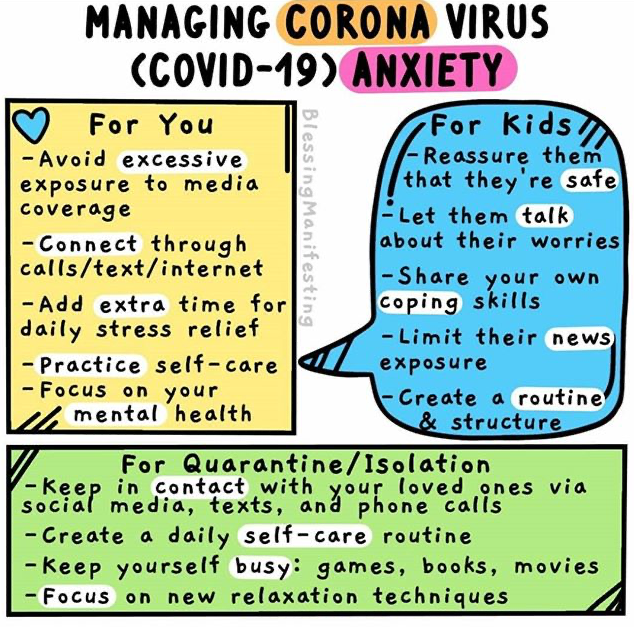
Mindfulness. Adults and children may experience heightened anxiety during this time. Share these simple ideas to remind your friends and neighbors to be kind to themselves during this time. Share this information using the jpeg above. From https://mighty writers.org

Unsplash: CDC

How To Talk To Your Kids About The Disease

Experts offer parents advice for talking to their children about the COVID-19 outbreak. By Caroline Bologna, Huffington Post

As the coronavirus outbreak progresses, parents are facing questions from their children, who have picked up bits and pieces of information (and misinformation) from the internet, TV, teachers and classmates.

The topic is a daunting one to tackle with children, as there’s a lot of fear and uncertainty surrounding the illness. But as with any situation of this kind, it’s important to present yourself as a supportive and reliable figure in the midst of kids’ confusion.

To help guide this conversation, HuffPost asked experts for their advice for talking to kids about COVID-19.

Unsplash: CDC, COVID 19

Social Distancing: Places And Events To Avoid Because Of Coronavirus

Is it safe to go to the gym? Small gatherings? Kids' birthday parties? By Casey Bond, Huffington Post | Updated March 14, 2020

Cases of coronavirus infection continue to spread. In response, the Centers for Disease Control published a number of recommendations to mitigate the transmission of COVID-19. Many local governments have followed suit, placing limits on public gatherings as part of what’s known as “social distancing.” Read the rest on the Huffington Post.

7 Science-based Strategies to Cope with Coronavirus Anxiety

It's a stressful time. If anxiety is getting the best of you and your family, here's how to de-stress.

BY JELENA KECMANOVIC from MetroKids

As the SARS-CoV-2 virus continues its global spread and the number of diagnosed COVID-19 cases continues to increase, anxiety related to the outbreak is on the rise too. As a psychologist, I am seeing this in my practice already. Although feeling anxiety in response to a threat is a normal human reaction, sustained high anxiety can undermine constructive responses to the crisis. People who already suffer from anxiety and related disorders are especially likely to have a hard time during the coronavirus crisis.

From MetroKids:  http://www.metrokids.com/MetroKids/Health/7-Science-based-Strategies-to-Cope-with-Coronavirus-Anxiety/

Want to do something about coronavirus? Here are 5 ideas.

It’s easy to feel powerless. Instead, help the most vulnerable. By Anna North, Vox. Updated Mar 11, 2020, 5:27pm EDT

It’s easy to feel powerless in a time like this — there’s not yet a vaccine or drug for Covid-19, the disease caused by the new coronavirus. And Americans are watching their government scramble to implement measures to keep them safe — something it may not be entirely prepared to do.

But while individuals may not be able to halt the spread of coronavirus, there are some steps we can take to help protect the most vulnerable — and to combat some of the social ills exacerbated by the virus, like racism and age discrimination. Click to read the 5 ideas.

Poetry for Tumultuous Times

Poets are always prophets in unsettled times and places, and they are here for us now to read and listen on On Being.

Unsplash: CDC

COVID-19: Preparation Tips for Families Affected by Autism

By Assemblyman Angelo Santabarbara on March 7, 2020. As Chair of the New York State Assembly’s Committee on Autism Spectrum Disorders, with the help of fellow board members of the International Board of Credentialing and Continuing Education Standards (IBCCES), we have gathered some tips and suggestions to keep in mind with the rise of COVID-19 disease cases.  These tips are tailored for individuals and families with a loved one on the autism spectrum but can be helpful for many individuals. Clip to read the tips.

Comment
  • Dr. Naseef's Blog
  • Older
  • Newer
facebook youtube instagram

\

Alternative Choices in Psychotherapy and Autism Evaluation

Philadelphia, PA

Alternative Choices | 319 Vine Street #110, Philadelphia, PA 19106, USA

facebook youtube instagram