Alternative Choices in Psychotherapy and Autism Evaluation

Philadelphia, PA
  • Home
  • Autism Diagnosis
  • Who We Are
    • Robert Naseef, Ph.D
    • Cindy Ariel, Ph.D
    • Robert Sher, Ph.D
  • Dr. Naseef's Blog
  • Public Speaking
    • About Dr. Robert Naseef
    • Keynote Topics
    • Previous Speaking Engagements
    • Endorsements
    • Videos
    • Contact
  • Our 4 Books
  • Contact
  • Home
  • Autism Diagnosis
    • Robert Naseef, Ph.D
    • Cindy Ariel, Ph.D
    • Robert Sher, Ph.D
  • Dr. Naseef's Blog
    • About Dr. Robert Naseef
    • Keynote Topics
    • Previous Speaking Engagements
    • Endorsements
    • Videos
    • Contact
  • Our 4 Books
  • Contact

Dr. Naseef's Blog

Robert Naseef's blog provides insightful views on neurodevelopmental disorders, especially Autism Spectrum Disorders. Combining personal experience and professional insight, he explores challenges faced by individuals on the spectrum and their families. The blog highlights understanding, acceptance, and practical support, serving as a valuable resource for caregivers and professionals seeking deeper awareness and effective strategies.

  • All
  • Acceptance
  • ADHD
  • AuDHD
  • autism
  • autism parents
  • autistic adults
  • autistic children
  • Autistic children
  • civil rights
  • Diagnosis
  • disability justice
  • disability rights
  • Fathers
  • medicaid
  • racism
  • Resilience
  • scientific integrity
  • social justice

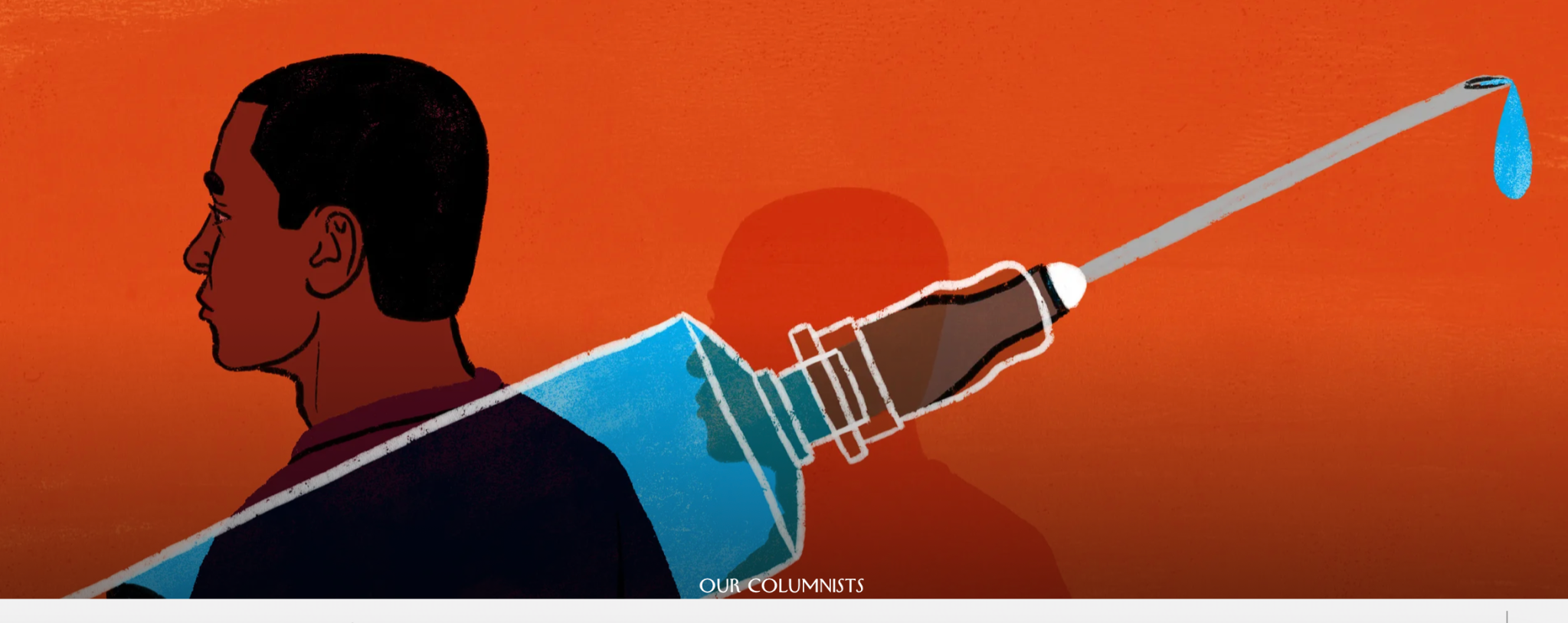
Mixed Feelings About the COVID-19 Vaccine

Robert Naseef January 14, 2021

Having mixed feelings is a common experience, including for fathers loving children and adults on the autism spectrum. In our fathers’ support group sponsored by the A. J. Drexel Autism Institute, we have established a safe monthly space to express the mixture of passionate love for our families and our frustrations with the challenges especially during the pandemic. An increasing number of our members have direct experience with COVID-19 in their families and social networks. During our December 19 meeting, different perspectives on the newly released vaccines came to the surface expressed initially by some of our Black fathers.

Vaccine hesitancy is widespread in the U.S. According to the Pew Research Center (http://pewrsr.ch/3n8SYHC), 60% of Americans say they would definitely or probably get a vaccine for the coronavirus. The remaining 40% report they definitely or probably would not get a coronavirus vaccine. About half of this group may decide to get vaccinated when more information becomes available. Hesitancy is however gradually decreasing across ethnic groups since September 2020. (http://bit.ly/38P6dby).

As of December 18, when front-line medical workers began to get the vaccine, (http://cnn.it/3pMob59) nearly 35% of Black Americans were hesitant to get the vaccine compared to 26% of White Americans. Notably, Republicans have a similar rate of hesitancy as Black people though their reasons are political rather than racial. For Black people the impact of the Tuskegee Study, Henrietta Lacks, and Dr. J. Marion Sims are in the historical record of using Black people as guinea pigs (http://on.today.com/3hCESxp) along with the ongoing systemic racism which has surged in public awareness and expression during the COVID-19 Pandemic.

This history of systemic racism in medicine is manifest through infant mortality rates that are twice as high for Black Americans and Indigenous Americans as Whites (http://bit.ly/3b3xOIW). In the catastrophic death toll of COVID 19, Black, Hispanic and Native American cases and deaths far exceed their share of the population, while White rates have stayed disproportionately low. As NBC news has reported (http://nbcnews.to/2LfcHII), Black Americans who contract COVID-19 have been 3.7 times more likely to require hospitalization and 2.8 times more likely to die than whites. A major reason for this disparity is because Black Americans are also more likely to have underlying health conditions and less likely to have health insurance or access to adequate care.
While some members of our group are enthusiastic to get the vaccine and hope for things to get back to what we remember as “normal,” all listened and heard each other out. One father, an ER doctor who has received the vaccination himself, validated that the history of medicine has done no favors for Black people and People of Color. He stressed the need for informed consent, meaning that individuals have to be comfortable with the risks associated with what they are doing. Waving journal articles and statistics in front of skeptical people is neither useful nor effective. Another member expressed still being scared of the possibility of getting COVID. And though the vaccines are mostly good news, he also shared his concerns about the rapid “warp speed” development process in our highly polarized political environment.

All voices on this hot button issue and other issues are welcome in our racially diverse and multifaith group. We believe it is vital to honor everyone’s perspectives. We listen in order to hear and understand as opposed to give advice and fix stuff. We draw strength from each other through our common bond across our differences. Our reach has grown over the 9 months of the pandemic, so we are moving our meeting time to 11:00 AM Eastern in order to accommodate fathers in other time zones. We will also meet for 75 minutes, so we can break up into smaller groups for part of the time in order to have more interaction. We would be glad to have you join us on Saturday, January 16, 2021.

Wishing you and your families peace and health as the new year unfolds,

Robert Naseef & Michael Hannon 

From The New Yorker, "Black America Has Reason to Question Authorities," Click to read the article.

Comment

Talking to Young Children about Violence in the News

Robert Naseef January 10, 2021

Scroll down for Spanish.

On this first week of the new year, our Center is reviving the Friday Focus to share our sadness and dismay at the violence at the Capitol this week. We condemn the actions of domestic terrorists. We uphold civil actions of peaceful protest that have allowed our democracy to continually advance on the long arc journey to justice. We stand together against violence with conviction, understanding, discourse, and resolve to work for justice and for peace. 

We understand that our children are watching. Many adults may wonder whether they should shield or protect children from the violent events of this week. In developmentally appropriate ways, we encourage adults to educate children on our political system in general, and of the attempted insurrection of January 6th in particular. We believe democracy survives because of awareness, peaceful critique, and civic action. 

We also know that being exposed to violence can be scary for children. We have included guidance below to assist you through a conversation with children about the violence at the Capitol. 

Let us be clear-eyed and honest with our children about our collective societal failures and political faults, especially the continual restriction to the freedom guaranteed by our Constitution for so many. But let us also be hopeful that the foundation of positive relationships and healthy development that our work supports will provide the base on which we build the democracy that reflects our highest ideals of life, liberty and the pursuit of happiness for all. 
 

Ten Tips for Talking with Children about the Violence at the Capitol

1. If you feel uncertain about how to start this conversation with children, practice with adults first. Notice the parts of the conversation where you might need assistance and ask for support from other adults.

2.Ask children what they know and what they have heard. Listen to the child's story and follow the child's lead. Use simple language and correct any misunderstood accounts. Tell a child what they need to know, not all that you know.
 
3.Be there and be calm. Monitor your own emotion and tone of voice. Pay attention to your gestures, affect, and voice because children pay special attention to these ways of communicating. Children scan the faces, voices and movements of others to discern safety. Your presence, voice, words, soft and loving touches, provide each child with the best ways of feeling safe.

4. Share your feelings. It is okay and important for children to know that the adults in their lives have the same feelings when bad things happen. Ask about their feelings. Often children will experience and express their feelings through their body states. Ask them "what” and “where" they feel (e.g. head, tummy, chest, neck, etc.) as well as "how" do they feel. 

5.Recognize that there are some feelings that we can only share and cannot fix: Children need us to be there with and for them at such times. It's appropriate to both not have an answer and be with the children in their sadness and confusion.

6. While we encourage telling children about the events of January 6th, monitor repeated exposure to images and reports of the events. Provide enough exposure to inform, but not frighten.

7. If children do get scared, remember the 3R's of security: Relationships, Routines and Restoration. Highlight relationships with familiar and consistent caregivers, family and friends. Protect and increase routines that are familiar and normalizing.

8. Provide structure and communicate safety: Uncertainty is the province of adulthood. While we as adults may feel unsure of the state of our democracy, we must always let children know that we will take care of them and protect them. 

9.A sense of mastery can help alleviate fear and uncertainty. Encourage your children to get involved in a community or service program such as collecting items for a food bank, making a call to their Congressperson, signing a petition or writing a letter to someone in local government about something that they would like to help change in their community.

10. Remember to take care of yourself: We have all been living with the collective stres
s of Covid-19 and political uncertainty for a l-o-n-g time. Yet, we know that if the adults in a child's life are overwhelmed, overstressed and overtired, it will be more difficult for the child to feel safe, secure and stable. Prioritize the cultivation of the "ABC's" of self-care: awareness, balance and connection, in your own life.

(Costa, G. & Mulcahy, K, 2021)

Montclair State University | Center for Autism and Early Childhood Mental Health, 147 Clove Road, Little Falls, NJ 07424

SPOTLIGHT ON STORIES!

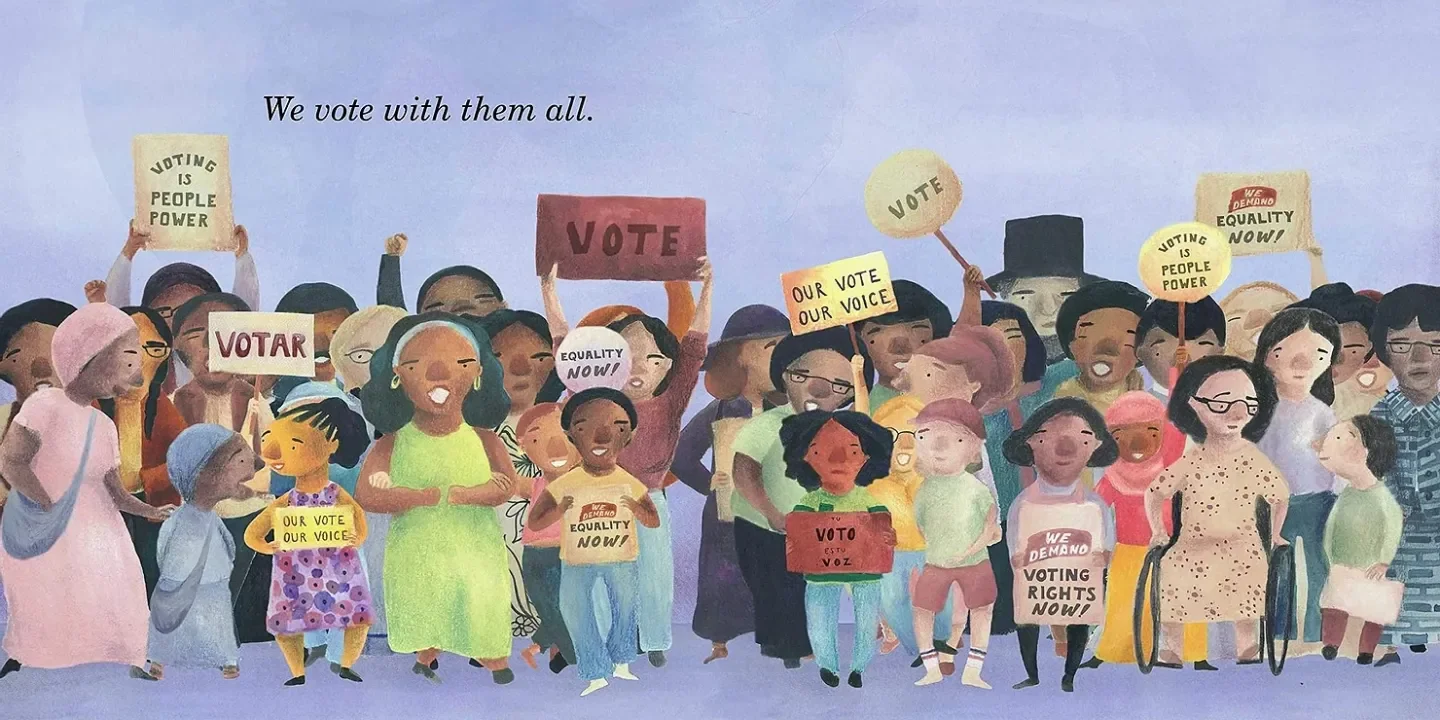
We know that stories can help communicate difficult topics to children. We love this list of books about elections, politics and civic engagement from the Helping Kids Rise organization. See if you have any in your library!

Books about Elections, Politics and Civic Engagement

Enfoque: Hablar con los niños pequeños sobre la violencia en las noticias

En esta primera semana del nuevo año, nuestro Centro está reviviendo
el Enfoque del Viernes para compartir nuestra tristeza y consternación
ante la violencia en el Capitolio esta semana. Condenamos las acciones
de los terroristas domésticos. Defendemos las acciones civiles de
protesta pacífica que han permitido que nuestra democracia avance
continuamente en el largo camino hacia la justicia. Nos unimos contra
la violencia con convicción, comprensión, discurso y determinación
para trabajar por la justicia y por la paz.
Entendemos que nuestros hijos están observando. Muchos adultos
pueden preguntarse si deben defender o proteger a los niños de los
eventos violentos de esta semana. De manera apropiada y de acuerdo
al nivel de desarrollo, alentamos a los adultos a educar a los niños
sobre nuestro sistema político en general, y sobre el intento de
insurrección del 6 de enero en particular. Creemos que la democracia
sobrevive con la conciencia, la crítica pacífica y la acción cívica.
También sabemos que estar expuestos a la violencia puede ser
aterrador para los niños. Hemos incluido a continuación la guía para
ayudarle a conversar con los niños sobre la violencia en el Capitolio.
Seamos claros y honestos con nuestros hijos sobre nuestros fracasos
sociales colectivos y nuestras faltas políticas, especialmente la continua
restricción a la libertad garantizada por nuestra Constitución para
tantos. Pero también tengamos la esperanza de que los cimientos de
las relaciones positivas y el desarrollo saludable que nuestro trabajo

apoya proporcionarán la base sobre la que construimos una
democracia que refleja nuestros más altos ideales de vida, libertad y la
búsqueda de la felicidad para todos.
Diez consejos para hablar con niños sobre la violencia en
el Capitolio
1. Si no está seguro de cómo iniciar esta conversación con los niños(as), practique
primero con los adultos. Observe las partes de la conversación en las que podría necesitar
ayuda y pida apoyo a otros adultos.

2. Pregunte a los niños(as) qué saben y qué han escuchado. Escuche la historia del niño(a)
y siga su liderazgo. Use un lenguaje sencillo y corrija cualquier malentendido. Dígale al
niño(a) lo que necesita saber, no todo lo que usted sabe.

3. Estar allí y estar tranquilo. Monitorea sus propias emociones y tono de voz. Prestar
atención a sus gestos, afecto y voz porque los niños(as) prestan atención especial a estas
formas de comunicación. Los niños(as) escanean los rostros, voces y movimientos de los
demás para discernir la seguridad. Su presencia, voz, palabras, toques suaves y amorosos,
proporcionan a cada niño(a) las mejores maneras de sentirse seguro.

4. Comparta sus sentimientos. Está bien y es importante que los niños(as) sepan que los
adultos en sus vidas tienen los mismos sentimientos cuando suceden cosas malas.
Pregúnteles por sus sentimientos. A menudo los niños experimentarán y expresarán sus
sentimientos a través de sus estados corporales. Pregúnteles "qué" y "dónde" se sienten
(por ejemplo, cabeza, barriga, pecho, cuello, etc.), así como "cómo" se sienten.

5.Reconocer que hay algunos sentimientos que sólo podemos compartir y no podemos
arreglar: Los niños(as) necesitan que estemos allí con y para ellos(as) en esos momentos.
Es apropiado no tener una respuesta y estar con los niños(as) en su tristeza y confusión.

6. Si bien animamos a contar a los niños(as) acerca de los acontecimientos del 6 de
enero, supervise la exposición repetida a imágenes e informes de los acontecimientos.
Proporcione suficiente exposición para informar, pero no asustar.

7. Si los niños(as) se asustan, recuerde las 3R de seguridad: Relaciones, Rutinas y
Restauración. Resalte las relaciones con cuidadores, familiares y amigos consistentes.
Proteger y aumentar las rutinas que son familiares y normalizadoras.

8. Proporcionar estructura y comunicar la seguridad: La incertidumbre pertenece a la
edad adulta. Si bien nosotros, como adultos, podemos sentirnos inseguros del estado de
nuestra democracia, siempre debemos hacer saber a los niños(as) que los cuidaremos y
los protegeremos.

9.Un sentido de maestría puede ayudar a aliviar el miedo y la incertidumbre. Anime a sus
hijos(as) a involucrarse en su comunidad o en un programa de servicio, como recoger
artículos para un banco de alimentos, hacer una llamada a su congresista, firmar una
petición o escribir una carta a alguien en el gobierno local sobre algo que les gustaría
ayudar a cambiar en su comunidad.

10. Recuerde cuidarse: Todos hemos estado viviendo con el estrés colectivo de Covid-19
y la incertidumbre política por un tiempo l-a-r-g-o. Sin embargo, sabemos que si los
adultos en la vida de un niño(a) están abrumados, sobrecargados y cansados, será más
difícil para el niño(a) sentirse seguro, protegido y estable. Priorizar el cultivo de las "ABC'
del cuidado personal: conciencia, equilibrio y conexión, en tu propia vida.
(Costa, G. & Mulcahy, K, 2021)

SPOTLIGHT ON STORIES!
Sabemos que las historias pueden ayudar a comunicar temas difíciles a los niños. Nos
encanta esta lista de libros sobre elecciones, política y compromiso cívico de la
organización Helping Kids Rise. ¡A ver si tienes alguno en tu biblioteca!

Books about Elections, Politics and Civic Engagement
Comment

Fathers Making Sense of our World: Summer 2020

Robert Naseef June 24, 2020

Our virtual meetings are growing and open to fathers everywhere to participate. Our Philadelphia based group at the AJ Drexel Autism Institute has become national and international. Participation can come in the form of solely listening or actively contributing to our conversations. Mark your calendars for this Saturday, June 27 at 10:00 AM, Eastern US.

We stand at the intersection of celebration and sorrow. On one hand, summer has arrived. Summer represents – for many of us – an opportunity for reprieve and more engaged family time.  We just celebrated Fathers’ Day and we are so grateful!  Many of our families and partners celebrated our contributions and support we provide our families. At the same time, the pandemic and systemic racism are not taking a vacation, so we invite you to join us to talk about how to support each other facing these realities.  In the midst of these moments, as we ponder the dangers in sending our children back to school, there exist countless opportunities to step up and become better men, fathers, partners, brothers, and friends. We continue to be transformed by the journey of raising children on the spectrum, as we support each other in a multi-racial, multi-ethnic, and multi-faith group of fathers.

            Our group has broached and acknowledged the disparities that children of color and their families face getting an ASD diagnosis as well as the vital intensive services necessary for our children’s success and quality of life. In our last meeting via Zoom, we talked about how to explain the protests against systemic racism to our children.  One father shared the difficulty in explaining the curfew in Philadelphia to his son. It’s difficult. Another father, who is an immigrant, shared how his son with autism was told to go back where he came from even though he has only lived in the United States. This was clear evidence that racism is alive and well in our most intimate communities. As a group we shared our deeply seated fears about the added vulnerability dealing with the police and the criminal justice system that our children, especially children of color, live with every day. Our meetings give us time, space, and safety to help make sense of our world. We honor the men who have engaged with us so far, and invite you (if applicable) and your father friends to engage with us in this historic time.

Stay Safe and Peace brothers,

Michael Hannon & Robert Naseef

Comment

Diversity is Awesome

Robert Naseef June 24, 2020

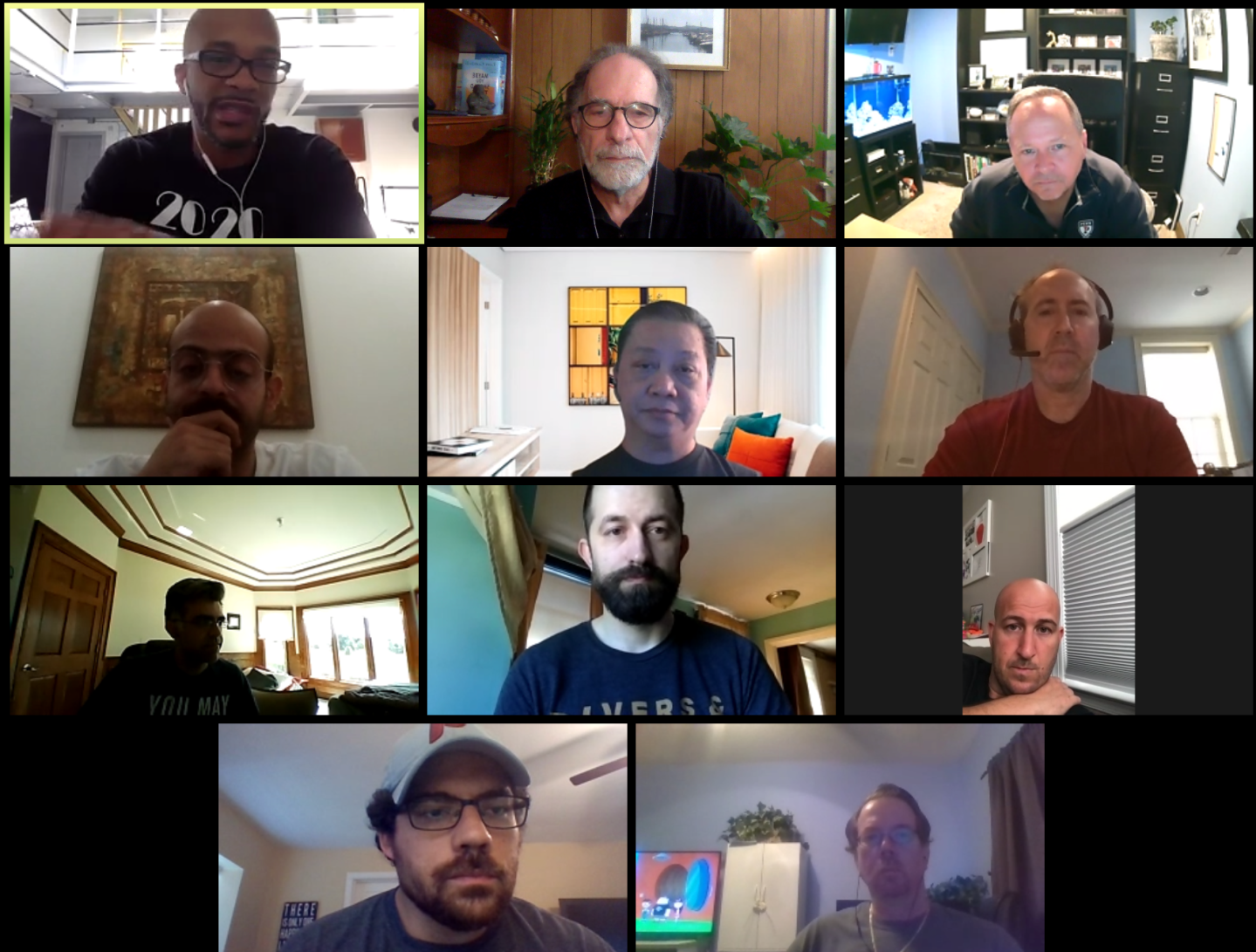
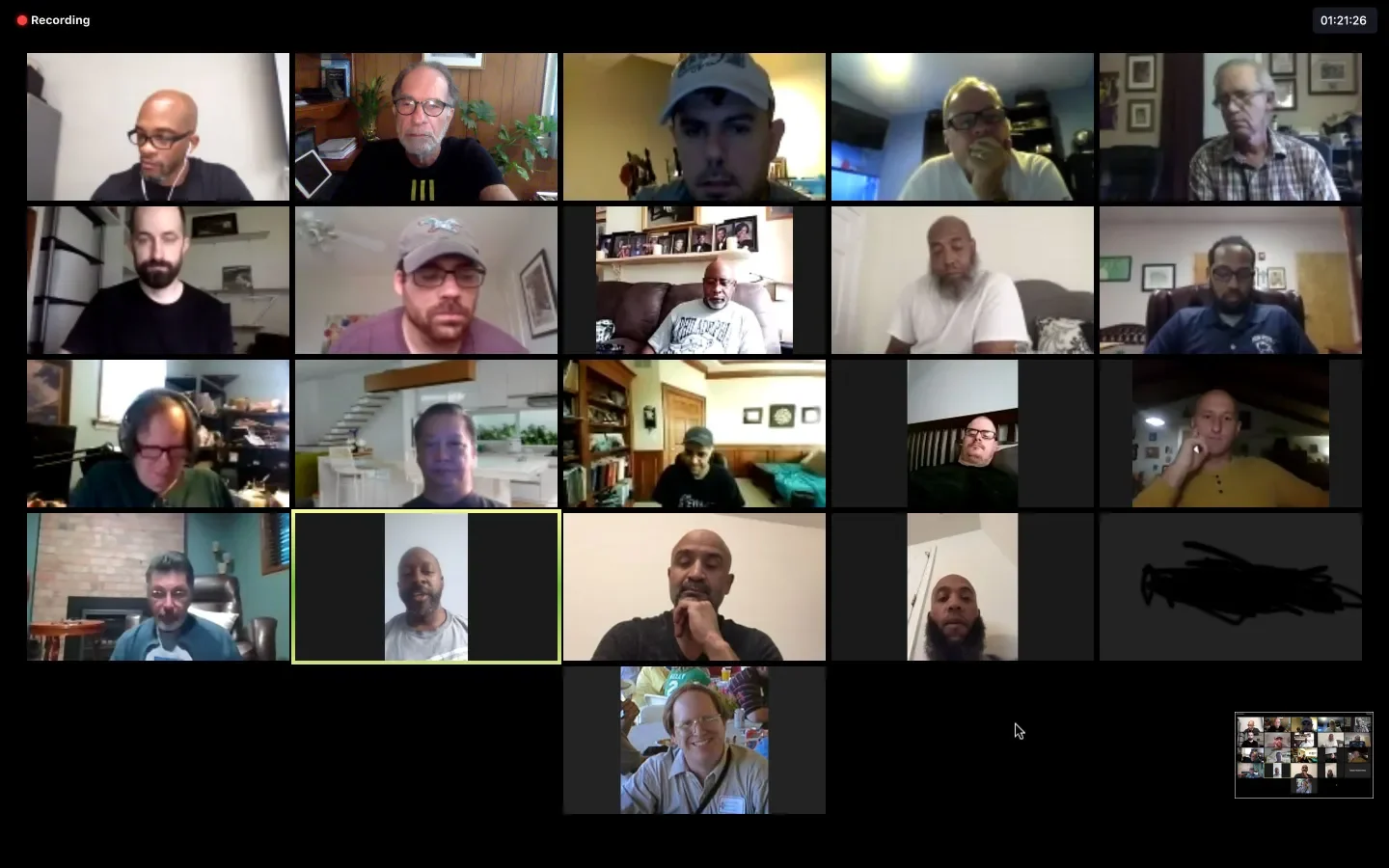
As one of our regular members put it, the Zoom Gallery view of our August fathers’ group was AWESOME. Our group, which started one year ago in Philadelphia at the AJ Drexel Autism Institute in Philadelphia, now draws men from as far away as Boston, Chicago, and Hawaii, where it was 4:00 AM, for this meeting. Another father shared that looking at the screen told him that we have more in common than we think as we listen to each other’s stories which touch home. Our conversation was not just about COVID and whether our children would learn virtually or in person and the dangers of going to school. Everything else going on in the world with racial injustice was clearly impacting the men who had come to this meeting on a deep level. 

One father explained his belief that diversity is what the world needs more than ever right now. He was inspired by everyone standing up to racial injustice from athletes and celebrities to everyday people. He has been moved and changed himself by what he has gotten out of our group that comes together for our children and our families with a vision of also making changes in the world that will benefit our children. 

Another man struck a deep chord when he said, “Finally a safe place!” He found it extremely encouraging and a great platform to say whatever he wanted without judgment to express his truth. The vulnerability shared in this meeting, contrary to the male stereotype, was actually a strength. As someone commented, “Depression and fear flourish in darkness. When you shine a light on it, it changes everything when you realize you are not alone.” Pride and joy in our children’s accomplishments as well as disappointment and sadness in some of our struggles got comparable airtime.

Our diversity was and is powerful and encouraging. We hope to see you at our next meeting, this Saturday, September 26, at 10:00 AM, Eastern. We are thankful for the safe and soulful space that our group is growing into and providing.

Wishing you safety and peace, brothers!

Robert & Michael

P.S. For login info, please email autisminstitute@drexel.edu

Comment

Being Part of the Change We Want to See

Robert Naseef June 9, 2020

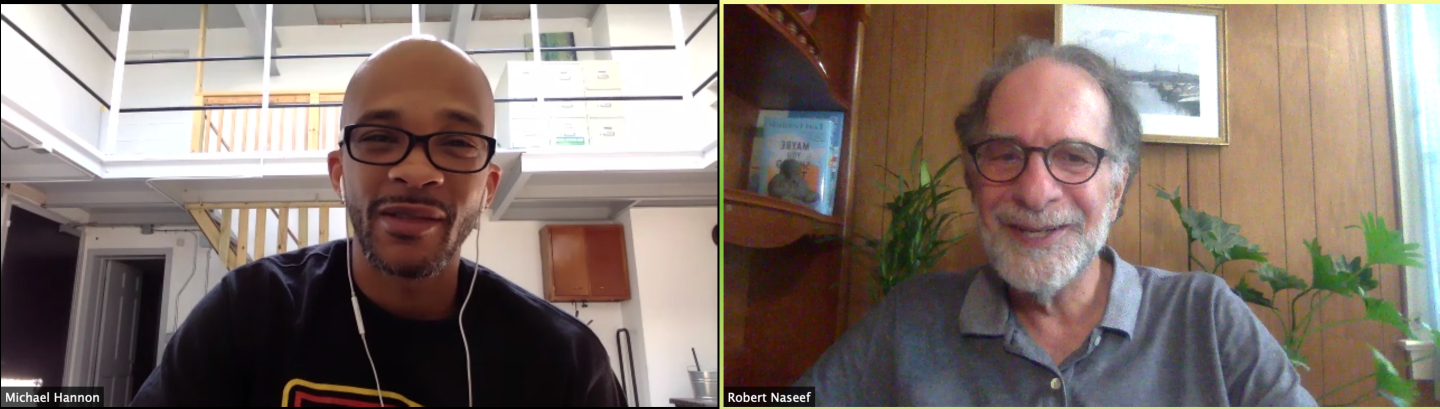
Brought together by our love for our children growing up on the autism spectrum, a diverse group of fathers has been meeting since September 2019 with the support of the A. J. Drexel Autism Institute. Drs. Michael Hannon and Robert Naseef have facilitated the group drawing from a depth of lived and professional experience. It’s generally rare, but so welcome and vital, to see racially and ethnically diverse men sharing the same space for support. Our group has often discussed the disparities that exist between children and families of color and White children and families in getting the ASD diagnosis as well as the vital intensive services necessary.

Our last meeting via Zoom on May 30, we aired our honest, pent up frustrations after over 10 weeks of quarantine. We all admitted some form of anger at the world, acute symptoms of anxiety and depression, less patience with loved ones, more alcohol consumption, all while cities across the country burned with the flames of protest against police violence against Black citizens in hopes for some semblance of justice.
 
Our virtual meetings are open to fathers everywhere to participate. That participation can come in the form of solely listening or actively contributing to our conversations. Mark your calendars for this Saturday, June 13 at 10:00 AM, Eastern. We are living through some horrible moments as “I can’t breathe!” echoes deep in our collective souls. Nonetheless, in these moments, there exist opportunities to be better men, fathers, partners, brothers, and friends. As we continue to be transformed by the journey of raising children on the spectrum, we have an opportunity to be a part of the change we want to see in the world in representing a multi-racial, multi-ethnic, and multi-faith group of fathers.

Stay safe, and peace brothers!

Michael & Robert

P.S. If you're a dad interested in joining the meeting this Saturday morning, you can email autisminstitute@drexel.edu for the login information.

Comment
  • Dr. Naseef's Blog
  • Older
  • Newer
facebook youtube instagram

Alternative Choices in Psychotherapy and Autism Evaluation

Philadelphia, PA

Alternative Choices | 319 Vine Street #110, Philadelphia, PA 19106, USA

facebook youtube instagram