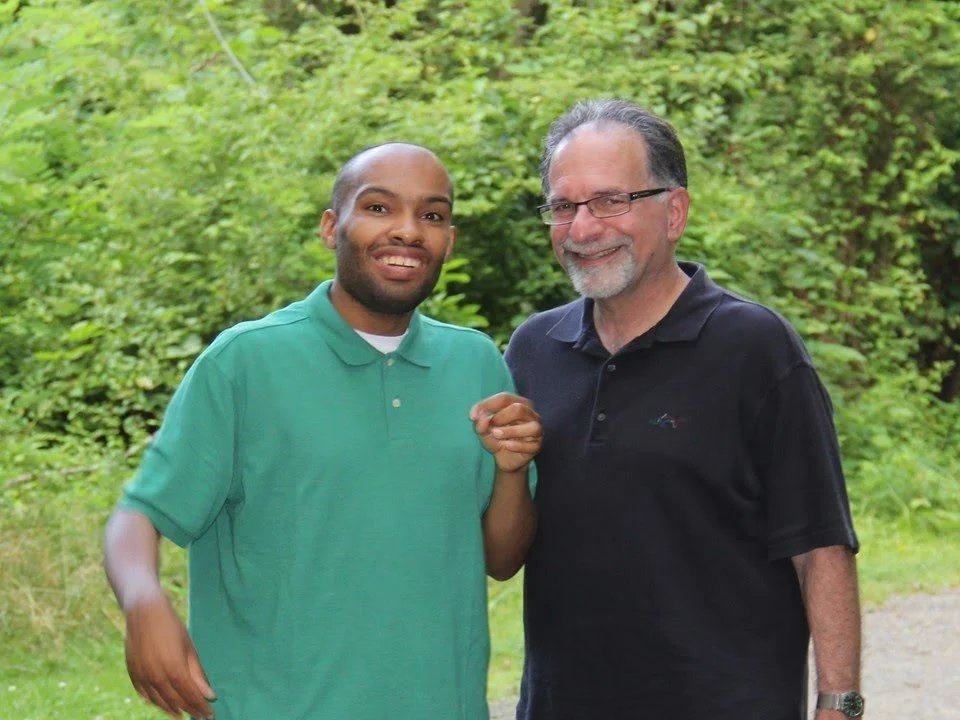
The humanistic concept of neurodiversity has shown great promise in uniting people from all walks of life across race, class, ability, diagnosis, etc. Some prominent voices in the autism world are proposing a new category which they are calling “Profound Autism.” My son, Tariq, born in 1979, would fit in this category. From my view, this would be a big mistake, and we should not let it happen. First, some background.
The term “profound autism” first appeared in the scientific literature in 2021in The Lancet Commission on the Future of Care and Clinical Research in Autism. This report describes those with “profound autism” as being at least 8 years old, requiring 24-hour access to an adult caretaker, and having cognitive ability measured by IQ of less than 50 and/or non-speaking or minimal verbal ability. In its Executive Summary, the Lancet Commission calls for dramatic action over the next five years to bring desperately needed supports and services to autistic children and adults and their families worldwide based upon their individual differences, strengths, and needs. Although the heterogeneous nature of the autism spectrum is explained well, none of this is new, save for the division of a new category. The Commission takes a social justice perspective noting that services are woefully underfunded even in high income countries and almost nonexistent in low-income countries. They note that most of the research to date has been based on white males. Even in the United States, it is well documented that funding varies considerably according to the local school districts which significantly disadvantages children and families by race and class.
Alison Singer, President of the Autism Science Foundation, recently published It’s time to embrace ‘profound autism’ in Spectrum. She argues that the new diagnosis is needed to better serve this vulnerable and underserved population which she sees as left behind by the autistic self-advocates who can speak for themselves. The stereotype of autism in the mainstream media has certainly shifted from the non-speaking to the self-advocates. Major autism conferences, such as the one she described feature speakers who do not represent the full breath of the autism spectrum. Of course, parents including myself fantasized that my son could grow up and be like another Temple Grandin. I would argue that a new category does not solve this problem. This can be corrected by conference organizers doing a better job covering the full range of needs and services across the spectrum.
My view is informed by my lived experience raising my Black biracial son in the Philadelphia area. When Tariq was born, and I held him in my arms, I imagined he would be a better version of me. He would be more patient, more athletic, and have a good life with success, and most of all I wanted him to be happy. He stopped speaking at 18 months and started pacing and flapping, behaviors that he still uses to regulate himself. Unaware of danger, he wandered away and required constant attention. He didn’t sleep through the night, and he even escaped by climbing out windows or going down fire escapes. He smeared feces at home and in school. He destroyed things at home, including his little sister’s artwork. When he was diagnosed with autism in his fifth year, my dream of a normal son was obliterated. I was resolved to do everything I could to help him have as normal a life as possible. My journey to acceptance was paved by a friend and colleague who helped me to realize that I was mourning a lost dream. His therapists and teachers helped me to focus on what he could do as opposed to what he couldn’t do. But they couldn’t help him speak to me and that broke my heart, over and over. Nonetheless, I began to enjoy what we could do together. This is a brief overview about my experiences which I have written about extensively.
Tariq always received the best services that were available in our area. I always thought that this was because I was such a good advocate for him. I have come to realize that that is far from the full story. Many of the mostly Black children who were in his early intervention program had the same behaviors. As far as I know, he was the only one diagnosed with autism because I could not accept him being diagnosed with mental retardation. I have come to understand that it was because of my white skin privilege and my educational advantages that he got the best level of care available. By the time Tariq was nine years old, it had become increasingly difficult to keep him safe at home and at school. Through the due process procedure, he was placed in a full-time residential program at the Devereux Foundation. He grew up and lived there until he was 22 years of age; currently he lives in a KenCrest group home in the Philadelphia area. I credit the good care that he has received there including keeping him safe and healthy during the COVID-19 public health emergency. In his life now, he is autistic all of the time and a happy man most of the time.
Although he has many challenges, he has done his best. I tried so hard to change him, and in the end, he changed me. He made me become a better version of myself—a better man, a better father, and a better partner. This is the journey I am still on. Like many other parents of nonspeaking autistic children, I have had imaginary conversations with him many times over the years, and I wonder what he would tell me if he could speak. In a 2019 blog, I imagined what he would say to me.
The growing cohort of autistic adults has contributed profoundly to my understanding of autism. Trailblazing Jim Sinclair wrote “Don’t Mourn for Us” in1992. While some amount of grief is normal, getting stuck there, according to Sinclair “is damaging for both the parents and the child, and precludes the development of an accepting and authentic relationship between them.” The real grief in Sinclair’s view is not autistic people themselves, but rather that our world has no place for them (or you can say – does not create space for them. Parents are urged to get angry about that and change this situation.
For anyone who wants to understand autism at a deepened human level, I would urge you to listen to and read the advice of autistic adults who are self-advocates, for starters:
Temple Grandin proclaims that she is “Different but not less.”
Dena Gassner teaches, “You don’t outgrow autism, you grow into it.”
Michael John Carley says, “Acceptance is a start not a finish.”
Jennifer O’Toole says “The face of autism is changing. And more often than we realize, that face is wearing lipstick.”
Stephen Shore says, “If you know one child with autism, you know one child with autism.”
Keep listening to voices of autistic people that, unlike my son, have been able to communicate in ways you can understand, and keep reading the work of the Autistic Self Advocacy Network (https://autisticadvocacy.org/)
Inspired by my son, I have developed a voice in the Autism Community. I have served on several boards and spoken to conferences around the country and internationally. I am not meeting parents or self-advocates who are asking or suggesting a new category. The main questions I hear are “How do I help my child?” or “How do I get help for myself.” Like many other groups pushing for change, the autism community has had numerous splits and factions. We don’t need more of that.
With my friend and colleague, Dr. Michael Hannon, I have cofacilitated a fathers’ support group at the AJ Drexel Autism Institute. Our group is diverse in many respects. We have fathers from various ethnic groups and faith traditions who take care of children of various ages and developmental levels, from the newly diagnosed to adulthood. In addition, some of our members are autistic themselves and provide valuable insight into understanding the language and communication styles of our children. We meet monthly and provide a safe place for fathers to share and celebrate their wins and express their deepest frustrations. At the end of every meeting, we share what we have absorbed from each other. Invariably the men there express how they have been supported by our common humanity.
The unmet needs of autistic children and adults and their families are a global public health emergency. Let’s not divide people up further. Let’s unite and go forward with a humanistic vision that everyone should get the supports they need to lead a full and rewarding
Comments:
5 responses to “Let’s NOT Divide the Autism Spectrum: My view from the trenches on Profound Autism”
Very poignant article. I quit attending autism conferences long ago when they seemed to only address a certain portion of the spectrum. I felt left out. As you know, Caleb had many challenges, and I would often describe him to others as “low functioning” because otherwise people assumed a profile of him that was not accurate. Oh, how I miss him. Now I have a grandson recently diagnosed on the other end. Thank you for all you do and all you have been to me personally.
Like
Beautifully written, Bob. You and Tariq have ‘walked the walk’ before many of us with adult children with ASD. I still side with an appreciation of ‘profound autism’ as a more helpful way of distinguishing my son and others on this wide spectrum (and I really appreciated Allison’s article about the subject). But I SO respect and appreciate your perspective and how you eloquently share it. Thanks for helping so many of us dads appreciate the wonderful children we do have.
Like
Jack Scott
Robert This is a great article. You sum up a very complex set of issues nicely. I hope this has impact on decision makers
Liked by you and 1 other person
Suggesting respectful language is NOT censorship! – Morénike Giwa Onaiwu
[…] Let’s NOT Divide the Autism Spectrum: <strong>My view from the trenches on Profound Aut… From Dr. Robert Naseef, parent of a “profoundly autistic” son […]
Like
Very well said! Thank you for posting! I am constantly disappointed by all the divisiveness that has developed in the autism community in the last decade. We need to hear *all* the voices on the spectrum, in whatever manner people are able to communicate in. And we need to hear the voices of those nonautistics in our community who are willing to be respectful enough to treat us as valuable humans beings, and learn how to help us participate as ourselves in a socety that isn’t made for us. Respect doesn’t come from arbitrary categorizations, or divisiveness, it comes from community and open mindedness. From embracing diversity, not pigeonholing people into “worthy” and “unworthy” categories. We *all* deserve the support we need to live the best lives we can live, not just the support that fits other people’s ableist stereotypes of what someone “should” or “shouldn’t” need.
Liked by 1 person