Alternative Choices in Psychotherapy and Autism Evaluation

Philadelphia, PA
  • Home
  • Autism Diagnosis
  • Who We Are
    • Robert Naseef, Ph.D
    • Cindy Ariel, Ph.D
    • Robert Sher, Ph.D
  • Dr. Naseef's Blog
  • Public Speaking
    • About Dr. Robert Naseef
    • Keynote Topics
    • Previous Speaking Engagements
    • Endorsements
    • Videos
    • Contact
  • Our 4 Books
  • Contact
  • Home
  • Autism Diagnosis
    • Robert Naseef, Ph.D
    • Cindy Ariel, Ph.D
    • Robert Sher, Ph.D
  • Dr. Naseef's Blog
    • About Dr. Robert Naseef
    • Keynote Topics
    • Previous Speaking Engagements
    • Endorsements
    • Videos
    • Contact
  • Our 4 Books
  • Contact

Dr. Naseef's Blog

Robert Naseef's blog provides insightful views on neurodevelopmental disorders, especially Autism Spectrum Disorders. Combining personal experience and professional insight, he explores challenges faced by individuals on the spectrum and their families. The blog highlights understanding, acceptance, and practical support, serving as a valuable resource for caregivers and professionals seeking deeper awareness and effective strategies.

  • All
  • Acceptance
  • ADHD
  • AuDHD
  • autism
  • autism parents
  • autistic adults
  • autistic children
  • Autistic children
  • civil rights
  • Diagnosis
  • disability justice
  • disability rights
  • Fathers
  • medicaid
  • racism
  • Resilience
  • scientific integrity
  • social justice

Fathers Opening Up: The Space Where It Happens

Robert Naseef December 14, 2021

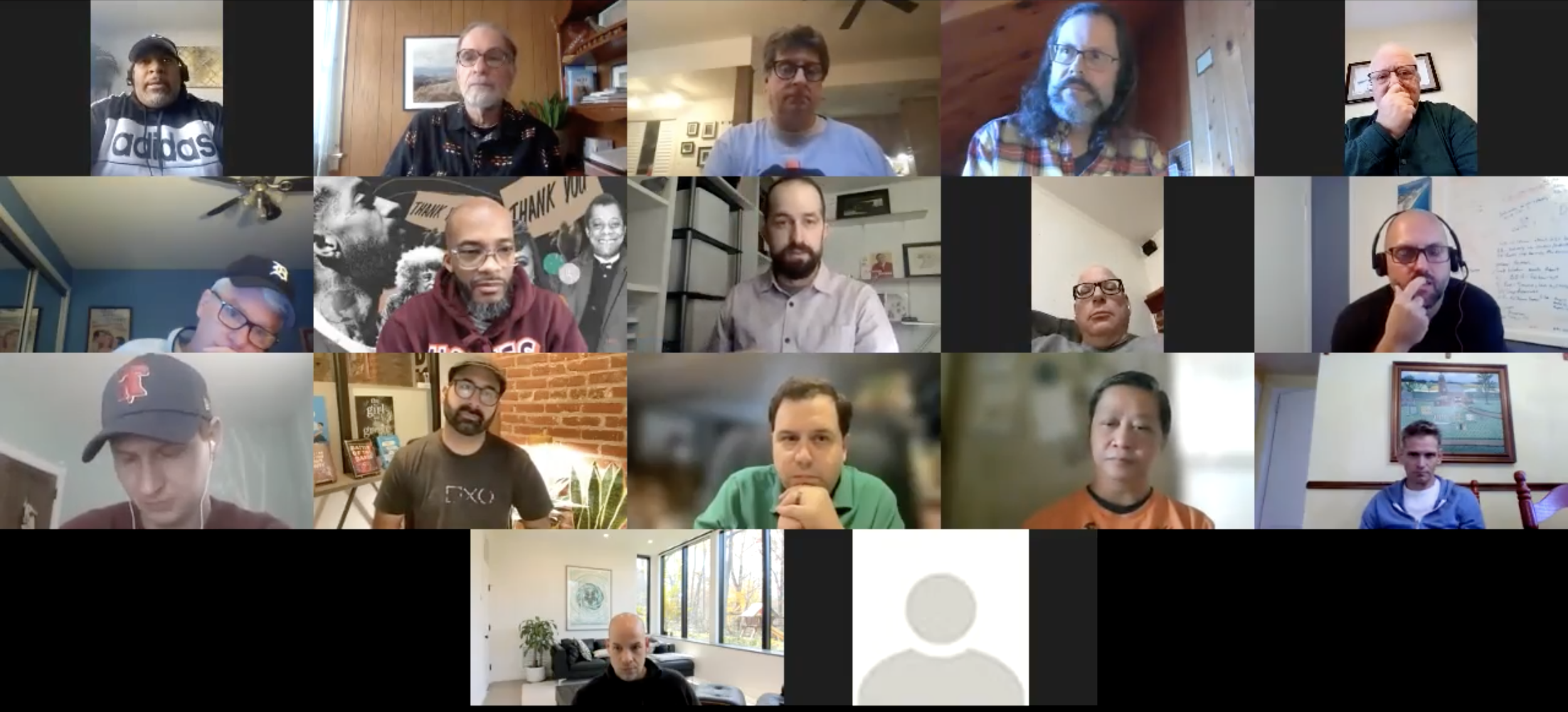
Our November meeting started out with some opening comments about acceptance. One father was brutally honest as he disclosed still trying to accept his young son’s autism diagnosis. What can we change? What can we live with? What do we have to live with? Can we live without shutting down or being in a consistently ugly mood because we're guys?

Acceptance was described as living in relative peace with life as it is, not what we want it to be. In the diverse and safe space that we have built for over two years, guys were invited to share things that they may not have felt brave enough or safe enough to say out loud about acceptance.

The father of a child who is minimally verbal shared how overwhelming it seems to think of his son's future as an adult. He has found that going day-by-day - sometimes moment-by-moment -  is the best. Another father, whose wife passed away, shared how exhausting it is as a single parent of his 28-year-old autistic son. Another man accepts and loves his child, but he confesses that it’s hard not to compare his experience to the neurotypical development (and privileges) he sees played out in his extended family and community.

Then the father of a 7-year-old who was diagnosed at 3 admitted, “I’m pretty angry at the world!” He became tearful and couldn’t say any more. We wondered what his tears would say if they could speak.

The Zoom room was temporarily quiet and reflective leading to an outpouring of support:

  • “You’re allowed to be angry”

  • “Angry about what? What's under the surface?”

  • “I'm beyond anger. I am really pissed. My 17-year-old is in residential care and the last three months have been the worst of my life.”

The men of older children, who are teens or adults, were able to share that it's OK if it feels like the anger is over, and it's OK if it's not over. As facilitators, we stressed that anger comes and goes at different volumes and with thoughts of injustice. Some older fathers shared that there are difficulties in accepting the aging process in their bodies that caused them to slow down and makes it hard to keep up with their children. While anger can be energizing and helpful to get out of a rut, as another pointed out, it's not always constructive. Gratitude for what is going right is useful, but not easy to access, because our default as men is to go with the anger.

A Black father from a southern state shared how difficult it was for him to wrap his mind around the diagnosis of his two children, because they are described as looking so normal but are so different. It was painful to hear people say, “They're so cute. They’re fine. You just worry too much!” After he got through his denial with the help of couples’ therapy, he was still angry about how difficult it was to get the proper services for his children.

Once again, the room got quiet for a few moments, and again there was an outpouring of support. There was emotional solidarity and lots of advice-giving which we couldn’t resist as men. Overall, our time together was full of the inspiring fire of raw male emotion. There was gratitude expressed for hearing these emotions expressed in a way that many had never experienced elsewhere. One father concluded that, “I’m positive to a fault.  It’s OK to be angry and ask, about what?”
Another wisely pointed out, “It’s easier to be mad than sad.” Others called our time in this supportive space as a highlight of their week because the emotional honesty was a revelation of buried feelings. It takes courage to listen and peel back the layers underneath the anger. What else is there?

If you are able, join us this Saturday, December 18, at 11:00 AM Eastern. If that doesn't work for you, we will be available on the 3rd Saturday of every month. For information about meetings contact AutismInstitute@drexel.edu

Stay safe, and peace!      

Michael and Robert

P.S. If you weren’t there and haven’t seen it yet, check out our Father’s Day Live event on YouTube. 
Comment

Listen to men talking about autism in the family

Robert Naseef September 15, 2021

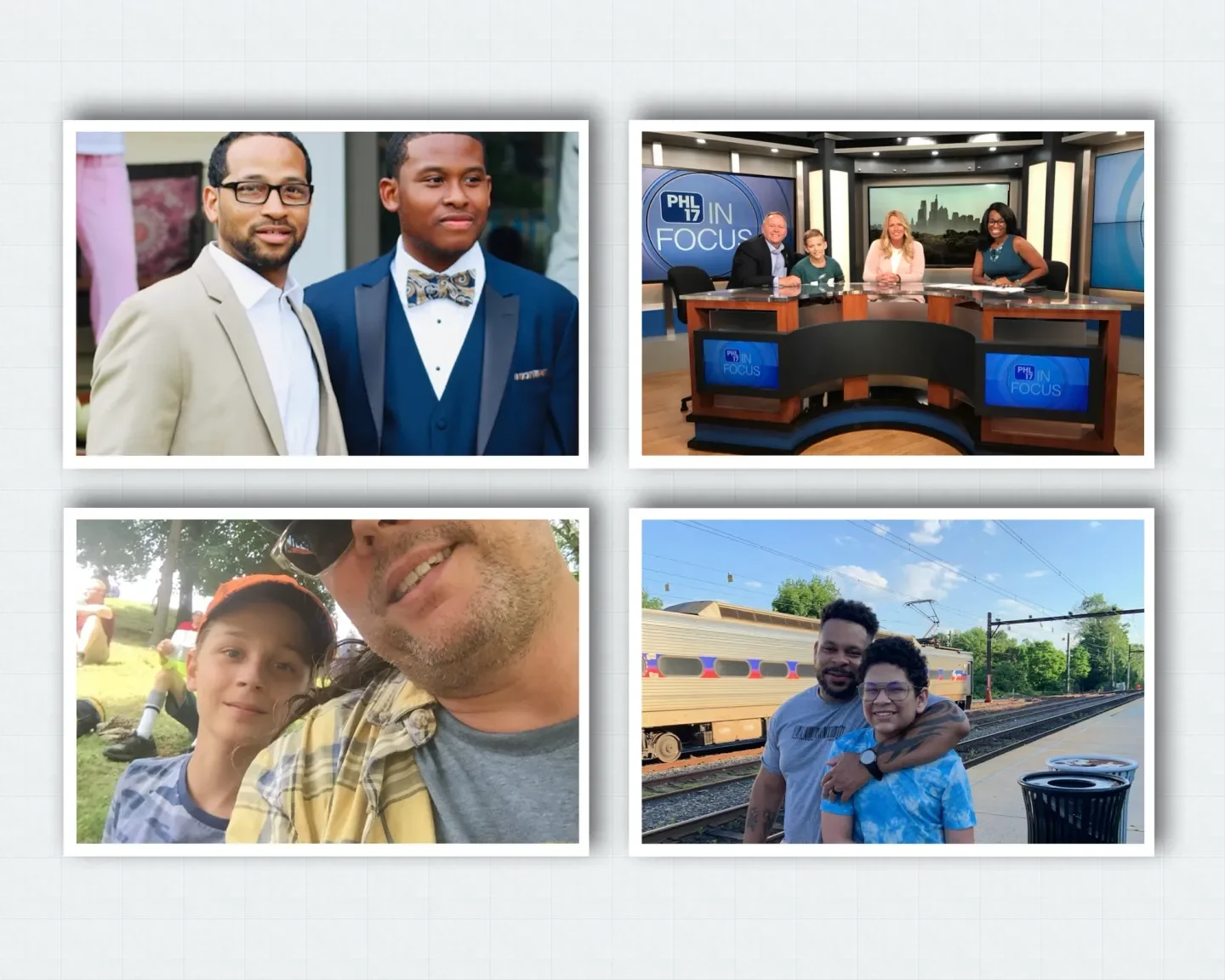
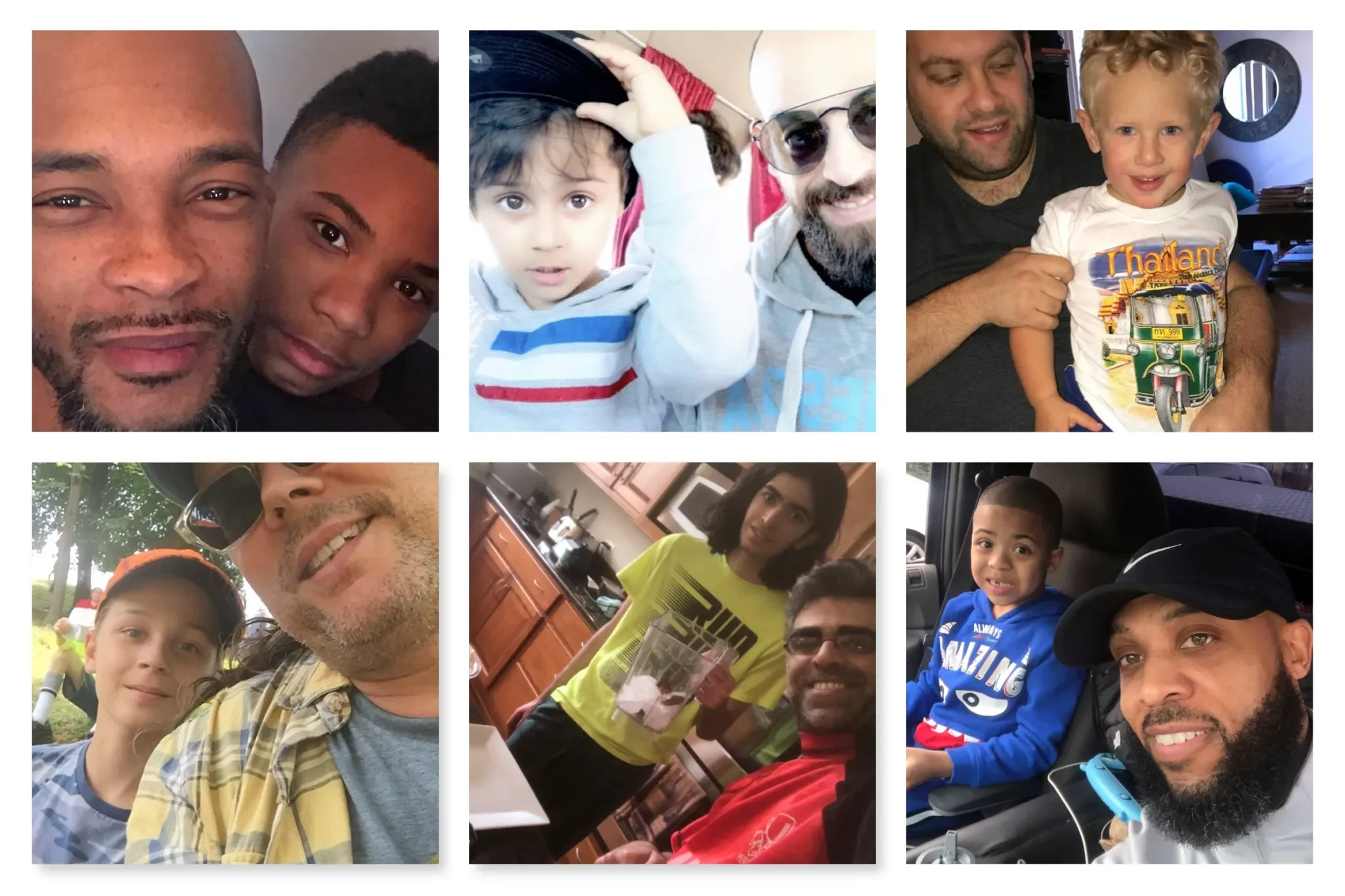
On the morning of Saturday, June 19th, the A.J. Drexel Autism Institute’s Fathers Autism Support got together for their monthly discussion, just as they have been doing since the fall of 2019. But instead of their usual, private meeting, which has evolved from a circle of chairs in a conference room at the Institute to Zoom meetings that span multiple states and time zones, the group opened up their space to an audience. “Hopefully you can hear what community sounds and feels like,” said one of the group’s leaders, Dr. Michael Hannon, an Associate Professor of Counseling at Montclair State University, who introduced himself as “a husband and father to two dope children.” Though Hannon and Dr. Robert Naseef, a clinical psychologist, author, and the father of an adult son on the spectrum, directed the conversation, the group operates under a support group model, which allows every member of the group the opportunity to share their stories. “This isn’t a program, there’s not a workbook. It’s a lot like catching up with a bunch of people in a similar situation over coffee.” said one father.

While many support groups exist for the parents of children on the spectrum, there are few that are limited to fathers. The specificity of this group has been instrumental in helping several of the members open up. “The first meeting was a sigh of relief. I needed this,” said one of the dads, who, like many others, initially attended at the request of his wife, who suggested he might “benefit from a third party” after his children were diagnosed with ASD. “It’s hard work to be socialized to think that boys and men are generally allowed to express heterosexual lust and anger, and anything else is considered feminine, or weak, or vulnerable. We can reframe what strength looks like.” Hannon said. Dr. Naseef added, “Learning to listen and speak our inner truth is an action. It’s not the unique territory of women.” Another father said, “It really can take courage and humility to make ourselves available to receive the wisdom that we need.”

Many of the group’s members talked about how valuable the diversity and neurodiversity of the group, not only in race, faith, location, and background, but also in the age range of children, has been to them. “It helps put me in perspective,” noted a father. “This group is a reminder to take joy in the journey. It’s nice to have a place to talk about these things and be heard and understood. It helps me be a better father. To love my son better.” said another.

Both Dr. Naseef and Dr. Hannon made a point to highlight that the event was being held not only during Father’s Day weekend, but on Juneteenth, a holiday celebrating the news of the 1863 Emancipation Proclamation finally reaching enslaved people in Texas in the summer of 1865. Naseef took a moment to acknowledge the uncomfortable reality that Juneteenth had been declared a federal holiday at the same time voting rights are under attack across the United States. As the discussion was coming to an end, Dr. Naseef recalled a quote from Dr. Martin Luther King, “the arc of the moral universe is long but it bends toward justice.” “When we can keep our fingers on the pulse of those who are being marginalized, like our children…our children, our family members, can help us bend that arc toward justice.” As Dr. Hannon said, "When Black Lives Matter, only then will all lives matter."

You can watch the full discussion below:

Comment

Beyond Cards and Letters:Being the Right Kind of Help

Robert Naseef May 11, 2021

We are past Mother's Day on the calendar, but it takes more than cards, flowers, and eating out (in normal times) to give our partners the appreciation for all they do each and every day. Mark your calendars for our fathers’ support group as we talk about appreciation and gratitude, especially for our partners this coming Saturday, May 15, at 11:00 Eastern Daylight Time. Our group is distinctively diverse by race and faith traditions and united by our love and commitment to our family members on the autism spectrum. We have supported each other and bonded through the COVID-19 pandemic. We have a core of regular members and visitors, Black, White, Hispanic, Asian, and Middle Eastern, from far and wide across the country and the globe. No surprise that many of our members got to us through their female partners who wanted us to speak up and put our feelings and experiences into words.

This Saturday, we will do that along with whatever else is coming up as our communities slowly open up to an uncertain new normal. At the end of the day, we're just guys so we always want to know what to do. It's through actions that we show our love, so here are few tips in the form of an action plan ahead of our meeting and for those of you who cannot attend:

  • Talk to her. Tell your partner how much you appreciate her and everything she does for your family. Be specific about all the wonderful things she does and how hard she tries.

  • Be present and available. Don’t do something.  Don’t make suggestions. Just be there. Volunteer to just listen to how she feels.

  • Be curious. Ask what you can do to make her job easier and thereby be the right kind of help.

  • Be consistent. Gently and persistently keep asking and showing up to do stuff.

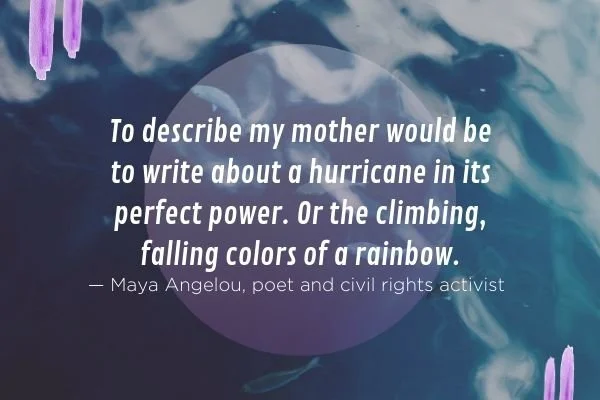
This is how to be a good man in your situation. Help her to take a breath, literally and figuratively. Let her know that she is indispensable.  Finally, remember one of the most important things a father can do for his children is to love their mother. No one can do a better job for your family. As Maya Angelou wrote, "To describe my mother would be to write about a hurricane in its perfect power. Or the climbing, falling colors of a rainbow."

On May 15 via Zoom, we will humbly take stock of lessons learned, the challenges before us, and the lives we want as we transition as a society from the public health emergency to whatever lies ahead. At the end of the day, we’re guys trying to help each other do the right thing.  

Wishing you safety and peace!      

Michael Hannon and Robert Naseef

For more information to attend the group, contact AutismInsitute@drexel.edu

Comment

Fathers' Voices on Being "The right Kind of Help"

Robert Naseef May 11, 2021

A lot has happened in the world since our Fathers' Support Group last met on October 17th. The presidential election is behind us, but the struggle for racial, social, and economic justice continues. Of course, we’ll discuss how today’s events impact us, but we will focus primarily on talking about what's happening within us and how we are growing, evolving, being pushed, and becoming uncomfortable as fathers loving people with autism. The honesty and openness of sharing our best and worst experiences has fueled the determination of men in our group as we are transformed by the experience of family life under pandemic conditions.

We’ve often talked about how to be the “right kind of help” for our families. It's no surprise that we want to get busy and fix things when there's a problem in our home. Cleaning the kitchen or vacuuming, however, might be the “wrong kind of help” when our family needs us to be more actively engaged. Listening carefully or asking how we can be helpful, if we can't figure it out, is what we need to do as opposed to getting busy and believing that we are helping. We might need to get on the floor or to the table and play. We might need to take our child for a walk or help to deescalate a meltdown. We might need to step up and give our partner a break to take a walk or just have a breather.

Another theme of our October conversation was the difficulties with social interactions when children are learning virtually. This can be really hard. The father of a four-year-old, seeing that his son wanted to interact with other children in the neighborhood, wondered with us about whether he should let him try.  Another father shared his disappointment and sadness about when his son went bike riding with two neighborhood friends who left him behind by himself. His son was able to find his way home by himself. But, what if that was not the case? We collectively pondered how to be the right kind of help when our sons or daughters try really hard to engage with others but don't experience success.

There is a strong desire to fix the problem, but do we step in? And, if so, when is the right time? We want our children to comply with how society works. Schools have their norms. Relationships have their norms. Work has its norms. But sometimes, we want them to have new norms!  We want to fix the world and make it more accepting, inclusive, and welcoming to our children who are different and to treat them with respect. And we’ve openly struggled with how to let them try, make mistakes, while supporting them and keeping them safe. Although this is a heavy load to carry, the honest sharing by men about  these issues engendered hope.

A question about the risk of having a second child with autism also came up. Recent research finds the risk of having a child with autism spectrum disorder (ASD) is about 1 in 54, almost 2%. But, if a family has one child with ASD, the chance of the next child having ASD is about 15%. If the next child is a boy, that child is 2-3 times more likely to have ASD than if the child is a girl. The risk of younger siblings having some ASD-like characteristics is about 20%. You can find more information about this here.

While we offer much more support than advice, we concluded that every child is unique and facing the uncertainty of another child possibly on the spectrum is really hard. If a couple doesn't think they can love unconditionally - whether that child is on the autism spectrum or not - then it's best to hold off. One of our regular members who has two children on the spectrum and is on the spectrum himself, shared that he has learned so much from his second child and become a better person as a result. 

As usual, we shared the lessons that we took away from our time together, such as working hard to be the “right kind of help,” feeling reassured to know that we are not alone, as well as the reminder that it's OK to make mistakes. We also engaged in our closing silent reflection on what we have learned from each other and contemplating the serenity prayer - accepting the things that cannot be changed, ​with courage changing the things that should be changed, ​with the wisdom to discern the one from the other. These messages ring profoundly true in our multiracial, multifaith, and neurodiverse group membership. We hope to see you at our next meeting, Saturday, November 21, at 10:00 AM, Eastern.  With gratitude and humility, we welcome you to the safe and soulful space our group is growing into and providing. Come to share your experiences, the joys and difficulties, and learn along with us.

Wishing you safety and peace!

Robert & Michael

P.S. If you're a father and haven't been in touch with us before and want to join in on November 21, email autisminstitute@drexel.edu.

2 responses to “Fathers’ Voices on Being “The right Kind of Help””

  1. ron oberleitner

    Nov 18, 2020 at 10:35 pm

    Edit

    Thanks for these important and heartfelt reflections in an incredibly anxious time (incl. for families who have children with autism). Hope to help make a more accepting and loving world for all in the future.

    Liked by you

    Reply

  2. Robert Naseef

    Dec 22, 2020 at 3:59 pm

    Edit

    It’s always great to hear from you, Ron. Feel free to show up for the fathers’ group whenever it might work for you and best wishes to you and your family for happy and healthy holidays.

Comment

Multiplying Joys and Dividing Challenges: Year Two of our Fathers Support Group

Robert Naseef March 16, 2021

We have been meeting by Zoom for a year after beginning in person in what seems like another era, in September 2019. Brought together by our love for family members on the spectrum, we are diverse by race, with fathers who are Black, White, Asian, Latino/Hispanic, and Middle Eastern. We come from different faith traditions that include Christianity, Judaism, and Islam. We come from all over the United States and a few other countries; our children’s ages range      from 3 into their 40s; and some of us have been diagnosed with autism ourselves. Our diversity inspires us and drives our efforts to be all we can be for our families. Once a month we gather together to support each other doing our best, and February was no exception.  We purposely took stock of what was going right and the challenges that lay before us.

As we started with what was going right, we celebrated: 

  • After weeks of patiently pushing, one father’s son started drawing and coloring and discovered his new interest and hobby;

  • One father’s child began singing his ABC’s from beginning to end after not saying more than one or two words at most;

  • Another father’s 43-year-old daughter was happy participating virtually in her group sessions;

  • A father’s teenage son and his friend on the spectrum enjoyed playing Dungeons and Dragons with his dad as the dungeon master in a game his father had played 35 years ago as a teenager himself;

  • Another father’s child began helping with chores after school;

  • One father’s 40-year-old adult son smiled for the camera for the first time;

  •  Someone’s two-year-old brought his hands together, signing for “more”, as he enjoyed the singing at Sunday worship bringing tears of joy;

  • A father heard his child spontaneously saying “cheese” for the camera;      

  • We acknowledged the joy in forming better connections with our children and partners;

  • We appreciated and affirmed  that “every victory counts!” as a father with Parkinson's told us he had learned from his Parkinson’s support group  

Our difficulties were never far from our minds: 

  •  One year into the pandemic, we are adjusting to the new normal but not liking it;

  • One father shared he was recovering from a scary covid infection, with a young adult in spectrum, preventing him from quarantining in his own home;

  • Another discussed his 38-year-old son with autism living on his own, isolated, afraid to go anywhere, and troubled by the news. 

One father courageously opened up about his difficulty and his pain connecting with his five-year-old son who ignores him.  He expressed feeling troubled because he sees his son being more interactive with his mother. With compassion, our group opened our hearts to him. One of our members, shared his wife’s QTIP, “Quit Thinking It’s Personal.” That helped him to stop expecting a hug or a Hollywood ending. He talked about pushing through to be in his son’s world and get into his orbit. 

Others shared their stories of going into their child's world connecting with dinosaurs or Thomas the Tank Engine and learning everything they could about their child's passions and interests. Another father shared having hockey sticks in his garage that were never used as he imagined while  learning to accept his son's interests. He learned from his partner that his son was more like a cat who will come to you on his own but not when you call him. This brought up a reference to the book,  All Cats Are on the Autism Spectrum. Readers may also want to check out, “5 Tips for Quality Play from Dr. GiacomoVivanti,” from the AJ Drexel Autism Center     

We shared that these are the moments for possible change and transformation when we might be feeling rejected or inadequate, and we have to move. We work with and through the pain because our love is stronger and helps us find possibilities for engagement. Sometimes we have to acknowledge and embrace the difficulty and give our own selves a hug of self-compassion.  One father shared that he gets a special smile when he picks up his son from his ABA therapy, and he smiles back in their special way of connecting.  In the end as we shared our takeaways, we were left with the deepened awareness that our children are teaching us to be better humans. 

Wishing you safety and peace!      

Michael and Robert

P.S. If you’re a father and haven’t been in touch with us before and want to join in on Saturday, March 20, at 11:00AM Eastern US, email

Comment
  • Dr. Naseef's Blog
  • Older
  • Newer
facebook youtube instagram

\

Alternative Choices in Psychotherapy and Autism Evaluation

Philadelphia, PA

Alternative Choices | 319 Vine Street #110, Philadelphia, PA 19106, USA

facebook youtube instagram