Alternative Choices in Psychotherapy and Autism Evaluation

Philadelphia, PA
  • Home
  • Autism Diagnosis
  • Who We Are
    • Robert Naseef, Ph.D
    • Cindy Ariel, Ph.D
    • Robert Sher, Ph.D
  • Dr. Naseef's Blog
  • Public Speaking
    • About Dr. Robert Naseef
    • Keynote Topics
    • Previous Speaking Engagements
    • Endorsements
    • Videos
    • Contact
  • Our 4 Books
  • Contact
  • Home
  • Autism Diagnosis
    • Robert Naseef, Ph.D
    • Cindy Ariel, Ph.D
    • Robert Sher, Ph.D
  • Dr. Naseef's Blog
    • About Dr. Robert Naseef
    • Keynote Topics
    • Previous Speaking Engagements
    • Endorsements
    • Videos
    • Contact
  • Our 4 Books
  • Contact

Dr. Naseef's Blog

Robert Naseef's blog provides insightful views on neurodevelopmental disorders, especially Autism Spectrum Disorders. Combining personal experience and professional insight, he explores challenges faced by individuals on the spectrum and their families. The blog highlights understanding, acceptance, and practical support, serving as a valuable resource for caregivers and professionals seeking deeper awareness and effective strategies.

  • All
  • Acceptance
  • ADHD
  • AuDHD
  • autism
  • autism parents
  • autistic adults
  • autistic children
  • Autistic children
  • civil rights
  • Diagnosis
  • disability justice
  • disability rights
  • Fathers
  • medicaid
  • racism
  • Resilience
  • scientific integrity
  • social justice

Let’s NOT Divide the Autism Spectrum: My view from the trenches on Profound Autism

Robert Naseef November 14, 2022

The humanistic concept of neurodiversity has shown great promise in uniting people from all walks of life across race, class, ability, diagnosis, etc. Some prominent voices in the autism world are proposing a new category which they are calling “Profound Autism.” My son, Tariq, born in 1979, would fit in this category. From my view, this would be a big mistake, and we should not let it happen. First, some background.

The term “profound autism” first appeared in the scientific literature in 2021in The Lancet Commission on the Future of Care and Clinical Research in Autism.  This report describes those with “profound autism” as being at least 8 years old, requiring 24-hour access to an adult caretaker, and having cognitive ability measured by IQ of less than 50 and/or non-speaking or minimal verbal ability. In its Executive Summary, the Lancet Commission calls for dramatic action over the next five years to bring desperately needed supports and services to autistic children and adults and their families worldwide based upon their individual differences, strengths, and needs. Although the heterogeneous nature of the autism spectrum is explained well, none of this is new, save for the division of a new category. The Commission takes a social justice perspective noting that services are woefully underfunded even in high income countries and almost nonexistent in low-income countries. They note that most of the research to date has been based on white males. Even in the United States, it is well documented that funding varies considerably according to the local school districts which significantly disadvantages children and families by race and class.

Alison Singer, President of the Autism Science Foundation, recently published It’s time to embrace ‘profound autism’ in Spectrum. She argues that the new diagnosis is needed to better serve this vulnerable and underserved population which she sees as left behind by the autistic self-advocates who can speak for themselves. The stereotype of autism in the mainstream media has certainly shifted from the non-speaking to the self-advocates. Major autism conferences, such as the one she described feature speakers who do not represent the full breath of the autism spectrum. Of course, parents including myself fantasized that my son could grow up and be like another Temple Grandin. I would argue that a new category does not solve this problem. This can be corrected by conference organizers doing a better job covering the full range of needs and services across the spectrum.

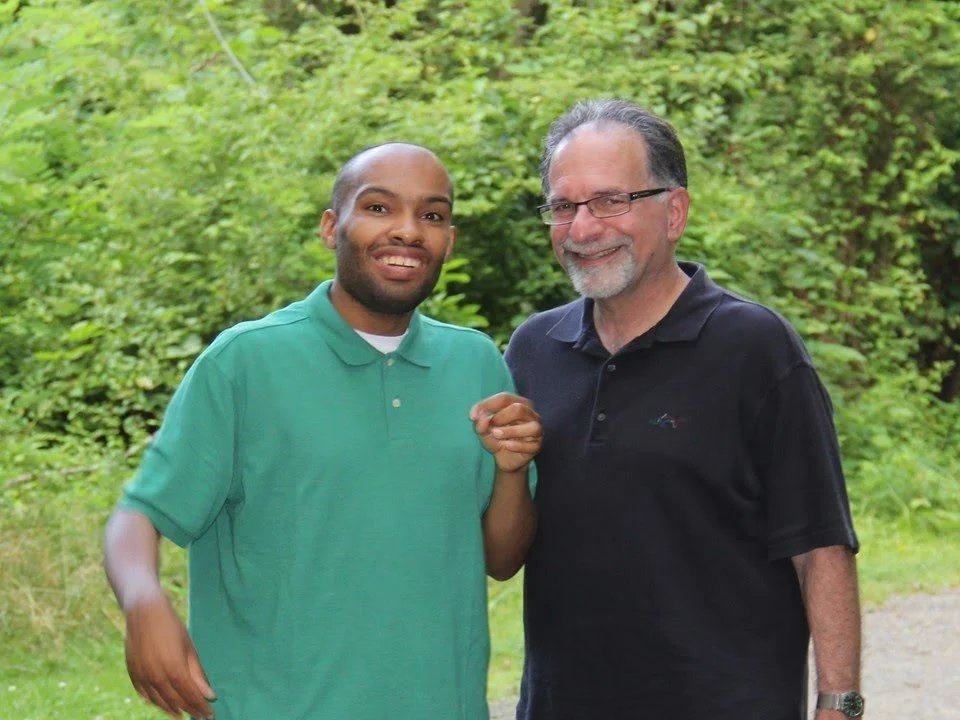
My view is informed by my lived experience raising my Black biracial son in the Philadelphia area. When Tariq was born, and I held him in my arms, I imagined he would be a better version of me. He would be more patient, more athletic, and have a good life with success, and most of all I wanted him to be happy. He stopped speaking at 18 months and started pacing and flapping, behaviors that he still uses to regulate himself. Unaware of danger, he wandered away and required constant attention. He didn’t sleep through the night, and he even escaped by climbing out windows or going down fire escapes. He smeared feces at home and in school. He destroyed things at home, including his little sister’s artwork. When he was diagnosed with autism in his fifth year, my dream of a normal son was obliterated. I was resolved to do everything I could to help him have as normal a life as possible. My journey to acceptance was paved by a friend and colleague who helped me to realize that I was mourning a lost dream. His therapists and teachers helped me to focus on what he could do as opposed to what he couldn’t do. But they couldn’t help him speak to me and that broke my heart, over and over. Nonetheless, I began to enjoy what we could do together. This is a brief overview about my experiences which I have written about extensively.

Tariq always received the best services that were available in our area. I always thought that this was because I was such a good advocate for him. I have come to realize that that is far from the full story. Many of the mostly Black children who were in his early intervention program had the same behaviors. As far as I know, he was the only one diagnosed with autism because I could not accept him being diagnosed with mental retardation. I have come to understand that it was because of my white skin privilege and my educational advantages that he got the best level of care available. By the time Tariq was nine years old, it had become increasingly difficult to keep him safe at home and at school. Through the due process procedure, he was placed in a full-time residential program at the Devereux Foundation. He grew up and lived there until he was 22 years of age; currently he lives in a KenCrest group home in the Philadelphia area. I credit the good care that he has received there including keeping him safe and healthy during the COVID-19 public health emergency. In his life now, he is autistic all of the time and a happy man most of the time.

Although he has many challenges, he has done his best. I tried so hard to change him, and in the end, he changed me. He made me become a better version of myself—a better man, a better father, and a better partner. This is the journey I am still on. Like many other parents of nonspeaking autistic children, I have had imaginary conversations with him many times over the years, and I wonder what he would tell me if he could speak. In a 2019 blog, I imagined what he would say to me.

The growing cohort of autistic adults has contributed profoundly to my understanding of autism. Trailblazing Jim Sinclair wrote “Don’t Mourn for Us” in1992. While some amount of grief is normal, getting stuck there, according to Sinclair “is damaging for both the parents and the child, and precludes the development of an accepting and authentic relationship between them.” The real grief in Sinclair’s view is not autistic people themselves, but rather that our world has no place for them (or you can say – does not create space for them. Parents are urged to get angry about that and change this situation.

For anyone who wants to understand autism at a deepened human level, I would urge you to listen to and read the advice of autistic adults who are self-advocates, for starters:

  • Temple Grandin proclaims that she is “Different but not less.” 

  • Dena Gassner teaches, “You don’t outgrow autism, you grow into it.”

  • Michael John Carley says, “Acceptance is a start not a finish.”

  • Jennifer O’Toole says “The face of autism is changing. And more often than we realize, that face is wearing lipstick.”

  • Stephen Shore says, “If you know one child with autism, you know one child with autism.”

  • Keep listening to voices of autistic people that, unlike my son, have been able to communicate in ways you can understand, and keep reading the work of the Autistic Self Advocacy Network (https://autisticadvocacy.org/)

Inspired by my son, I have developed a voice in the Autism Community. I have served on several boards and spoken to conferences around the country and internationally. I am not meeting parents or self-advocates who are asking or suggesting a new category. The main questions I hear are “How do I help my child?” or “How do I get help for myself.” Like many other groups pushing for change, the autism community has had numerous splits and factions. We don’t need more of that.

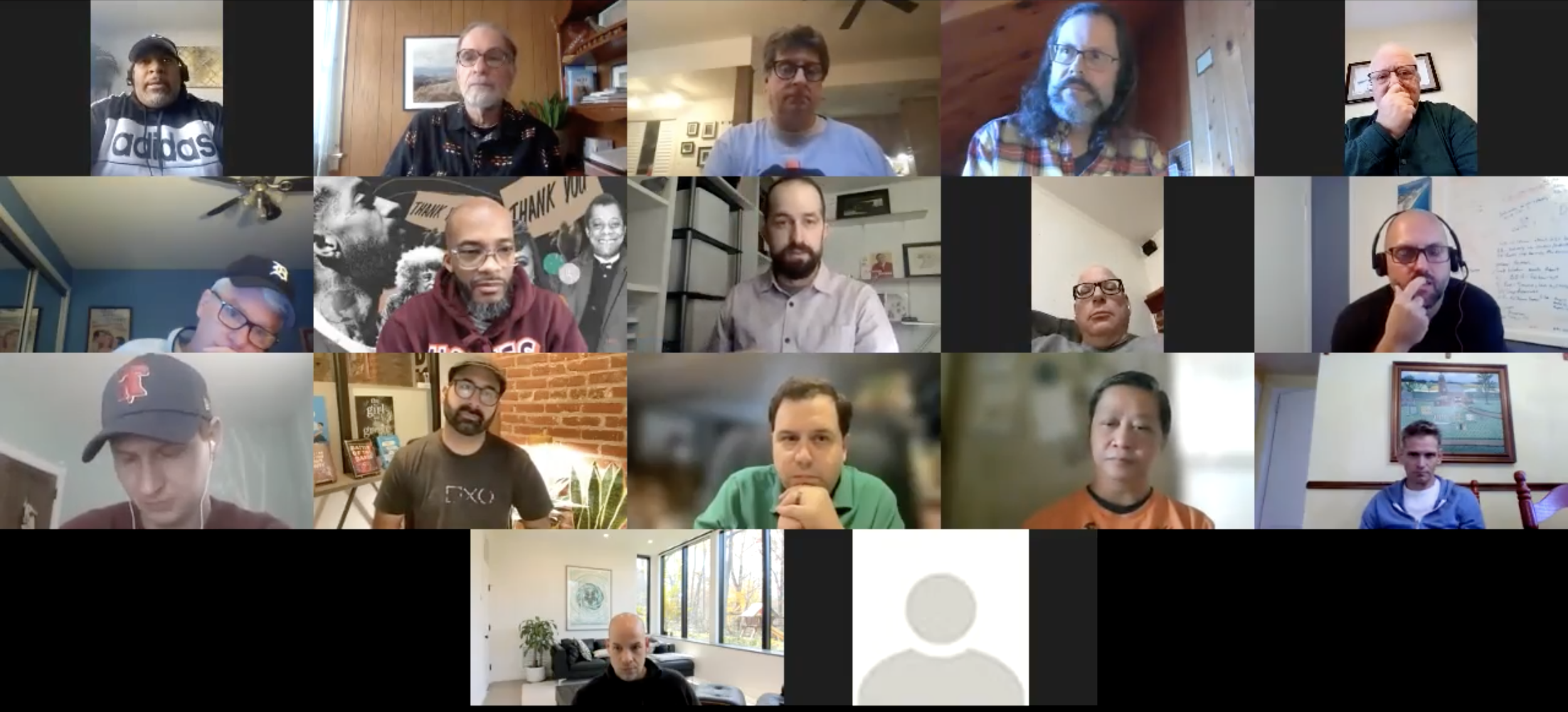
With my friend and colleague, Dr. Michael Hannon, I have cofacilitated a fathers’ support group at the AJ Drexel Autism Institute. Our group is diverse in many respects. We have fathers from various ethnic groups and faith traditions who take care of children of various ages and developmental levels, from the newly diagnosed to adulthood. In addition, some of our members are autistic themselves and provide valuable insight into understanding the language and communication styles of our children. We meet monthly and provide a safe place for fathers to share and celebrate their wins and express their deepest frustrations. At the end of every meeting, we share what we have absorbed from each other. Invariably the men there express how they have been supported by our common humanity.

The unmet needs of autistic children and adults and their families are a global public health emergency. Let’s not divide people up further. Let’s unite and go forward with a humanistic vision that everyone should get the supports they need to lead a full and rewarding

Comments:

5 responses to “Let’s NOT Divide the Autism Spectrum: My view from the trenches on Profound Autism”

  1. denisepowersfabian

    Nov 14, 2022 at 4:06 pm

    Edit

    Very poignant article. I quit attending autism conferences long ago when they seemed to only address a certain portion of the spectrum. I felt left out. As you know, Caleb had many challenges, and I would often describe him to others as “low functioning” because otherwise people assumed a profile of him that was not accurate. Oh, how I miss him. Now I have a grandson recently diagnosed on the other end. Thank you for all you do and all you have been to me personally.

    Like

    Reply

  2. Ron Oberleitner

    Nov 14, 2022 at 4:27 pm

    Edit

    Beautifully written, Bob. You and Tariq have ‘walked the walk’ before many of us with adult children with ASD. I still side with an appreciation of ‘profound autism’ as a more helpful way of distinguishing my son and others on this wide spectrum (and I really appreciated Allison’s article about the subject). But I SO respect and appreciate your perspective and how you eloquently share it. Thanks for helping so many of us dads appreciate the wonderful children we do have.

    Like

    Reply

  3. Jack Scott

    Nov 30, 2022 at 4:56 pm

    Edit

    Robert This is a great article. You sum up a very complex set of issues nicely. I hope this has impact on decision makers

    Liked by you and 1 other person

    Reply

  4. Suggesting respectful language is NOT censorship! – Morénike Giwa Onaiwu

    Jan 12, 2023 at 7:38 pm

    Edit

    […] Let’s NOT Divide the Autism Spectrum: <strong>My view from the trenches on Profound Aut… From Dr. Robert Naseef, parent of a “profoundly autistic” son […]

    Like

    Reply

  5. Kim

    Apr 3, 2023 at 9:04 pm

    Edit

    Very well said! Thank you for posting! I am constantly disappointed by all the divisiveness that has developed in the autism community in the last decade. We need to hear *all* the voices on the spectrum, in whatever manner people are able to communicate in. And we need to hear the voices of those nonautistics in our community who are willing to be respectful enough to treat us as valuable humans beings, and learn how to help us participate as ourselves in a socety that isn’t made for us. Respect doesn’t come from arbitrary categorizations, or divisiveness, it comes from community and open mindedness. From embracing diversity, not pigeonholing people into “worthy” and “unworthy” categories. We *all* deserve the support we need to live the best lives we can live, not just the support that fits other people’s ableist stereotypes of what someone “should” or “shouldn’t” need.

    Liked by 1 person
Comment

Fathers Opening Up: The Space Where It Happens

Robert Naseef December 14, 2021

Our November meeting started out with some opening comments about acceptance. One father was brutally honest as he disclosed still trying to accept his young son’s autism diagnosis. What can we change? What can we live with? What do we have to live with? Can we live without shutting down or being in a consistently ugly mood because we're guys?

Acceptance was described as living in relative peace with life as it is, not what we want it to be. In the diverse and safe space that we have built for over two years, guys were invited to share things that they may not have felt brave enough or safe enough to say out loud about acceptance.

The father of a child who is minimally verbal shared how overwhelming it seems to think of his son's future as an adult. He has found that going day-by-day - sometimes moment-by-moment -  is the best. Another father, whose wife passed away, shared how exhausting it is as a single parent of his 28-year-old autistic son. Another man accepts and loves his child, but he confesses that it’s hard not to compare his experience to the neurotypical development (and privileges) he sees played out in his extended family and community.

Then the father of a 7-year-old who was diagnosed at 3 admitted, “I’m pretty angry at the world!” He became tearful and couldn’t say any more. We wondered what his tears would say if they could speak.

The Zoom room was temporarily quiet and reflective leading to an outpouring of support:

  • “You’re allowed to be angry”

  • “Angry about what? What's under the surface?”

  • “I'm beyond anger. I am really pissed. My 17-year-old is in residential care and the last three months have been the worst of my life.”

The men of older children, who are teens or adults, were able to share that it's OK if it feels like the anger is over, and it's OK if it's not over. As facilitators, we stressed that anger comes and goes at different volumes and with thoughts of injustice. Some older fathers shared that there are difficulties in accepting the aging process in their bodies that caused them to slow down and makes it hard to keep up with their children. While anger can be energizing and helpful to get out of a rut, as another pointed out, it's not always constructive. Gratitude for what is going right is useful, but not easy to access, because our default as men is to go with the anger.

A Black father from a southern state shared how difficult it was for him to wrap his mind around the diagnosis of his two children, because they are described as looking so normal but are so different. It was painful to hear people say, “They're so cute. They’re fine. You just worry too much!” After he got through his denial with the help of couples’ therapy, he was still angry about how difficult it was to get the proper services for his children.

Once again, the room got quiet for a few moments, and again there was an outpouring of support. There was emotional solidarity and lots of advice-giving which we couldn’t resist as men. Overall, our time together was full of the inspiring fire of raw male emotion. There was gratitude expressed for hearing these emotions expressed in a way that many had never experienced elsewhere. One father concluded that, “I’m positive to a fault.  It’s OK to be angry and ask, about what?”
Another wisely pointed out, “It’s easier to be mad than sad.” Others called our time in this supportive space as a highlight of their week because the emotional honesty was a revelation of buried feelings. It takes courage to listen and peel back the layers underneath the anger. What else is there?

If you are able, join us this Saturday, December 18, at 11:00 AM Eastern. If that doesn't work for you, we will be available on the 3rd Saturday of every month. For information about meetings contact AutismInstitute@drexel.edu

Stay safe, and peace!      

Michael and Robert

P.S. If you weren’t there and haven’t seen it yet, check out our Father’s Day Live event on YouTube. 

Comment

Listen to men talking about autism in the family

Robert Naseef September 15, 2021

On the morning of Saturday, June 19th, the A.J. Drexel Autism Institute’s Fathers Autism Support got together for their monthly discussion, just as they have been doing since the fall of 2019. But instead of their usual, private meeting, which has evolved from a circle of chairs in a conference room at the Institute to Zoom meetings that span multiple states and time zones, the group opened up their space to an audience. “Hopefully you can hear what community sounds and feels like,” said one of the group’s leaders, Dr. Michael Hannon, an Associate Professor of Counseling at Montclair State University, who introduced himself as “a husband and father to two dope children.” Though Hannon and Dr. Robert Naseef, a clinical psychologist, author, and the father of an adult son on the spectrum, directed the conversation, the group operates under a support group model, which allows every member of the group the opportunity to share their stories. “This isn’t a program, there’s not a workbook. It’s a lot like catching up with a bunch of people in a similar situation over coffee.” said one father.

While many support groups exist for the parents of children on the spectrum, there are few that are limited to fathers. The specificity of this group has been instrumental in helping several of the members open up. “The first meeting was a sigh of relief. I needed this,” said one of the dads, who, like many others, initially attended at the request of his wife, who suggested he might “benefit from a third party” after his children were diagnosed with ASD. “It’s hard work to be socialized to think that boys and men are generally allowed to express heterosexual lust and anger, and anything else is considered feminine, or weak, or vulnerable. We can reframe what strength looks like.” Hannon said. Dr. Naseef added, “Learning to listen and speak our inner truth is an action. It’s not the unique territory of women.” Another father said, “It really can take courage and humility to make ourselves available to receive the wisdom that we need.”

Many of the group’s members talked about how valuable the diversity and neurodiversity of the group, not only in race, faith, location, and background, but also in the age range of children, has been to them. “It helps put me in perspective,” noted a father. “This group is a reminder to take joy in the journey. It’s nice to have a place to talk about these things and be heard and understood. It helps me be a better father. To love my son better.” said another.

Both Dr. Naseef and Dr. Hannon made a point to highlight that the event was being held not only during Father’s Day weekend, but on Juneteenth, a holiday celebrating the news of the 1863 Emancipation Proclamation finally reaching enslaved people in Texas in the summer of 1865. Naseef took a moment to acknowledge the uncomfortable reality that Juneteenth had been declared a federal holiday at the same time voting rights are under attack across the United States. As the discussion was coming to an end, Dr. Naseef recalled a quote from Dr. Martin Luther King, “the arc of the moral universe is long but it bends toward justice.” “When we can keep our fingers on the pulse of those who are being marginalized, like our children…our children, our family members, can help us bend that arc toward justice.” As Dr. Hannon said, "When Black Lives Matter, only then will all lives matter."

You can watch the full discussion below:

Comment

Beyond Cards and Letters:Being the Right Kind of Help

Robert Naseef May 11, 2021

We are past Mother's Day on the calendar, but it takes more than cards, flowers, and eating out (in normal times) to give our partners the appreciation for all they do each and every day. Mark your calendars for our fathers’ support group as we talk about appreciation and gratitude, especially for our partners this coming Saturday, May 15, at 11:00 Eastern Daylight Time. Our group is distinctively diverse by race and faith traditions and united by our love and commitment to our family members on the autism spectrum. We have supported each other and bonded through the COVID-19 pandemic. We have a core of regular members and visitors, Black, White, Hispanic, Asian, and Middle Eastern, from far and wide across the country and the globe. No surprise that many of our members got to us through their female partners who wanted us to speak up and put our feelings and experiences into words.

This Saturday, we will do that along with whatever else is coming up as our communities slowly open up to an uncertain new normal. At the end of the day, we're just guys so we always want to know what to do. It's through actions that we show our love, so here are few tips in the form of an action plan ahead of our meeting and for those of you who cannot attend:

  • Talk to her. Tell your partner how much you appreciate her and everything she does for your family. Be specific about all the wonderful things she does and how hard she tries.

  • Be present and available. Don’t do something.  Don’t make suggestions. Just be there. Volunteer to just listen to how she feels.

  • Be curious. Ask what you can do to make her job easier and thereby be the right kind of help.

  • Be consistent. Gently and persistently keep asking and showing up to do stuff.

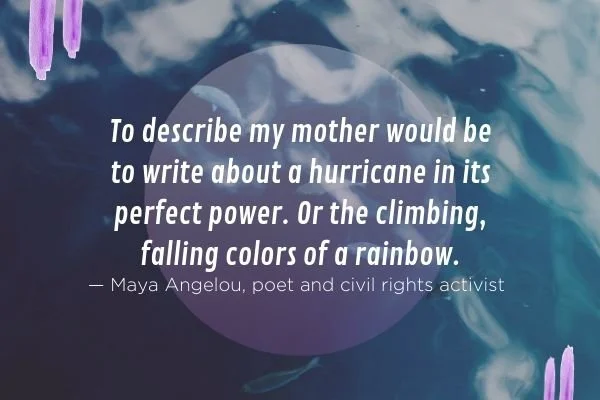
This is how to be a good man in your situation. Help her to take a breath, literally and figuratively. Let her know that she is indispensable.  Finally, remember one of the most important things a father can do for his children is to love their mother. No one can do a better job for your family. As Maya Angelou wrote, "To describe my mother would be to write about a hurricane in its perfect power. Or the climbing, falling colors of a rainbow."

On May 15 via Zoom, we will humbly take stock of lessons learned, the challenges before us, and the lives we want as we transition as a society from the public health emergency to whatever lies ahead. At the end of the day, we’re guys trying to help each other do the right thing.  

Wishing you safety and peace!      

Michael Hannon and Robert Naseef

For more information to attend the group, contact AutismInsitute@drexel.edu

Comment

Fathers' Voices on Being "The right Kind of Help"

Robert Naseef May 11, 2021

A lot has happened in the world since our Fathers' Support Group last met on October 17th. The presidential election is behind us, but the struggle for racial, social, and economic justice continues. Of course, we’ll discuss how today’s events impact us, but we will focus primarily on talking about what's happening within us and how we are growing, evolving, being pushed, and becoming uncomfortable as fathers loving people with autism. The honesty and openness of sharing our best and worst experiences has fueled the determination of men in our group as we are transformed by the experience of family life under pandemic conditions.

We’ve often talked about how to be the “right kind of help” for our families. It's no surprise that we want to get busy and fix things when there's a problem in our home. Cleaning the kitchen or vacuuming, however, might be the “wrong kind of help” when our family needs us to be more actively engaged. Listening carefully or asking how we can be helpful, if we can't figure it out, is what we need to do as opposed to getting busy and believing that we are helping. We might need to get on the floor or to the table and play. We might need to take our child for a walk or help to deescalate a meltdown. We might need to step up and give our partner a break to take a walk or just have a breather.

Another theme of our October conversation was the difficulties with social interactions when children are learning virtually. This can be really hard. The father of a four-year-old, seeing that his son wanted to interact with other children in the neighborhood, wondered with us about whether he should let him try.  Another father shared his disappointment and sadness about when his son went bike riding with two neighborhood friends who left him behind by himself. His son was able to find his way home by himself. But, what if that was not the case? We collectively pondered how to be the right kind of help when our sons or daughters try really hard to engage with others but don't experience success.

There is a strong desire to fix the problem, but do we step in? And, if so, when is the right time? We want our children to comply with how society works. Schools have their norms. Relationships have their norms. Work has its norms. But sometimes, we want them to have new norms!  We want to fix the world and make it more accepting, inclusive, and welcoming to our children who are different and to treat them with respect. And we’ve openly struggled with how to let them try, make mistakes, while supporting them and keeping them safe. Although this is a heavy load to carry, the honest sharing by men about  these issues engendered hope.

A question about the risk of having a second child with autism also came up. Recent research finds the risk of having a child with autism spectrum disorder (ASD) is about 1 in 54, almost 2%. But, if a family has one child with ASD, the chance of the next child having ASD is about 15%. If the next child is a boy, that child is 2-3 times more likely to have ASD than if the child is a girl. The risk of younger siblings having some ASD-like characteristics is about 20%. You can find more information about this here.

While we offer much more support than advice, we concluded that every child is unique and facing the uncertainty of another child possibly on the spectrum is really hard. If a couple doesn't think they can love unconditionally - whether that child is on the autism spectrum or not - then it's best to hold off. One of our regular members who has two children on the spectrum and is on the spectrum himself, shared that he has learned so much from his second child and become a better person as a result. 

As usual, we shared the lessons that we took away from our time together, such as working hard to be the “right kind of help,” feeling reassured to know that we are not alone, as well as the reminder that it's OK to make mistakes. We also engaged in our closing silent reflection on what we have learned from each other and contemplating the serenity prayer - accepting the things that cannot be changed, ​with courage changing the things that should be changed, ​with the wisdom to discern the one from the other. These messages ring profoundly true in our multiracial, multifaith, and neurodiverse group membership. We hope to see you at our next meeting, Saturday, November 21, at 10:00 AM, Eastern.  With gratitude and humility, we welcome you to the safe and soulful space our group is growing into and providing. Come to share your experiences, the joys and difficulties, and learn along with us.

Wishing you safety and peace!

Robert & Michael

P.S. If you're a father and haven't been in touch with us before and want to join in on November 21, email autisminstitute@drexel.edu.

2 responses to “Fathers’ Voices on Being “The right Kind of Help””

  1. ron oberleitner

    Nov 18, 2020 at 10:35 pm

    Edit

    Thanks for these important and heartfelt reflections in an incredibly anxious time (incl. for families who have children with autism). Hope to help make a more accepting and loving world for all in the future.

    Liked by you

    Reply

  2. Robert Naseef

    Dec 22, 2020 at 3:59 pm

    Edit

    It’s always great to hear from you, Ron. Feel free to show up for the fathers’ group whenever it might work for you and best wishes to you and your family for happy and healthy holidays.

Comment
  • Dr. Naseef's Blog
  • Older
  • Newer
facebook youtube instagram

Alternative Choices in Psychotherapy and Autism Evaluation

Philadelphia, PA

Alternative Choices | 319 Vine Street #110, Philadelphia, PA 19106, USA

facebook youtube instagram